






 Portuguese
  Spanish


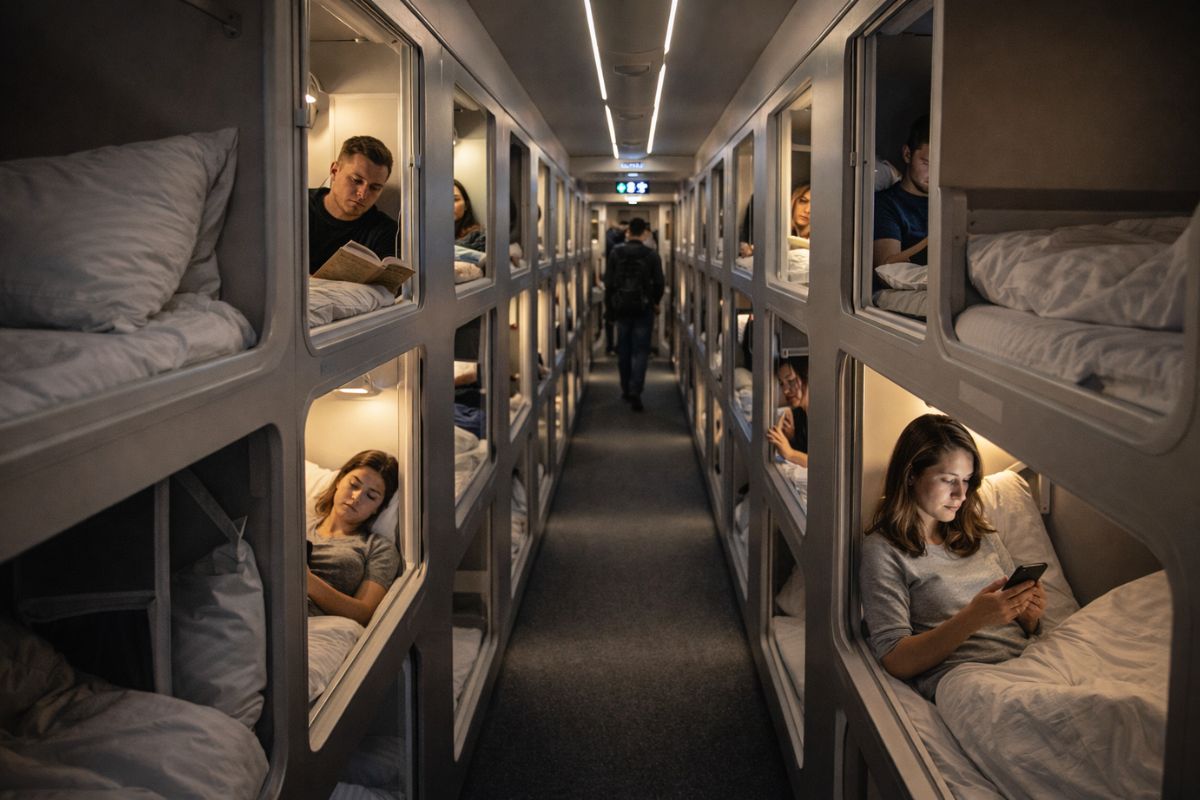


In Berlin, a startup led by Anton Dubrau tries to solve the biggest bottleneck of night trains: high cost and little privacy. The proposal swaps classic compartments for mini-cabins, increases capacity to almost 700 passengers, targets tickets around 100 euros, and reduces dependence on subsidies on central routes.
Night trains have returned to be sought after in parts of Europe, but they still carry a harsh paradox: they are desirable, sustainable, and appealing, yet they tend to be expensive and lose to airplanes in the final calculation. In Berlin, entrepreneur Anton Dubrau bets that the solution lies in individual mini-cabins and nearly doubling occupancy.
The idea arises in a scenario where routes are reopened and closed quickly, like Paris and Berlin, and where operators and governments discuss subsidies as if they were the oxygen of the system. When public funding decreases, the map shrinks, and the promise of sleeping while crossing borders once again depends on a cold calculation of capacity, fare, and risk.
The Sign Of Subsidies And The Disappearance Of Routes
The recent picture of night trains is made up of ups and downs. The Paris-Berlin and Vienna connection was reopened in 2023, but closed after just two years of operation following state-level subsidy cuts.
-
OnePlus N6 Smartphone to Launch in India with 8,000mAh Battery and 45W SuperVOOC Charging, Lasting Up to Three Days

-
Scientists Plan to Release Air Bubbles Underwater to Protect Antarctica’s “Doomsday Glacier” from Melting

-
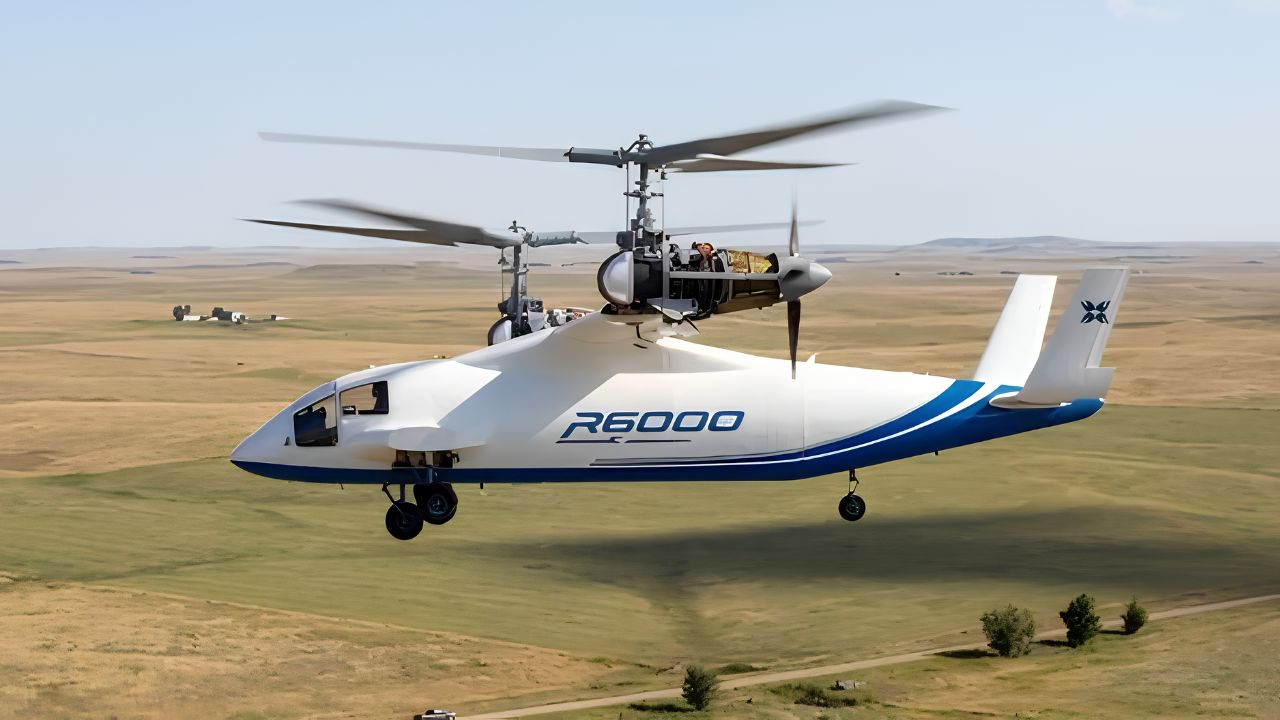
Chinese R6000 Drone Combines Airplane and Helicopter Features, Carries Up to 12 People for Multiple Missions
-
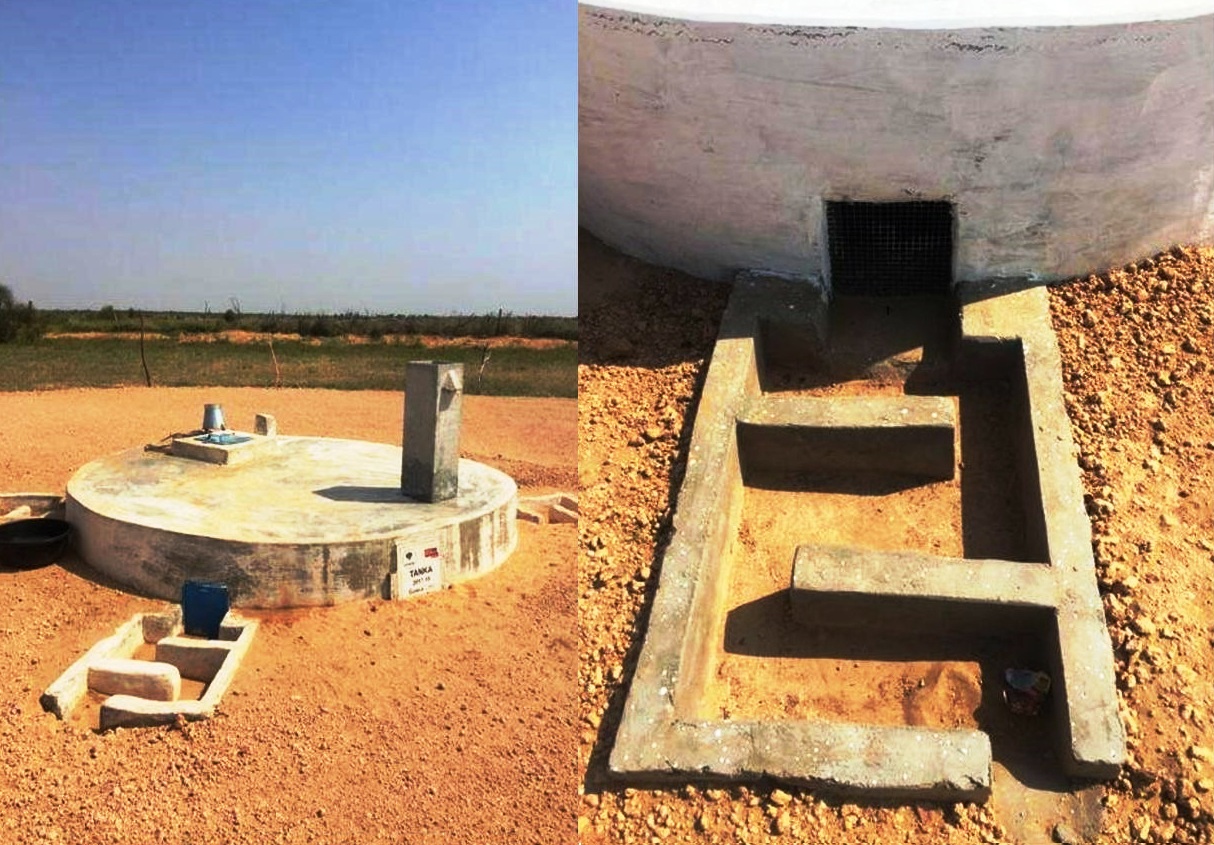
In the World’s Most Densely Populated Desert, Families Dig Funnel-Shaped Underground Cisterns to Capture Rare Rainfall and Store Drinking Water for Up to Eight Months



The case has become a reference because it exposes the fragility of a service that needs to fill up while also maintaining minimum comfort standards.
The impact of this type of decision appears in other connections. The route between Stockholm and Berlin has also been described as being on thin ice, with private operators signaling they would only take over specific days without subsidies.
The debate stops being romantic and turns into spreadsheets, because the night train only survives if the numbers work out for both the operators and those who pay.
Mini-Cabins To Multiply Capacity Without New Trains
The strategy of Anton Dubrau tries to tackle the problem through volume. Conventional night trains would operate with a capacity of around 340 passengers per trip; the design with mini-cabins proposes to fit almost 700 people distributed over two floors.
The premise is simple: dilute fixed costs over more seats and beds to lower prices without relying too much on subsidies.
Another point is to avoid the requirement for a new fleet. The proposal considers refurbishing old cars, rather than building trains from scratch, which shortens timelines and could reduce initial investment.
Still, the concept is in the simulation and prototype phase, with the mini-cabins reaching the seventh version after tests that began with simple models.
Privacy, Luggage, And The Promise Of A Ticket Close To The Plane
The mini-cabins are designed to eliminate a classic discomfort: sharing a compartment with strangers. The proposed format is an individual cabin where the seat transforms into a bed, with space to store luggage, a window, and a foldable table for work.
The bet is to turn “just sleeping” into a predictable experience, even in repurposed cars.
The pricing math appears as a central argument. In the calculations presented by Anton Dubrau, a journey of 1,000 km like Paris to Berlin could cost around 100 euros, a price that attempts to align with air travel to compete for undecided travelers.
The Paris-Berlin example is symbolic because it mixes high demand, pressure for subsidies, and the perception that without a competitive fare, the route will disappear again.
Investment, Bureaucracy, And The Race To Reach 2030
Between the cabin and the track lies a corridor of obstacles. The team itself lists bureaucracy, route availability, investment, and the effective construction of the cars as barriers that cannot be resolved solely with design.
The project only stands when engineering meets regulation, and that is usually the slowest part.
So far, development has cost several hundred thousand euros, with partial funding from Anton Dubrau, investors, and subsidies aimed at business creation.
The cited estimate for production at scale points to 2030, precisely when the European Commission aims to double the number of passengers traveling by train, a goal that could place political pressure to expand or rethink subsidies.
Why Night Trains Have Become A Climate Dispute
The defense of night trains often stumbles over emission numbers. In the comparison presented, a passenger emits an average of 22 g of CO2 per kilometer by train, while the airplane reaches almost six times that; cars would be even more polluting, especially when large and with only one occupant.
The climate discussion becomes an economic argument when energy prices rise.
There is also an efficiency argument: trains can run using less energy and generate electricity through braking, while short-haul flights depend on crowded airports and narrow operating windows.
Even so, the weak point remains the final price and the predictability of the service, exactly where mini-cabins and subsidies enter the same sentence.
The design of the mini-cabins tries to answer an uncomfortable question: can night trains survive without permanent subsidies, or will Europe accept losing routes like Paris to Berlin whenever the budget tightens?
The promise of almost 700 passengers per trip is aggressive, but execution depends on regulation, investment, and public acceptance.
If you have ever traveled on night trains, what weighed more in your choice: privacy, price, or travel time? Would you sleep in one of the mini-cabins if the fare was close to 100 euros between Paris and Berlin? And, in your country, do you think that subsidies for long-distance transport are a priority or a luxury?





Seria bom se for para o Brasil
Ok, mas quantas pessoas, cabem em um trem atualmente? , Qual é o valor médio atual das passagens, e dos aviões em contra partida? Obvio que ésta ” noticia” é patrocinada, mas faz direito, abração
Algo me diz que você só leu o título. Todas essas questões são respondidas no corpo do texto.
Sem sombra de dúvidas eu faria mini cabines e ainda adaptaria para uma criança com necessidades. Onde o responsável legal podeira ficar junto. A rota SP-Rio poderia ser noturna sem a necessidade de um trem bala.
Já teve na década de 90.
Onde você estava, nessa época?
Trens sempre serão deficitários.
Procure se informar sobre ferrovias.
Não se engane com os trens chineses.
Os trens chineses são 100% subsidiados.