






 Portuguese
  Spanish


While USP Consolidates Its Position in International Rankings, Scientists at UFRJ Reveal New Strategies to Combat Alzheimer’s and Glaucoma, Highlighting National Science.
Brazil is experiencing a moment of prominence in the global scientific arena. A Brazilian university, the University of São Paulo (USP), has achieved a historic position among the best in the world. At the same time, cutting-edge research at the Federal University of Rio de Janeiro (UFRJ) is opening new paths for the treatment of neurodegenerative diseases. Although distinct, these achievements connect: they demonstrate the strength of an academic ecosystem capable of producing recognized excellence and impactful science globally.
How a Brazilian University Reached the Global Elite
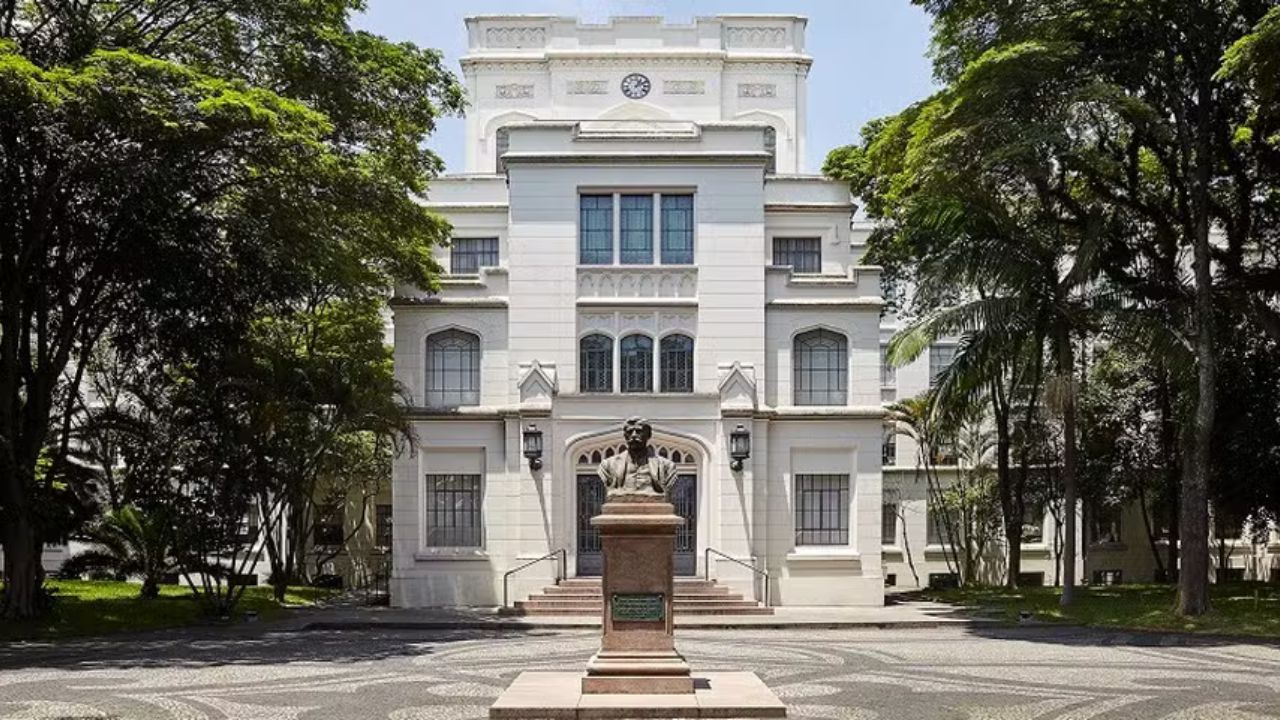
The quality of higher education in Brazil has gained significant recognition. In the prestigious Times Higher Education (THE) 2025 ranking, the University of São Paulo (USP) entered the exclusive group of the 200 best universities in the world, an unprecedented achievement in the last decade. In the QS 2026 ranking, USP also ranks in an elite position, at 108th globally, outperforming 92.8% of all assessed institutions.
This recognition is not isolated. USP stands out in specific areas such as “Life Sciences and Medicine” (47th in the world) and “International Research Network” (76th). Brazil’s strength is complemented by other leading institutions such as Unicamp and UFRJ, ensuring the country has the most robust representation from Latin America in global rankings. This academic depth creates an ideal environment for developing innovative research.
-
Crab Trapped in Plastic Bottle for 62 Days Near Okinawa Highlights Little-Known Impact of Marine Pollution on Small Animals

-
Esperanza’s Bamboo Barrier in Oaxaca Redirects River and Reduces Erosion by 85% in Five Years

-
Family Builds Homemade Wind Turbine to Power Off-Grid Home, Video Reaches 555,000 Views on Ngô Thị Huyền’s Channel
-
Indian Brand Creates Sneakers from Recycled PET Bottles and Discarded Tires, Repurposing Over 1 Million Bottles and Raising $4 Million for Expansion





The Discovery at UFRJ That Challenges Science
At the heart of UFRJ, research challenges decades of knowledge about Alzheimer’s disease. For a long time, science focused on beta-amyloid protein plaques in the brain as the primary cause of the disease. However, drugs that remove these plaques have failed to reverse cognitive decline.
Scientists from UFRJ, in collaboration with USP, decided to look elsewhere: at astrocytes. These cells, once viewed as mere support, are essential for communication between neurons. The research, published in the renowned journal Aging Cell, focused on a molecule produced by astrocytes, called hevin. They discovered that levels of hevin are much lower in the brains of Alzheimer’s patients.
In experiments with mice, the researchers increased hevin levels in the animals’ brains. The result was remarkable: the mice’s memory was restored. Most impressively, this improvement occurred without any changes in the amount of amyloid plaques. Hevin appears to function by “repairing the wiring” of the brain, strengthening the connections (synapses) between neurons.
UFRJ Also Innovates in Vision Regeneration Against Glaucoma
The ability of UFRJ to innovate does not stop at Alzheimer’s. Another group of researchers at the university is opening a new frontier in glaucoma treatment, a neurodegenerative disease that causes irreversible blindness by destroying retinal neurons. The study’s goal is to regenerate these neurons.
The UFRJ team, in collaboration with the Max Planck Institute in Germany, discovered a way to do this. The research, published in the journal Development, showed that a transcription factor called Klf4 can reprogram other retinal cells to transform into the ganglion cells lost to glaucoma. This regenerative medicine approach suggests that, in the future, the retina itself could be stimulated to repair itself, something revolutionary for ophthalmology.
The True Path to “Cure”
The discoveries at UFRJ are extremely promising, but it’s important to contextualize the term “cure.” As explained by Professor Flavia Gomes, coordinator of the Alzheimer’s study, “what has been found does not mean a cure, but a strategy to halt the disease’s progression.”
The path from a laboratory discovery to an available treatment for patients is long and rigorous. Current studies represent proof of concept. The major advancement, for now, is the validation of completely new strategies and therapeutic targets. It is the opening of these new avenues of research that, in the future, may lead to a cure.
The Role of Investment in Brazilian Science
These scientific achievements do not happen by chance. They depend on continuous and robust investment in science and technology. Research funding in Brazil has gone through periods of instability.
In this context, support from state agencies, such as FAPERJ (Rio de Janeiro) and FAPESP (São Paulo), has been crucial for the survival and success of these projects. Both UFRJ research initiatives received funding from these foundations. For Brazilian science to continue producing globally impactful results, it is essential that investment becomes a stable and long-term state policy. The performance of each leading Brazilian university directly depends on this support.


