Portuguese
  Spanish


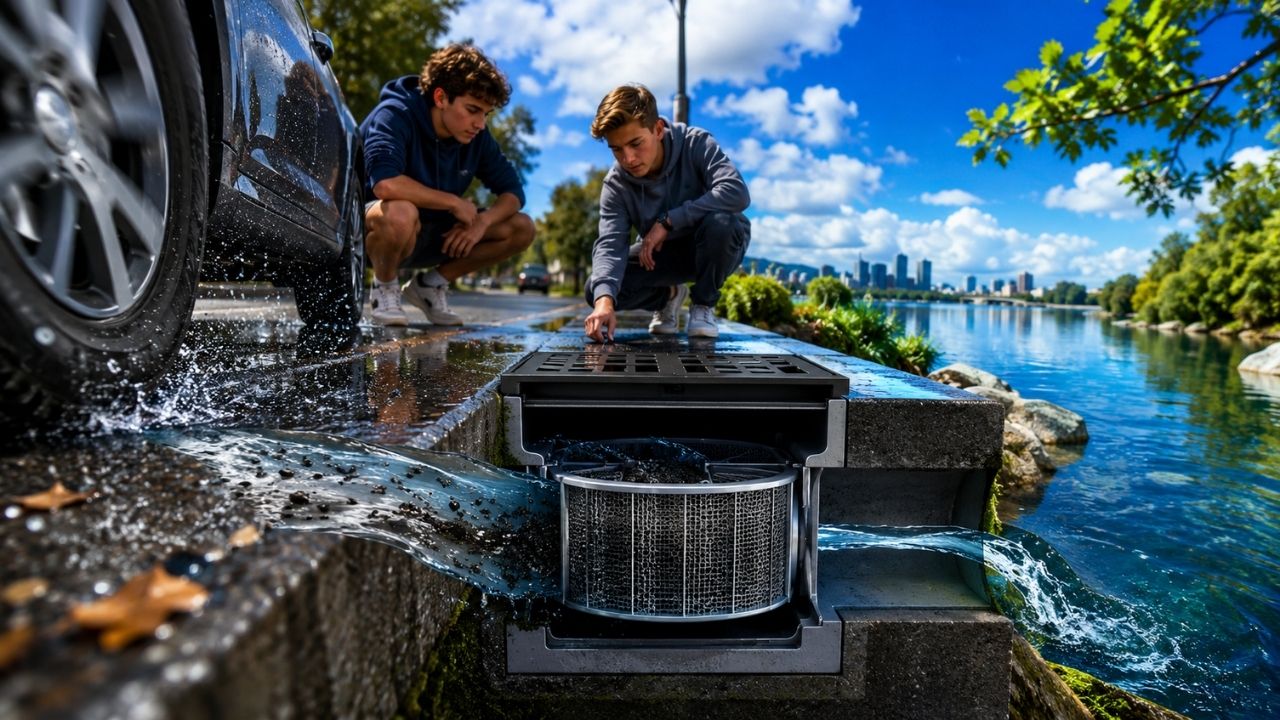

A team of young people from the United States developed DrainZero, a drain filter capable of intercepting and decomposing tire microplastics before rainwater reaches rivers. The project was selected among the 35 best ecological solutions in the world by the Earth Prize 2026.
Every time it rains in a city, the water that flows through the streets carries with it a type of pollution that human eyes cannot see: rubber and plastic microparticles shed from tire wear during daily traffic. This invisible load flows down the gutters, enters the drains, and goes directly to rivers, lakes, and oceans, without any barrier in its path. It was precisely this gap in urban sanitation that a group of teenagers from the United States decided to tackle with DrainZero, a drain filter designed to capture and break down tire microplastics before they reach water bodies.
The project was announced on April 13, 2026, as part of the Earth Prize 2026 Fellows list, the world’s largest environmental competition for young people aged 13 to 19, organized by the Earth Foundation, a non-profit organization based in Geneva, Switzerland. The American team, identified as DrainZero, represents the North American region in the competition and was selected among the 35 best ecological solutions in the world.
What is DrainZero and how it works
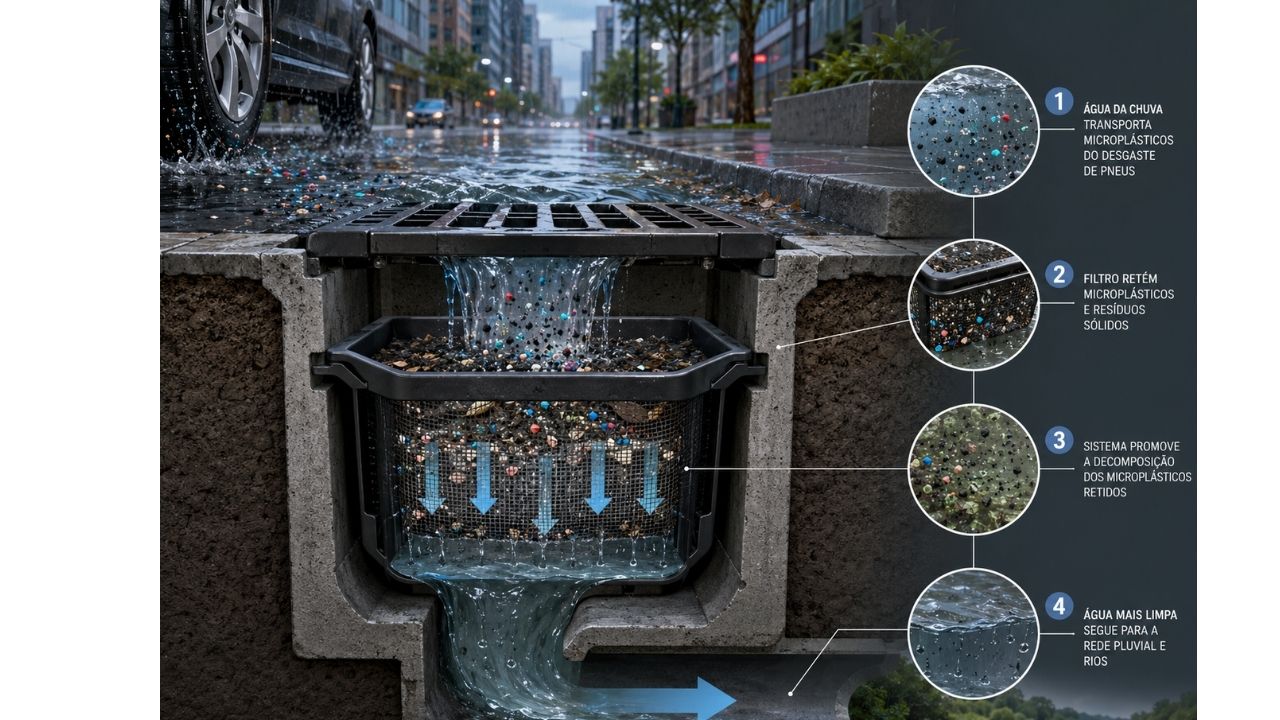
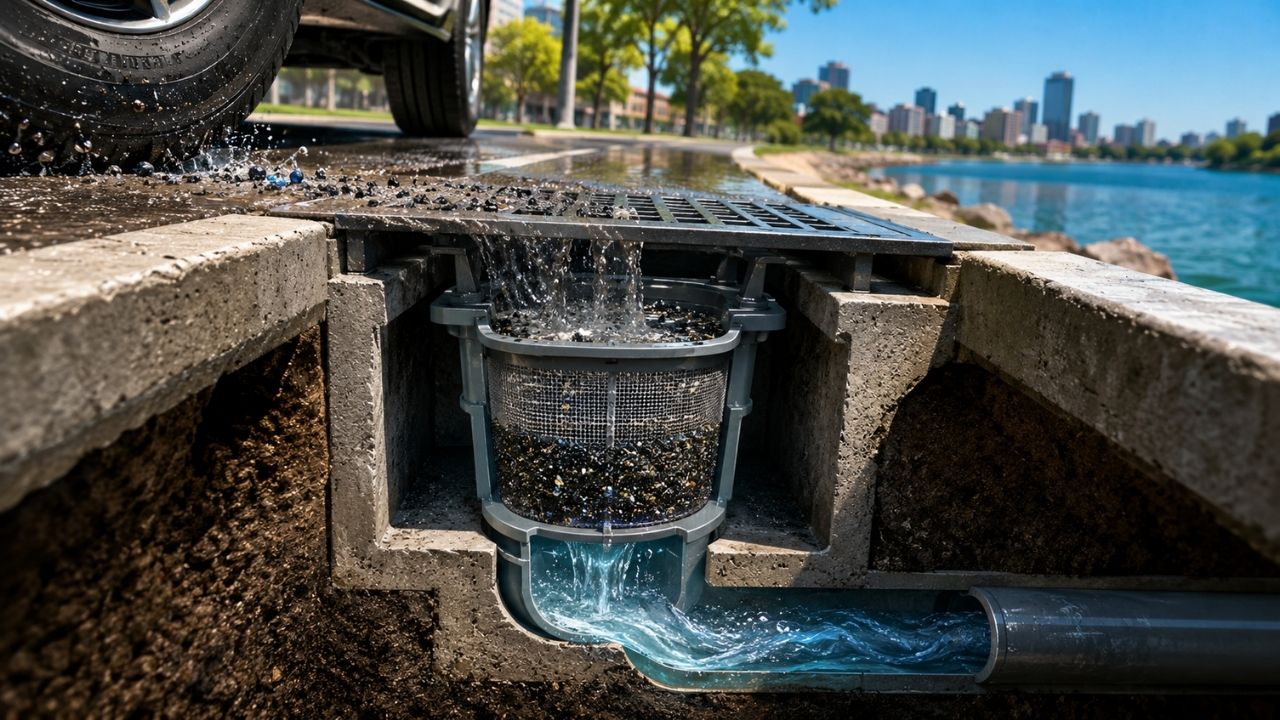
DrainZero is described by the Earth Prize as a filtration system installed directly in urban drain grates, with the function of intercepting microplastics originated from the friction of tires with asphalt. As a drain filter, the device not only captures these particles but also promotes their degradation, preventing them from being simply retained and then re-dispersed into the environment during the cleaning of drainage networks.
-
Engineers Develop Jacket That Converts Air Humidity Into Drinkable Water, Producing Up to 900 ml Daily for Hikers, Campers, Rescuers, Rural Workers, and Military in Remote Areas

-
NASA Plans to Repurpose Mars Rover for Lunar Mission, Sending a 1-Ton Nuclear-Powered Vehicle to Explore the Moon’s South Pole Without Solar Dependence
-
Early Humans Made Beds Nearly 200,000 Years Ago in African Caves, Study Reveals

-
Japanese Smart Bike Detects Cyclist’s Intent to Turn and Potential Falls


This drain filter addresses a problem that often goes unnoticed even in discussions about plastic pollution: while PET bottles and plastic bags have public visibility, tire microplastics are generated continuously and silently on any street where vehicles circulate. With each rain, this material follows the same path: gutter, drain, stormwater network, and finally, natural water systems. The source of the information about the project is the official Earth Prize statement, published on April 13, 2026.
The context of the Earth Prize 2026 and what it means to be among the top 35
The Earth Prize is promoted by the Earth Foundation since 2021 and presents itself as the largest environmental competition specifically aimed at young people worldwide. In its fifth edition, held in 2026, the competition had already reached more than 21,000 students in 169 countries and territories, having distributed over 500,000 dollars in prizes throughout its existence, according to data from the organization itself.
Being selected as a Fellow of the Earth Prize 2026 means joining a group of only 35 teams chosen from candidates around the globe, organized into seven regions: Africa, Asia, Europe, North America, Central and South America, Middle East, and Oceania and Southeast Asia. Peter McGarry, founder of the Earth Foundation, stated in a release that this year’s fellows “have demonstrated, once again, that age is not a barrier to tackling complex environmental challenges with creativity and purpose.”
The other solutions from North America and what unites them
DrainZero is not the only North American project among the 2026 fellows. In the same region, three other teams with equally distinct approaches were selected. ADAPT, also from the United States, developed a drought predictor based on artificial intelligence that helps farmers monitor soil conditions and manage irrigation via a mobile app. Meanwhile, CoralX, another American project, created a system that uses satellite data to automatically trigger emergency funding for divers protecting coral reefs threatened by warming waters.
The Canmore Women in STEM Club group from Canada proposed a plant-based biofilter capable of removing toxins from water while cultivating food species. What unites these four North American projects is the same central logic of the Earth Prize: transforming the identification of a specific environmental problem into a concrete, low-cost solution applicable in the real world, not just in the laboratory or in theory.
From competition to impact: what comes next for DrainZero
Selection as a Fellow of the Earth Prize 2026 is just the first formal step of the competition. The next stage involved the announcement of seven regional winners between May 11 and 17, 2026, one per global region, each receiving $12,500 to advance their project. On May 16, 2026, the Earth Prize itself announced that the regional winner for North America was SargaTex PR, from Puerto Rico; therefore, DrainZero remained as a fellow among the 35 selected, but was not announced as a regional winner.
What the trajectory of previous winners of the Earth Prize indicates, according to the organization itself, is that recognition can go beyond the cash prize: teams from past editions have been featured in outlets like Forbes, Business Insider, and The Irish Times, and some have advanced with patents and corporate partnerships to enable their solutions on a commercial scale. For a team of American teenagers with a storm drain filter capable of containing tire microplastics, this path remains open.
Tire microplastics being intercepted before reaching the rivers, by teenagers with a filter installed in the street storm drain.