Portuguese
  Spanish


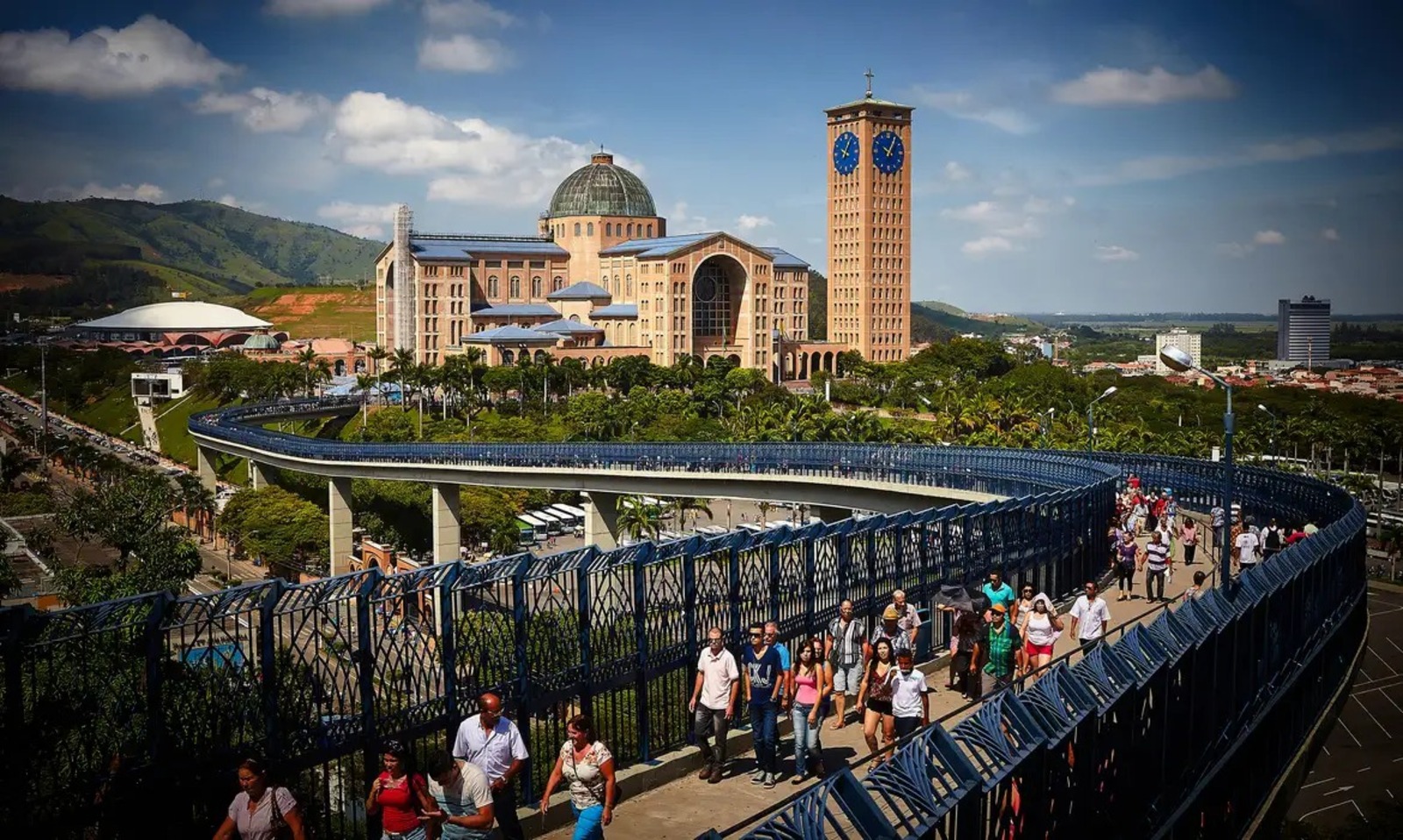


The RioSP Concessionaire Presented to ANTT the Project for a 134 km Walkway Exclusive for Pilgrims, Parallel to Dutra, Promising to Transform the Pilgrimage to the National Sanctuary of Aparecida with More Safety and Comfort
The RioSP Concessionaire will build a 134-kilometer walkway exclusively for pilgrims traveling on foot or by bicycle to the National Sanctuary of Aparecida. The path, ranging from 3 to 7 meters wide, will run parallel to the Presidente Dutra highway, without interfering with traffic lanes or shoulders. The goal is to reduce the risk of accidents, as currently, devotees walk alongside vehicles.
Exclusive Walkway for Pilgrims: A Priority and Anticipated Project
The technical project has been submitted to the National Land Transport Agency (ANTT) and has received priority for execution.
The forecast is that construction will begin in 2026, alongside a plan to expand the capacity of the Dutra highway.
-
Two-Bedroom Home Built in a 40-Foot Shipping Container Delivered and Ready for Same-Day Living in São Paulo Countryside

-
China Constructs Artificial Island 32 km Offshore for Yangshan Port, Connected to Shanghai by 32 km Bridge, Unloading 3,000 Containers in 20 Hours
-
China’s $70 Billion River Diversion Project, the World’s Largest, Moves 44.8 Billion Cubic Meters Annually, Crosses Under the Yellow River, and Displaced 330,000 People
-
Indian Driver Spends 14 Years Digging 10-Meter Tunnel Through Mountain to Connect Isolated Village to the World





With the upcoming holiday on October 12, dedicated to Our Lady Aparecida, the pilgrimage has already begun.
The Federal Highway Police (PRF) estimates that 40,000 people will travel the route on foot or by bicycle this year, compared to 37,000 last year.
Rodolfo Borrel, Operations Manager at RioSP, explained that, after obtaining authorization from ANTT, it will be possible to detail the project.
“This is a joint effort to provide more safety for the pilgrims, especially during the celebrations for Our Lady Aparecida. We conduct a major security operation to protect the faithful, but there is always a risk of an out-of-control car causing an accident with the pilgrims,” he stated.
Route and Technical Challenges
The new road will connect Arujá, in Greater São Paulo, to Aparecida, passing through Jacareí, São José dos Campos, Caçapava, Taubaté, Roseira, and Pindamonhangaba.
According to the technical study, there is enough space for continuous construction along most of the route.
In some sections, however, the volume of work will be greater, especially where it will be necessary to elevate the roadway or navigate around highway entrances and exits. “There are technical solutions to overcome these more critical points,” Borrel detailed.
In urban areas, it may be possible to use existing local margins, reducing the impact of the interventions.
The project is still in the initial phase and depends on formal authorization from ANTT to proceed to the next stages, such as developing the functional project and conducting an economic feasibility analysis.
Support Points and Structure of the Walkway
The plan includes transferring the support points currently located on the shoulders to the new exclusive road.
These locations provide rest areas, food, and safety for the pilgrims. If the construction is approved, the investment will be entirely funded by the RioSP concessionaire.
Since this was not foreseen in the original concession contract, it will be necessary to carry out an economic-financial rebalancing of the agreement.
The company argues that the benefits to user safety justify the additional investment.
Safe Pilgrimage 2025
While the definitive project progresses, RioSP is developing this year the program Safe Pilgrimage 2025, with actions aimed at protecting and guiding the pilgrims.
Between October 6 and 12, 23 support tents were installed at strategic points along the highway—from Arujá to Aparecida in the São Paulo stretch, and from Resende to Aparecida in the Fluminense stretch.
These tents operate 24 hours a day and provide safety instructions, kits with vests and reflective tapes, potable water, restrooms, and charging stations for cell phones.
Additionally, the concessionaire promotes educational actions at service stations and toll plazas, distributes leaflets at churches and parishes, and issues alerts on the electronic panels of the Dutra highway.
Patroness Festival and Tourism Impact
The Route of Light, recognized by the National Sanctuary as a more peaceful alternative integrated with nature, also receives support structure and distribution of safety kits.
According to a survey by the Tourism Economy Intelligence Center (CIET), linked to the Secretary of Tourism and Travel of the State of São Paulo, the Patroness Festival is expected to attract around 450,000 visitors this year.
The highest concentration of pilgrims occurs on weekends, when the city can receive up to 150,000 people.
According to the city hall, most visitors stay for three to four days, boosting the local commerce and hotel network.
With the new project, the expectation is that future pilgrimages will be safer, more comfortable, and well-structured—a significant change in the traditional faith journey to Aparecida.
With information from Jovem Pan.