Portuguese
  Spanish


Vietnam Moved From Post-War Scarcity to Export Millions of Tons of Rice and Become One of the World’s Largest Producers.
In the mid-1970s, after years of protracted war, Vietnam faced a severe food crisis. Destroyed rural infrastructure, abandoned farmland, and extremely low productivity placed the country among the net rice importers. The situation began to change in the late 1980s when the government launched structural economic reforms known as Đổi Mới, officially initiated in 1986.
The transformation that followed was one of the fastest and most significant ever recorded in modern agriculture. In just a few decades, Vietnam stopped relying on imports to become one of the three largest rice exporters on the planet, alongside Thailand and India. Currently, the country produces more than 40 million tons of rice per year, according to FAO data, and regularly exports volumes exceeding 6 million tons annually.
The change was not just quantitative. It altered the productive, technological, and economic structure of the country.
-
Quail Eggs Reveal a “Secret Code” on Their Shells Explaining Unique Patterns and Colors

-
Rare Tropical Fruit Canistel, with Egg Yolk Color and Caramel Flavor, Gains Interest from Researchers and Small Producers in Brazil
-
Brazilian Farmers Develop Wheeled Metal Lever to Ease Cassava Harvesting Without Heavy Machinery
-
Study of Brazil’s Tietê River Finds 25 Pesticides in Water, Including Cancer-Linked Substance Near Source


The Breaking Point: Structural Reforms and the End of Tight Control
Until the 1980s, the Vietnamese agricultural model was heavily centralized. Production was organized in state cooperatives, with targets set by the government and little autonomy for farmers.
The result was low efficiency and recurring scarcity. With Đổi Mới, the government began a gradual transition to a socialist market economy. Farmers began to receive long-term land use rights, allowing them to decide what to plant and sell surpluses in the market.
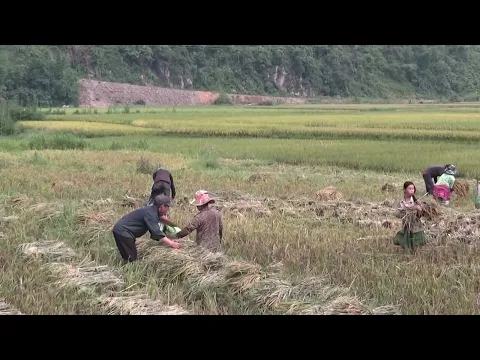

This decentralization drastically increased the incentive for productivity. Rice production grew rapidly. By the early 1990s, Vietnam had already achieved food self-sufficiency. A few years later, it became a net exporter.
Technological Expansion and Modernization of the Mekong Delta
The heart of agricultural transformation is in the Mekong Delta, a fertile region in the south of the country responsible for a large part of the national rice production.
Investments in irrigation, flood control, and drainage allowed for multiple harvests per year. Hydraulic systems were modernized to manage flooding cycles and salinization.
The introduction of high-yield rice varieties also boosted production. More efficient management techniques and rational use of fertilizers contributed to increased productivity per hectare.
Mechanization gradually advanced, reducing operational costs.
The combination of institutional reform, agricultural technology, and water infrastructure created a solid foundation for export expansion.
Production Scale and Economic Impact of Rice
Today, Vietnam harvests more than 40 million tons of rice annually. Of this total, more than 6 million tons are destined for the external market, depending on the agricultural cycle and global demand.
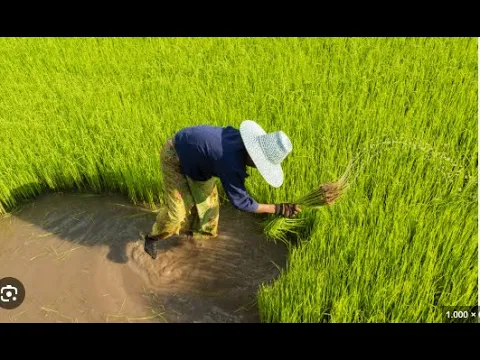
The country consistently ranks among the three largest global exporters.
The export of rice has become a relevant component of Vietnam’s trade balance, contributing to foreign exchange generation and economic stability.
Millions of small farmers have become part of export production chains, increasing rural income. Agriculture has shifted from a subsistence sector to a strategic axis of national development.
Contemporary Challenges and Sustainability
Despite the success, the model faces new challenges.
Climate change directly impacts the Mekong Delta. Rising sea levels and saline intrusion threaten productive areas.
The Vietnamese government has implemented policies for agricultural diversification, reducing the excessive use of fertilizers, and transitioning to more sustainable practices.
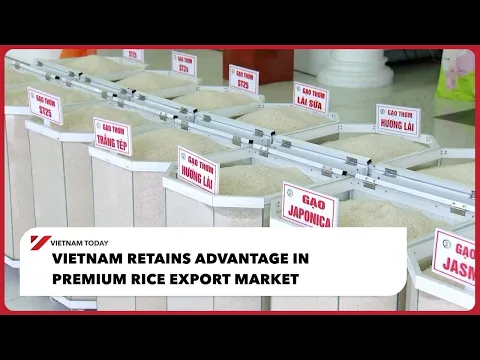
There is also an effort to increase added value by exporting premium quality rice and processed products rather than relying solely on volume. Another challenge is the accelerated urbanization that pressures agricultural areas.
From Scarcity to Global Food Security
The Vietnamese trajectory is often cited by international organizations as an example of successful agricultural reform.
In less than four decades, the country went from a scenario of food insecurity to an exporting power capable of influencing global markets.
The change did not happen by chance. It was the result of institutional restructuring, encouragement of agricultural initiative, investment in infrastructure, and technological adaptation.
From territory devastated by war and dependent on food aid, Vietnam became a rice supplier to dozens of countries. The agricultural transformation redefined its economic position and consolidated internal food security.
The case demonstrates how structural reforms, when combined with agricultural planning and access to the international market, can profoundly alter the productive destiny of a nation.
Vietnam not only increased its production. It reconfigured its relationship with the land, with the global market, and with its own economic history.