Portuguese
  Spanish


Without government help, without engineers and with very few tools, thirteen residents of the village of Guoliang decided in 1972 to carve a corridor into the living rock of the Taihang Mountains in China. It took five years. Some died during the work. On May 1, 1977, the tunnel opened to cars for the first time in the village’s history.
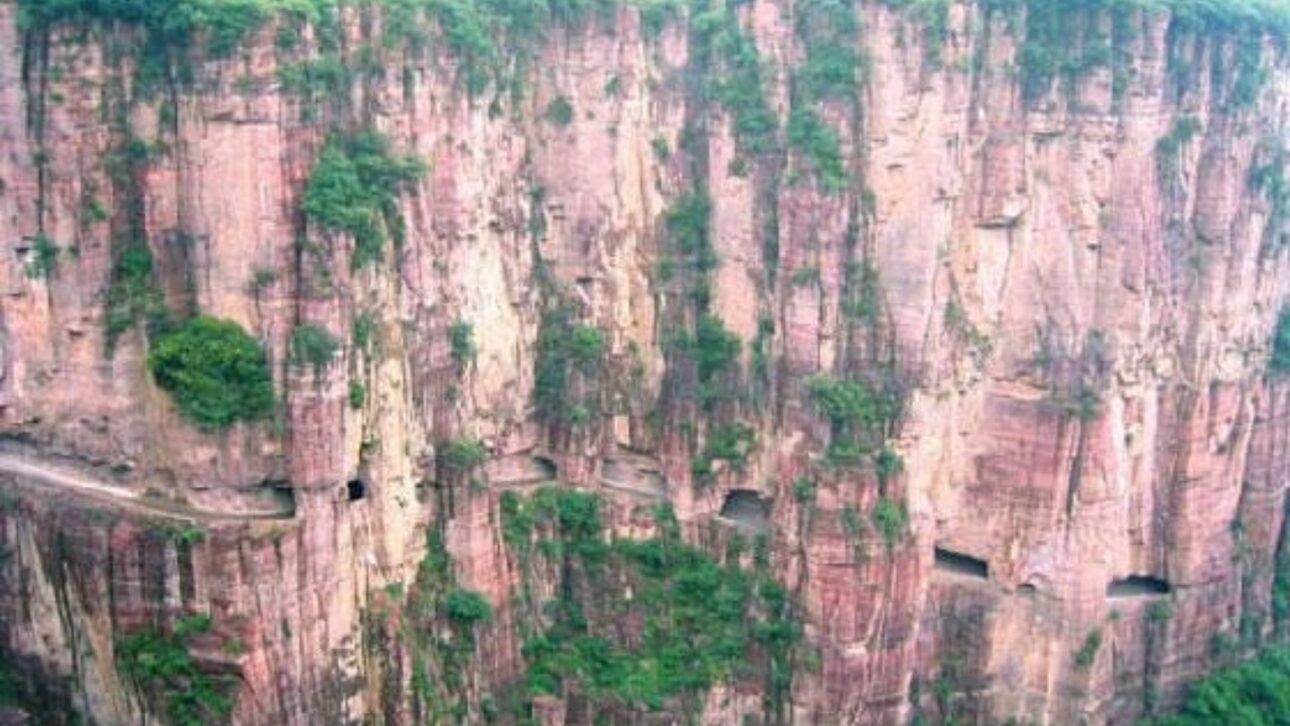
The village of Guoliang was located on top of a cliff in the Taihang Mountains, in the northwest of Henan province, China. For centuries, the only way to get there was to climb a dangerous passage carved into the rock, called the Sky Ladder. Supplies entered with difficulty. Communication with the outside world was practically nonexistent. In 1972, the village chief, Shen Mingxin, gathered thirteen residents and proposed something that bordered on the impossible: to dig an entire tunnel into the cliffside using hammers, steel tools, and possibly some explosives bought with money from selling the community’s goats and herbs, as recorded in the account preserved in the Internet Archive (Wayback Machine).
Five years later, on May 1, 1977, the Guoliang Tunnel opened to traffic. At 1,200 meters long, about 5 meters high, and 4 meters wide, the passage connected an entire community to the modern world for the first time. The human cost was high: some of the workers died in accidents during construction. Those who survived finished the work. The tunnel has more than thirty windows open to the abyss, initially carved to throw debris off the cliff. Today, those who look through them see the valley floor hundreds of meters below.
A village isolated for centuries at the top of the world
Guoliang was not just remote. It was structurally separated from the rest.
-
Unable to secure a mortgage as a self-employed single mother, she designed her own floating home from a 20-meter boat and now lives “off-grid” with her two children and solar panels on an English canal.

-
Man Transforms Rusty Shipping Container into Luxury Home with Insulated Walls, Large Windows, and Drywall Finish, Surprising Onlookers

-
“Super Grass” Miscanthus Grows Rapidly Without Pesticides, Replacing Heating Oil in Europe and Now Used in Carbon-Capturing Concrete and Walls in World’s First “Bale House”
-
Abandoned House Renovation Fixes Decades-Long Leak in Two Days with Red Steel Roof Installation




The village was over 1,200 meters above sea level, on top of a cliff surrounded by mountains in the Taihang, in northern China.
The only entrance had existed for generations: a steep trail carved into the rock, the Stairway to Heaven, used by residents who needed to descend to the valley to fetch anything that the community did not produce there. Carrying sacks of grain, tools, or construction materials along this path was an exercise of strength and balance that few could do more than once a day.
The history of the village dates back to the Western Han Dynasty, between 206 BC and 24 AD, when a peasant leader named Guo Liang is said to have settled there.
For more than two thousand years, isolation was the permanent condition for those born in Guoliang. There was no telephone. There was probably no electricity.
The village was, in practice, an island on top of stone, with about 300 inhabitants living in a subsistence economy almost completely disconnected from the rest of the country, according to reports collected by researcher Rick Archer and preserved by the Internet Archive.
The decision by China that changed everything
In 1972, Shen Mingxin made a decision that the residents called a life-or-death gamble.
He convinced the community that the only real way out of isolation was a project that no government had proposed and that they themselves would have to execute: open a horizontal tunnel in the cliff wall, creating a road that cars could travel.
No engineering project. No construction company. No public funding. The financing came from selling the goats and medicinal herbs that the families raised and harvested.
Thirteen men began the work. The rock of the Taihang Mountains is a hard red shale, and drilling it with manual tools required strength, endurance, and patience that only makes sense when the alternative is to remain isolated forever.
The explosives, if used, came from what was left from the sale of the animals.
The process of digging, detonating, and removing debris through the openings in the rock wall took five consecutive years of work.
Some men died during this period in construction accidents. The others continued.
How the tunnel was practically excavated
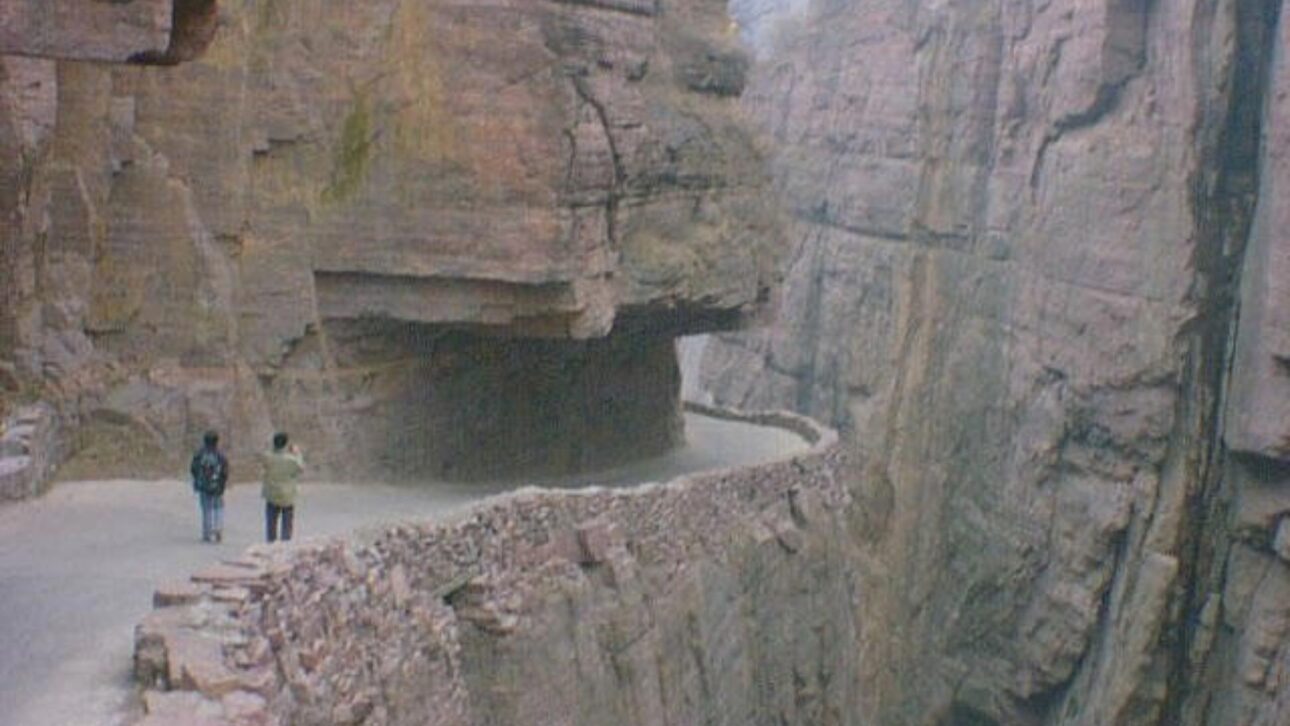
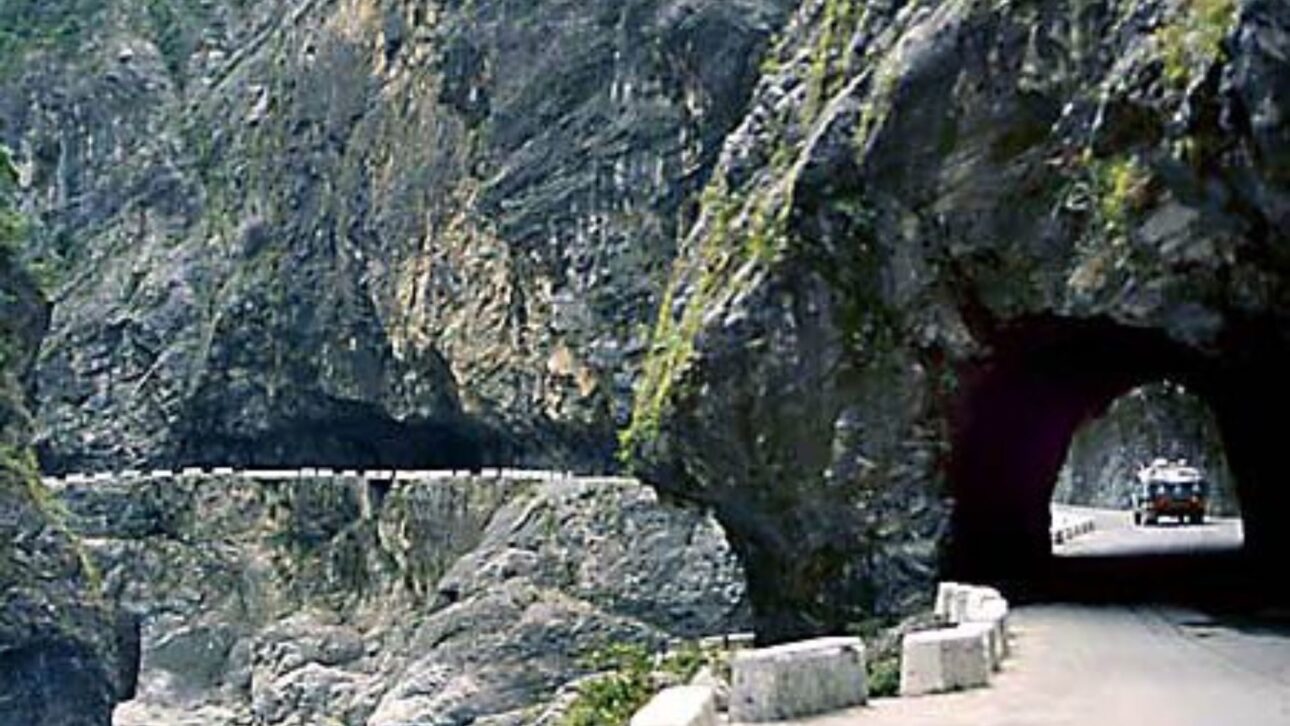
The structure of the Guoliang Tunnel is different from any other road corridor in the world.
Being dug directly into the cliff wall, it is not straight: it has curves, irregularities, and width variations that reflect the easiest path through the rock, not a layout planned by engineers.
The inner walls are rough, full of tool marks and controlled explosions. Natural lighting comes from the more than thirty windows open to the outside, which alternately let in light and wind and reveal the precipice outside.
These windows were not planned as an aesthetic element. They were the most efficient way to throw debris out during construction, making room to continue digging without having to transport tons of rock through the tunnel back to the entrance.
The accidental result is a passage that is sometimes in total darkness, sometimes receives oblique sun rays that cross the opening and illuminate the rock floor, in a visual effect that no architect designed.
Visitors describe the experience of walking through the Guoliang Tunnel as crossing a living labyrinth, where the sound of a distant engine can appear without warning.
Opened in 1977, the slogan emerged along
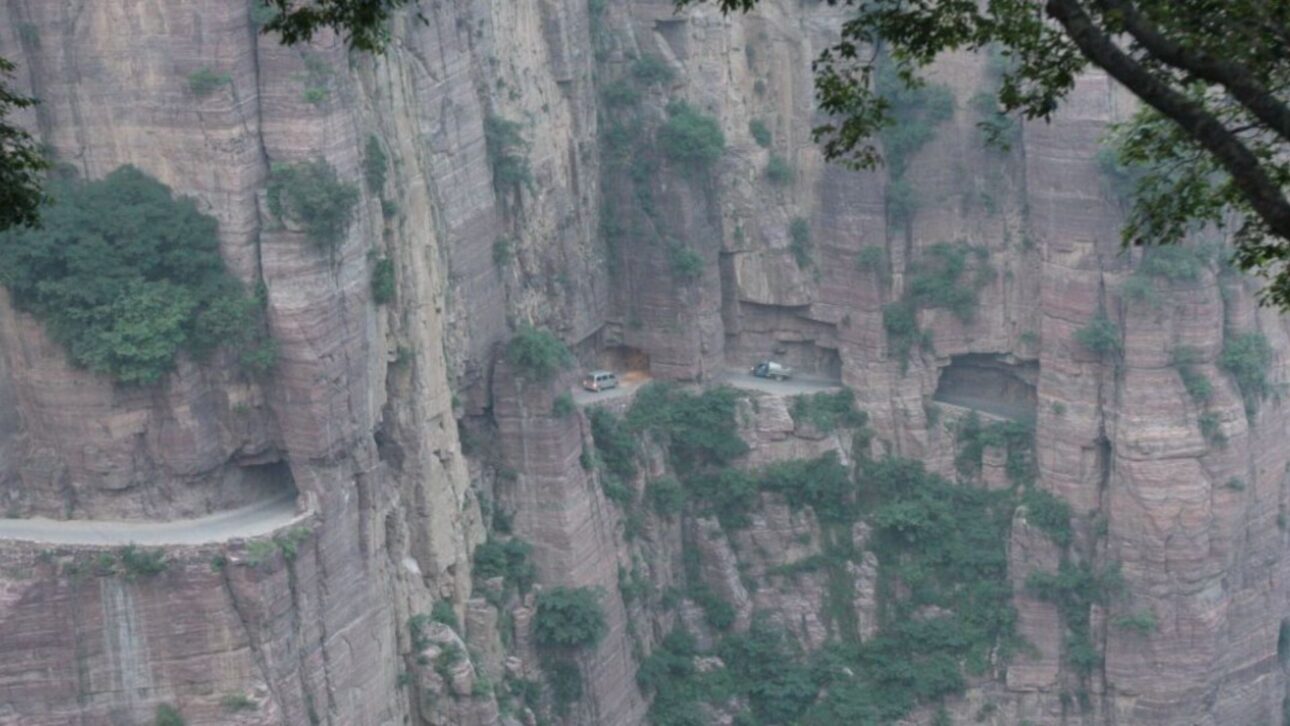
On May 1, 1977, the tunnel was officially opened to traffic. It was the first time a motorized vehicle climbed up to Guoliang.
For the residents who had spent decades carrying everything on their backs up the Sky Ladder, seeing a car enter the village must have been something difficult to assimilate.
The construction had taken five years, at least a few lives, and practically all the animal and plant heritage that the families possessed.
The residents created a slogan for the tunnel right at its opening: “The road that does not tolerate mistakes”.
The phrase describes what any driver notices in the first few meters: the passage is 4 meters wide, making the crossing between two vehicles extremely difficult, and the windows open to the abyss have no protective railing.
A steering error on a tight curve inside the tunnel can have irreversible consequences.
The road that the villagers built to connect the village to the world is, at the same time, one of the most dangerous entrances to any inhabited community in China.
From isolation to tourism: the unexpected impact in China
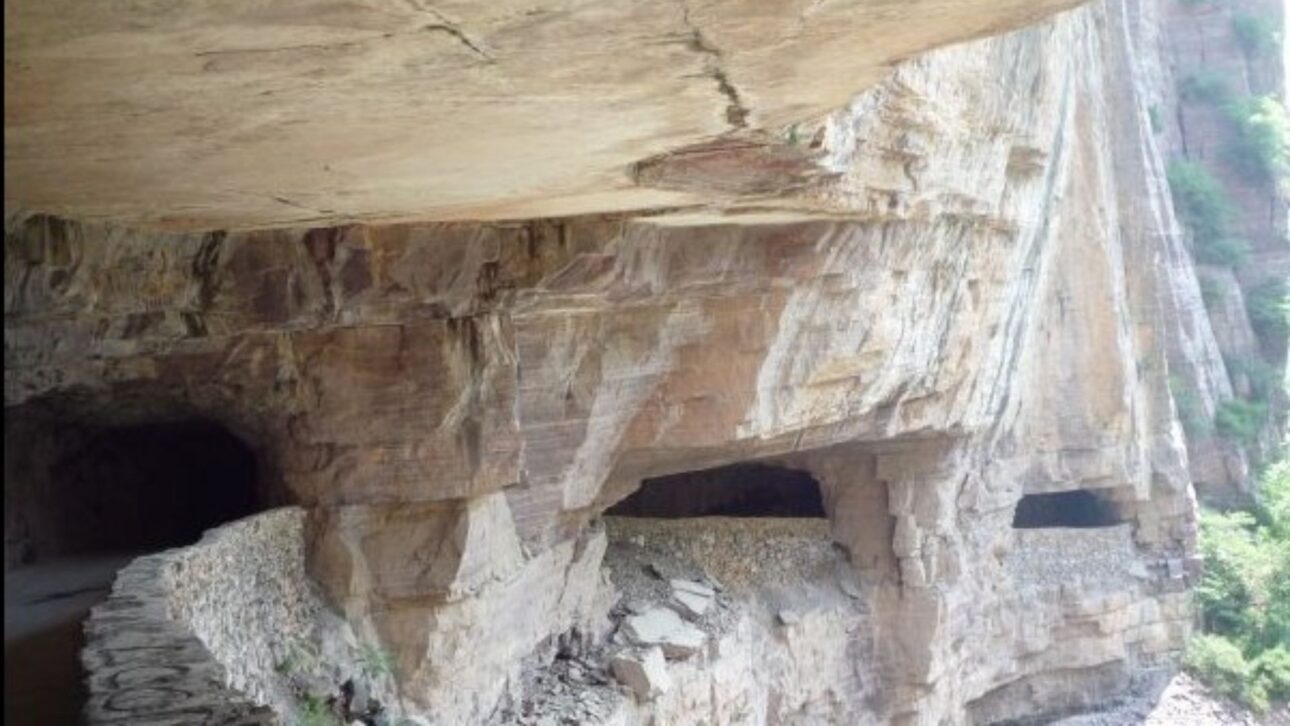
Around the year 2000, when China began opening the interior of the country to domestic and international tourism, government officials visited the Guoliang region and concluded that the unusual tunnel and the surrounding landscape formed a unique attraction.
The village that had been ignored for decades began to receive visitors from various parts of the world. Hotels were built in the area as early as 2009. Modern walkways and bridges were installed to facilitate circulation in the region.
The area also became a destination for artists. Groups of painters and photographers began regularly climbing to Guoliang to work with the landscape of red cliffs, deep valleys, and stone architecture that characterizes the village.
The community of 83 families and 329 inhabitants, according to traveler records cited by the Internet Archive, maintains an entirely stone-built structure: gates, roads, bridges, houses, tables, and utensils.
The same rock that the thirteen villagers drilled to escape isolation became the central element of the identity that attracts visitors to Guoliang.
What remains of the thirteen who started it all
The history of the builders of the Guoliang Tunnel has few detailed records available in Western sources.
What is known comes from traveler accounts, tourist blogs, and information from local guides compiled over the years.
Shen Mingxin is the most documented name: the village chief at the time, he was the one who orchestrated the project and convinced the residents that the gamble was worth the risk.
The names of the other twelve men who worked with him are less known, as are the exact circumstances of the accidents that killed some of them during construction.
This documentation gap is itself a reflection of Guoliang’s isolation.
A work carried out by villagers without formal education, far from any urban center, without journalistic coverage, and during a period when China was closed to the world, did not generate systematic records.
What remains is the structure itself: 1,200 meters of stone hand-drilled, with curves, windows open to the void, and tool marks on the walls.
The proof of what was done is not in any archive, it is in the cliff itself.
Thirteen people without technical training dug for five years a tunnel over a kilometer long in solid rock to connect their own village to the world. Is this one of the most impressive stories of popular engineering in recent history, or are there others that deserve the same attention? Would you dare to drive through the Guoliang Tunnel? Leave your opinion in the comments.