






 Portuguese
  Spanish


Samsung Launches New Galaxy Watch 8 Line in Brazil, Bringing Innovative Design and Advanced Health Features, as Well as Versions with 4G Connectivity, Color Options and Features that Raise the Standard of Smartwatches in 2025.
Samsung has officially launched the new Galaxy Watch 8 line in Brazil, betting on advanced health monitoring features and an innovative design that aims to redefine the consumer’s relationship with wearable technology.
Available in traditional and Classic versions, the new smartwatches promise not only to keep up with your routine but to act as allies in promoting well-being, prevention, and medical follow-up.
The highlight of the Galaxy Watch 8 line is the new case shape, adopting the so-called “squircle,” a square with rounded corners, inspired by the Galaxy Watch Ultra.
-
China Develops Custom 140-Ton Electric Mining Truck with 770 kWh Swappable Battery, Deploys 290 Units in Xinjiang’s Largest Zinc Mine

-
Meta to Launch Arena, a New Prediction App Targeting 3.56 Billion Users, Competing with Polymarket and Kalshi

-
Scientist Challenges Famous Human Evolution Theory, Argues Homo Sapiens Evolved Gradually Over Thousands of Years
-
15-Year-Old American Builds Ocean Generator with PVC Pipe and 3D-Printed Propeller for $12, Wins National Prize, Presents at White House, and Makes Forbes 30 Under 30 List




This choice, according to Samsung, aims to unify the look of its main models and bring a more modern aesthetic to the portfolio.
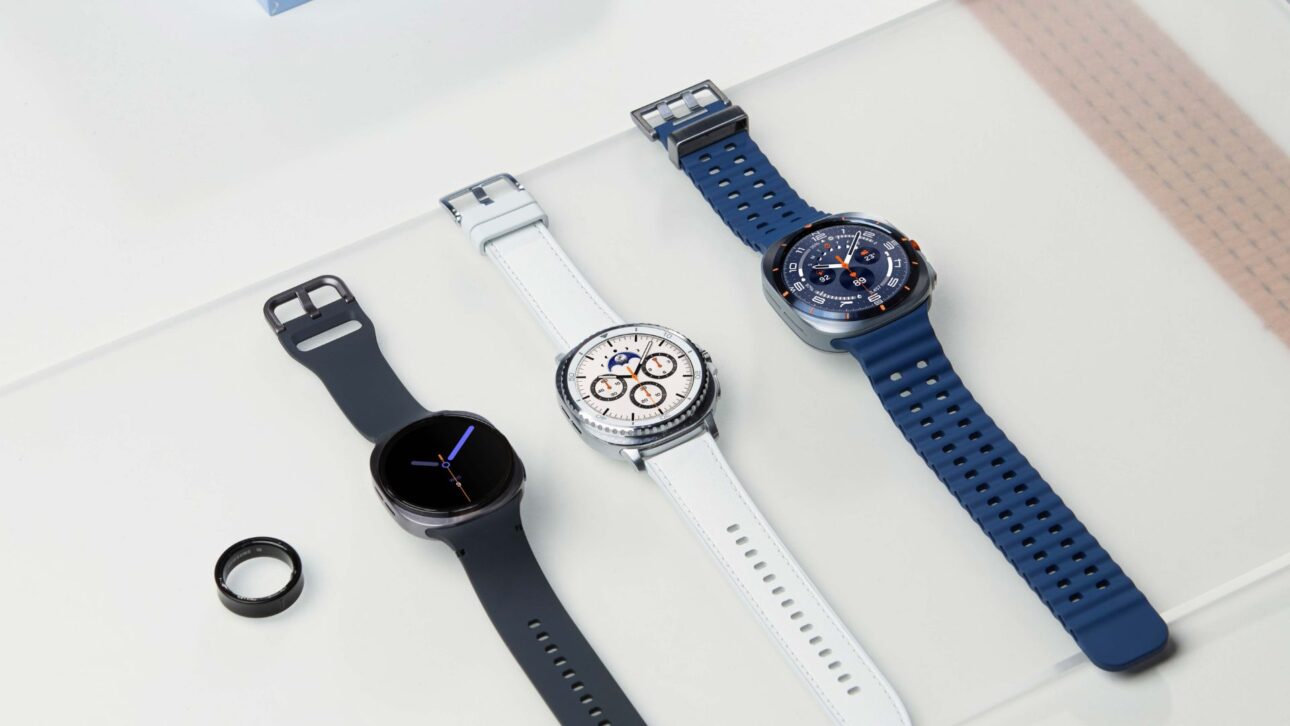
The Watch 8 offers options of 40 mm and 44 mm, in silver and gray, accompanied by silicone bands.
The Galaxy Watch 8 Classic enters the market with a 46 mm case, fabric bands, and in black or white, including the traditional rotating bezel, a distinctive feature of the model.
Enhanced Display and Durability
The Super AMOLED displays, present across the line, have been improved and now deliver brightness of up to 3,000 nits, ensuring excellent visibility under intense sunlight.
In addition, the sapphire crystal protection, more resistant to scratches and impacts, remains standard.
The displays vary according to the model: 1.34 inches for the 40 mm and 46 mm versions, and 1.47 inches for the 44 mm version, always with high resolution — 438 x 438 pixels or 480 x 480 pixels — providing clarity in all usage circumstances.
Performance and Memory
In terms of performance, both models are equipped with the Samsung Exynos W1000 processor, the same as the previous generation, offering 2 GB of RAM and storage options of 32 GB (Galaxy Watch 8) or 64 GB (Galaxy Watch 8 Classic).
In the case of the Galaxy Watch Ultra, the new feature is the increased internal memory to 64 GB, along with a third color option: navy blue.
The batteries have seen a slight increase in capacity, with 325 mAh for the 40 mm Watch 8, 435 mAh for the 44 mm version, and 445 mAh for the Classic, which, according to the manufacturer, extends the battery life for different user profiles.
Advanced Health Monitoring
The major differentiator of the Galaxy Watch 8 family, however, lies in the advancements in health monitoring.
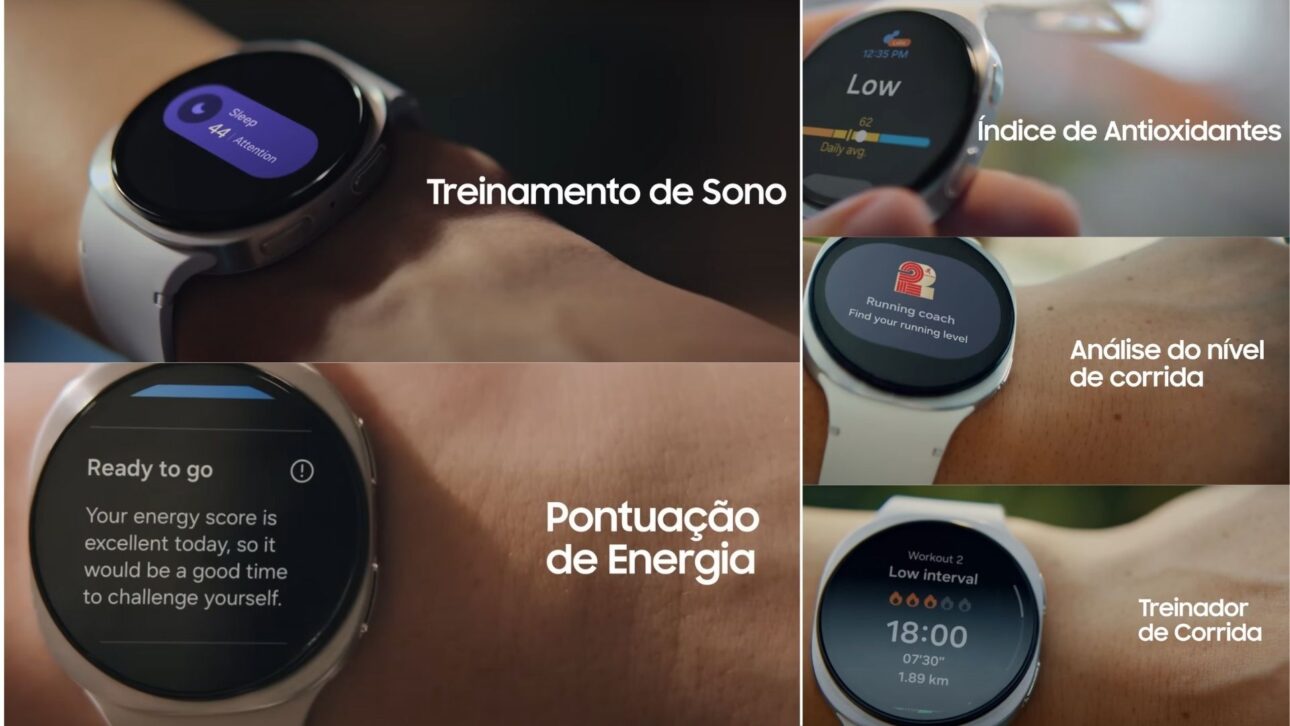
The BioActive sensor, present throughout the line, offers continuous recording of heartbeats, electrocardiogram (ECG) reading, blood oxygen level (SpO2) measurement, body temperature, stress level analysis, energy score calculation, and body composition assessment.
For the 2025 edition, the sensor has received improvements, now monitoring vascular load, providing more detailed reports on heart health, and identifying antioxidant levels, an important element for those seeking healthy eating habits and better aging.
Software Functions and User Experience
Among the software updates, the operating system Wear OS 6, with the One UI 8 Watch interface, adds features such as guidance for the ideal bedtime and running coach, which progressively adjusts the user’s pace, contributing to improved sports performance and proper recovery.
These tools will also be available on earlier models from the brand.
Samsung’s proposal is thus to deliver a continuous digital health experience, facilitating the adoption of preventive practices.
Connectivity, Sensors, and Certifications
The connectivity features include versions with Bluetooth 5.3, Dual Band Wi-Fi (2.4 and 5 GHz), optional 4G LTE, in addition to the main global positioning systems: dual-band GPS, Glonass, BeiDou, and Galileo (L1+L5).
The watches also have light sensors, accelerometer, barometer, gyroscope, and geomagnetic sensors.
In terms of durability, the models meet military durability standards (MIL-STD-810H), have IP68 certification, which ensures protection against dust and water, and are resistant to submersion up to 50 meters (5ATM).


Price, Versions, and Smart Exchange Program
The Galaxy Watch 8 line is available on Samsung Brazil’s official website, with the following suggested prices:
- R$ 2,999 (Bluetooth, 40 mm)
- R$ 3,199 (Bluetooth, 44 mm)
- R$ 3,299 (4G LTE, 40 mm)
- R$ 3,499 (4G LTE, 44 mm)
- R$ 4,499 for the Galaxy Watch 8 Classic with 4G LTE
Meanwhile, the Galaxy Watch Ultra, in the new dark blue color, hits the market at R$ 4,999.
All models are part of the Smart Exchange program, which offers a minimum discount of R$ 1,000 for the Galaxy Watch 8 and R$ 1,500 for the Classic, making it easier for those wishing to trade in their old models to access new technologies.
Integration, Battery Life, and Technology
For those seeking a smartwatch with advanced health features, extended battery life, and updated design, the new Galaxy Watch 8 line positions itself as a robust option, aligning clinical, sports, and connectivity features.
The launch reinforces Samsung’s commitment to an increasingly attentive market regarding the integration of well-being and technology, promoting a complete and personalized experience for Brazilian users.
In light of so many innovations, is the public ready to trust important aspects of health to a smartwatch, leaving traditional monitoring methods behind?





