Portuguese
  Spanish


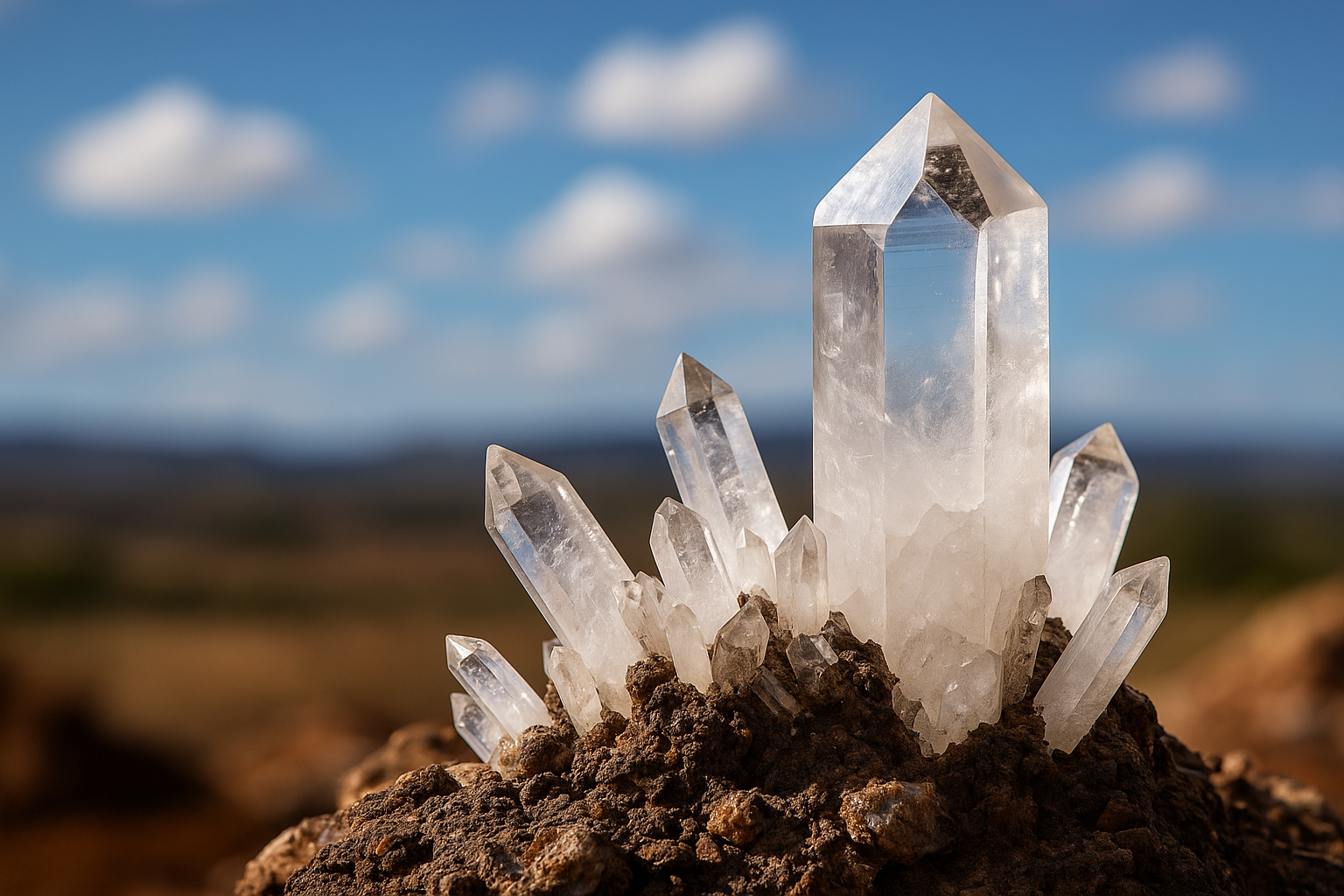


The City of Cristalina Stands Out Internationally for Its Gemstones, Mining Tourism, and Impressive Geological Diversity
Brazil occupies a prominent position on the world stage when it comes to gemstones. In addition to abundance, the variety found in Brazilian territory is impressive. Minas Gerais is a notable example, being responsible for a large part of the global gem production. However, there is another location that attracts attention: the city of Cristalina, located about 130 kilometers from Brasília.
The Largest Reserve of Quartz Crystals
Cristalina has gained international recognition for housing the world’s largest reserve of quartz crystals. As a result, it has become an energy and tourist hub, welcoming visitors and enthusiasts from various parts of the world.
The city not only showcases the natural beauty of the stones but also provides unique experiences for those who wish to learn more about this universe up close.
-
Brazil’s Central Bank’s Tight Monetary Policy Risks Stifling Both Production and Demand Amid High Inflation and Fiscal Imbalance

-
Over a Century After the Sinking, US Takes Legal Action to Stop Auction of Over 100 Titanic Artifacts

-
Chinese Rail Port in Inner Mongolia Surpasses 25,000 China-Europe Trains, Connecting 75 Routes Across Over 10 Countries, Showcasing Central Corridor as a Strong Land Alternative to Long Sea Routes
-
Brazilian State Government Establishes New Fire Brigade Battalion with $74 Million Investment



Most Sought-After Gemstones
Among the most sought-after stones in Cristalina are sapphires, blue topazes, amethysts, and tourmalines. These crystals attract attention not only for their appearance but also for their energetic and decorative properties, being highly valued in various segments.
One of the major tourist attractions in the city is the possibility of visiting legalized mines. In these areas, visitors can dig the soil and collect their own gemstones, experiencing the thrill of mining their own gems.
This practice makes the tour even more interactive, sparking the interest of gemology and nature enthusiasts.
The Origins of Exploration in Cristalina
The history of Cristalina has ancient roots, linked to the Bandeirantes. At that time, explorers were searching for gold and emeralds in the region.
The scenario began to change in 1974 when the first reserve of crystals was discovered, featuring gigantic quartz specimens, some reaching up to 10 meters in length.
Today, the city has four regulated mining extraction points open to the public.
Formation of Crystals Over Millions of Years
The crystals found in Cristalina did not form quickly. Their formation began approximately 300 million years ago, in warm and humid underground environments.
The growth of these crystals occurs slowly, taking millions of years to reach their current size. This makes each specimen a true work of nature.
In addition to mining, Cristalina also offers various tourist attractions. Visitors can hike in protected natural areas, visit waterfalls, and explore impressive geological formations, such as Pedra do Chapéu.
Another highlight is the Igreja São Sebastião dos Cristais, built in 1948, which adds historical and cultural value to the municipality.
The economy of Cristalina heavily depends on gemstones. The commercialization of crystals generates jobs and attracts investments, in addition to boosting tourism. Culturally, the gems play an important role, inspiring artists and artisans.
The balance between natural resource exploitation and environmental conservation is evident, demonstrating that economic development and sustainability can go hand in hand.
With information from Terra Brasil Notícias.