Portuguese
  Spanish


Based on the described financial mechanism, the national economy would be subject to two equally pernicious aspects: the first being stagflation, which is when unemployment rises along with inflation. Another acceptable interpretation of this topic would be that it corresponds to the “sum of the economic activity strangulation caused by high interest rates with the inflation generated by fiscal disorder.”
The second, fiscal dominance, would be characterized by the deepening of the federal public debt, to the point of nullifying any effect of maintaining the Selic at a high level (currently, the highest real rate on the planet) to curb price increases.
Financial merry-go-round may compromise productive investments
On the contrary, the inflationary dragon gains more ‘muscle’ due to the increased cost of rolling over the debt and the respective premium demanded by the market for this to occur, which further fuels inflation. As long as this ruinous financial merry-go-round prevails, productive investments, such as factory expansions or hiring labor, should decrease, as well as the level of consumption.
-
Over a Century After the Sinking, US Takes Legal Action to Stop Auction of Over 100 Titanic Artifacts

-
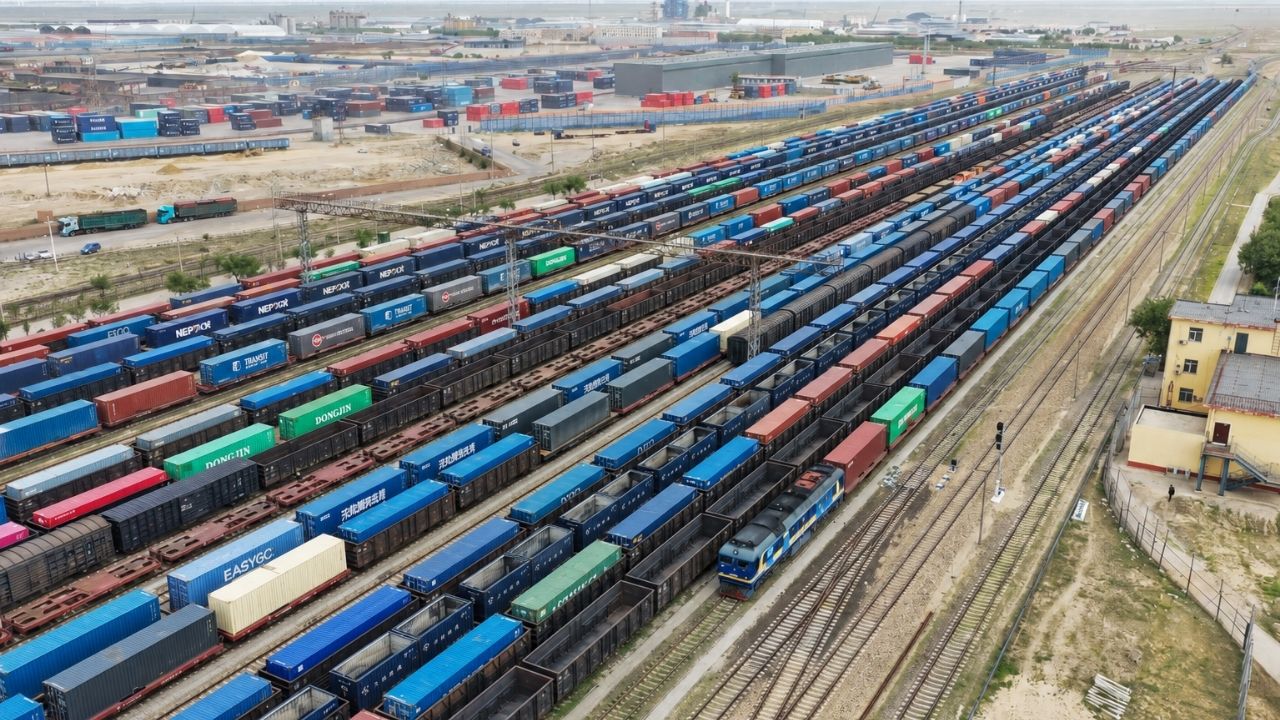
Chinese Rail Port in Inner Mongolia Surpasses 25,000 China-Europe Trains, Connecting 75 Routes Across Over 10 Countries, Showcasing Central Corridor as a Strong Land Alternative to Long Sea Routes

-
Brazilian State Government Establishes New Fire Brigade Battalion with $74 Million Investment
-
Brazil Imports 85% of Its Fertilizers, Races to Reduce Reliance on Russia and China



But it is not only the intentionally wasteful management that is the central problem of the pre-fiscal bomb stage, but the unwavering political decision to spend as much as possible, with a view to paving the way for re-election.
Insper: wasteful management contains ‘package of benefits’
This obsession with power is evident in the conclusions of the survey produced by the economist and associate researcher at Insper (Institute of Education and Research), Marcos Mendes, when coining the expression ‘package of benefits’, as a counterpoint to the idea of the fiscal framework, which replaced the ‘spending cap’ as a premise of fiscal responsibility.
According to Mendes, currently 94.3% of the expenditures contained in recent measures (which imply expenses) are outside the expenditure limit of the fiscal framework, a flaw that allows the government to meet the formal target (of primary surplus) by ‘masking’ the Budget, while injecting billions of reais into the economy.
How the Executive ‘circumvents’ the framework:
A volume of R$ 187.2 billion, including direct benefits, incentives, and subsidies, amounts to a global volume of R$ 187.2 billion. Of this amount, R$ 176.7 billion (94.3%) are literally outside the rules that limit the increase in spending, of which R$ 119 billion are excluded even from the calculation of the primary surplus target.
More sophisticated are the mechanisms used by the Planalto to ‘bypass’ fiscal rules, through fiscal and accounting loopholes, better known as ‘parafiscal’ expenses:
Loans via state banks (financial expenses): The National Treasury transfers funds so that banks like BNDES can provide subsidized credit lines. This is the case with the Move Brasil/Move Applications program (R$ 30 billion for financing sustainable vehicles). Since accounting treats this as a “financial operation” (money that theoretically will return to the treasury), the expense is not recorded as a primary budget expense.
Guarantees by public funds: Programs like Desenrola 2.0 and subsidies to Minha Casa, Minha Vida use funds with idle money. Previously, these balances were routinely used to amortize public debt; now they are directed towards consumption incentives.
Extraordinary credits and waivers: Tax exemption measures (such as expanding the income tax exemption bracket for those earning up to R$ 5,000) erode future revenue. Since they do not increase nominal expense at the end, they do not affect the ceiling limits, although they worsen indebtedness and reduce the state’s net revenue.
Despite being strongly criticized by the Federal Court of Accounts (TCU), it highlights the effects of the parallel accounting model:
Explosion of gross debt: Brazil’s gross public debt has escalated to a record level of 80.4% of GDP. Financial market analysts indicate that indebtedness is rapidly heading to reach 83% of GDP, rising about six times faster than the growth of the real economy.
In the face of this barrage of actions that affront the principle of fiscal balance, the Central Bank (BC) has no alternative but to “park the Selic rate at restrictive levels (such as the current 14.25% per year), extending projections of high interest rates beyond the electoral horizon to contain the inflationary burst.”
‘Remedies’ for the ‘sanitation’ of public accounts:
Fiscal responsibility: reduction of government spending and cutting of deficit subsystems, reducing demand pressure and creating room for a sustained drop in the basic interest rate.
Management of administered prices: review of public tariff and fuel adjustment policies, less impacting inertial inflation.
Directed credit and compulsory deposits: alteration in the percentages of compulsory deposits and regulation of directed credit lines, restricting excess liquidity without penalizing the entire interest curve.
Increase in competition: promotion of microeconomic reforms and trade opening to avoid supply bottlenecks and reduce the Brazil cost.
In this regard, World Bank consultant, former National Treasury undersecretary, columnist for Estadão, and economist Claudio Adilson Gonçalez advocates the need to reduce dependence on very expensive credit modalities, in order to relieve pressure on the real interest rate (Selic), defined by the Monetary Policy Committee (Copom).
Agenda includes rebuilding credit channels
“The agenda, therefore, is not to replace monetary policy with heterodox shortcuts. It is to rebuild the partially obstructed channels identified in this and the previous column: more prudent credit for families and less reliance on expensive modalities,” wrote Gonçalez.
For the Estadão columnist, in the medium term, the Executive will need to acquire “fiscal discipline, greater legal security, and stability of rules, aiming to make public debt less indexed to the Selic, which, as we have seen, also obstructs part of the transmission channels of monetary policy.” In his assessment, such measures, in addition to greater financial stability, tend to reduce the real interest rate necessary to meet the inflation target.
In the chapter of the so-called ‘structural reforms’, Gonçalez highlights measures to stimulate supply:
Tax reform: simplify tax collection to reduce the Brazil Cost and attract private investments.
Trade opening: facilitate the import of technological inputs to force an increase in internal productivity.
Legal security: ensure stable rules for concessions and public-private partnerships (PPPs) in infrastructure.