






 Portuguese
  Spanish


Scientists gathered at the Brazilian Academy of Sciences revealed that 99.99% of the deep ocean has never been seen by human eyes. Billions of tons of cobalt, nickel, and rare earths await at the bottom while Brazil still debates how to get there.
In May 2026, during the Magna Meeting of the Brazilian Academy of Sciences (ABC), a fact shook the scientific world: at the beginning of this year, less than 30% of the global ocean had been mapped with high-resolution sonar technologies installed on ships. The revelation was made by geophysicist Luigi Jovane, professor at the Oceanographic Institute of USP and member of the United Nations expert group. For the researcher, humanity still navigates, literally, in the dark.
The numbers presented by Jovane at the conference are hard to absorb. 99.99% of the deep ocean remains visually unknown. More than 95% of all deep-water exploration dives happen less than 200 miles from the coast, leaving the vast interior seas completely untouched. The vast interior of the oceans, with its abyssal plains and submerged mountains, remains inaccessible.
“We know more about the surface of the Moon than the ocean floor”
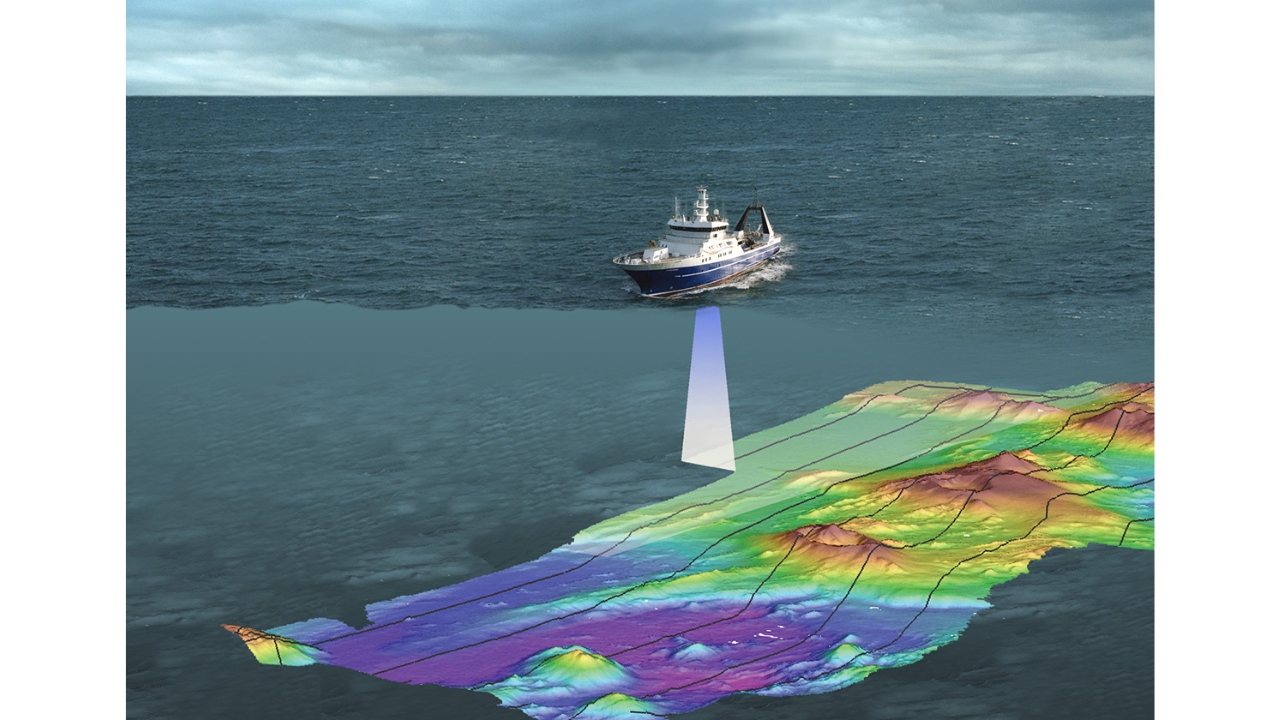
The phrase is from Jovane himself, spoken at the Magna Conference of ABC, and carries an uncomfortable weight. According to the researcher, it is more expensive to develop vehicles to explore the ocean floor than to explore the Universe. The extremely high pressure, extremely low temperature, and total absence of light make each mission to the depths an operation of extreme risk — and the impacts of any intervention on the ocean floor are, in his words, “global, not localized, and cumulative”.
-
Archaeologists Discover 2,300-Year-Old Beer in Sealed Bronze Vessel from Ancient Chinese Tomb

-
35,000-Year-Old Saber-Toothed Tiger Cub Found Intact in Siberian Permafrost, Whiskers, Claws, and Skin Preserved Since the Ice Age
-
Scientists Uncover “Amazon Stonehenge” with 127 Giant Rocks, Shedding Light on Indigenous Solar Observations Before European Arrival

-
Six-Year-Old Uncovers 400-Million-Year-Old Coral Fossil in Backyard, Revealing a Pre-Dinosaur Ocean World




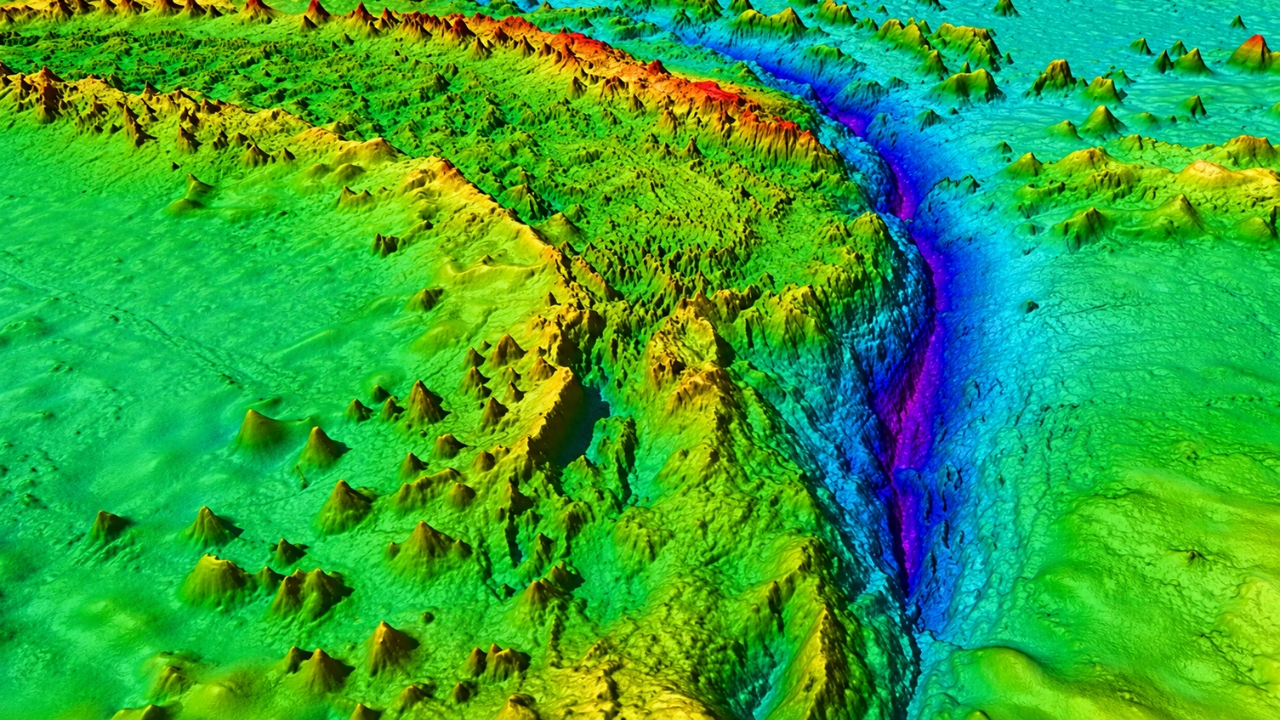
The international project Seabed 2030 — a partnership between the Nippon Foundation and GEBCO, linked to UNESCO — was launched in 2017 with the goal of mapping 100% of the ocean floor by the end of this decade. When the project began, only 6% of the ocean floors had been mapped with modern resolution. Today, after nearly a decade of global effort, this number has reached 26.1% — progress that has already led to the discovery of about 19,000 new underwater mountains that science simply did not know about.
What is hidden at the bottom — and why the world wants to get there first
Polymetallic nodules: strategic minerals at 6,500 meters deep
At the bottom of the abyssal plains, between 3,000 and 6,500 meters deep, there are formations called polymetallic nodules — rocks rich in manganese, cobalt, nickel, copper, and rare earths, the same metals that drive the manufacture of batteries, wind turbines, and electric vehicles. The ABC 2026 Magna Meeting placed these resources at the center of the debate on the blue economy — the sustainable use of ocean resources for economic growth with environmental preservation.
Companies from different countries are already testing robotic equipment to extract these nodules at depths unreachable by any human. The race for these resources is global, silent, and increasingly fierce — and Brazil, with more than 7,400 km of coastline and one of the largest Exclusive Economic Zones on the planet, has a direct strategic interest in this competition.
Brazil, BBNJ, and the governance of the seabed
As discussed on the last day of the ABC 2026 Magna Meeting, the Treaty on Biodiversity Beyond National Jurisdiction (BBNJ), which came into effect in 2026, expanded the participation of developing countries in ocean exploration expeditions and encouraged the transfer of technology. At the same event, it was highlighted that 54% of the international seabed is under the jurisdiction of the International Seabed Authority (ISA) — and that each mapped meter represents strategic territory in dispute among nations.
The energy the ocean can generate — and Brazil has not yet harnessed
Waves, tides, and thermal gradient: sources still almost unexplored
The ocean not only holds minerals — it is also a virtually untouched renewable powerhouse. At the ABC’s own Magna Meeting, engineer Segen Estefen from the National Institute for Oceanography Research (INPO) detailed the possibilities: waves, ocean currents, tidal range, thermal gradient between surface and deep waters, tidal currents, and even salinity gradient can be converted into clean electricity. Estefen also highlighted that Brazil operates the second largest oceanography experimental tank in the world at COPPE/UFRJ, dedicated precisely to testing these technologies.
According to Agência Brasil, INPO received R$ 15 million from Finep to develop four technologies simultaneously: a wave energy converter, an ocean thermal energy conversion (OTEC) system, an offshore green hydrogen production module, and a tidal current turbine — which can also operate in continuous flow rivers, bringing clean energy to isolated communities.
Offshore wind: giant potential, still slow progress
Brazil approved in 2025 the Law 15.097, the legal framework for offshore wind energy, providing legal security to the sector. However, the country is still awaiting the publication of an executive decree with the definitive rules for projects to move forward. No offshore plant operates in Brazil to this day — while the rest of the world is already accelerating this technology at full speed.
The gap between what we know and what exists
The ABC Magna Meeting 2026 left an unequivocal conclusion: the ocean is simultaneously the largest scientific frontier and the largest unexplored energy reserve on the planet. Less than 10% of the species living in the depths have scientific names. The geobiological processes at the seabed are, in Jovane’s words, simply “unknown.”
Brazil is uniquely positioned in this equation — with an extensive coastline, advanced research, and strategic resources in the EEZ. Will it arrive at the right time in this race?


