Portuguese
  Spanish


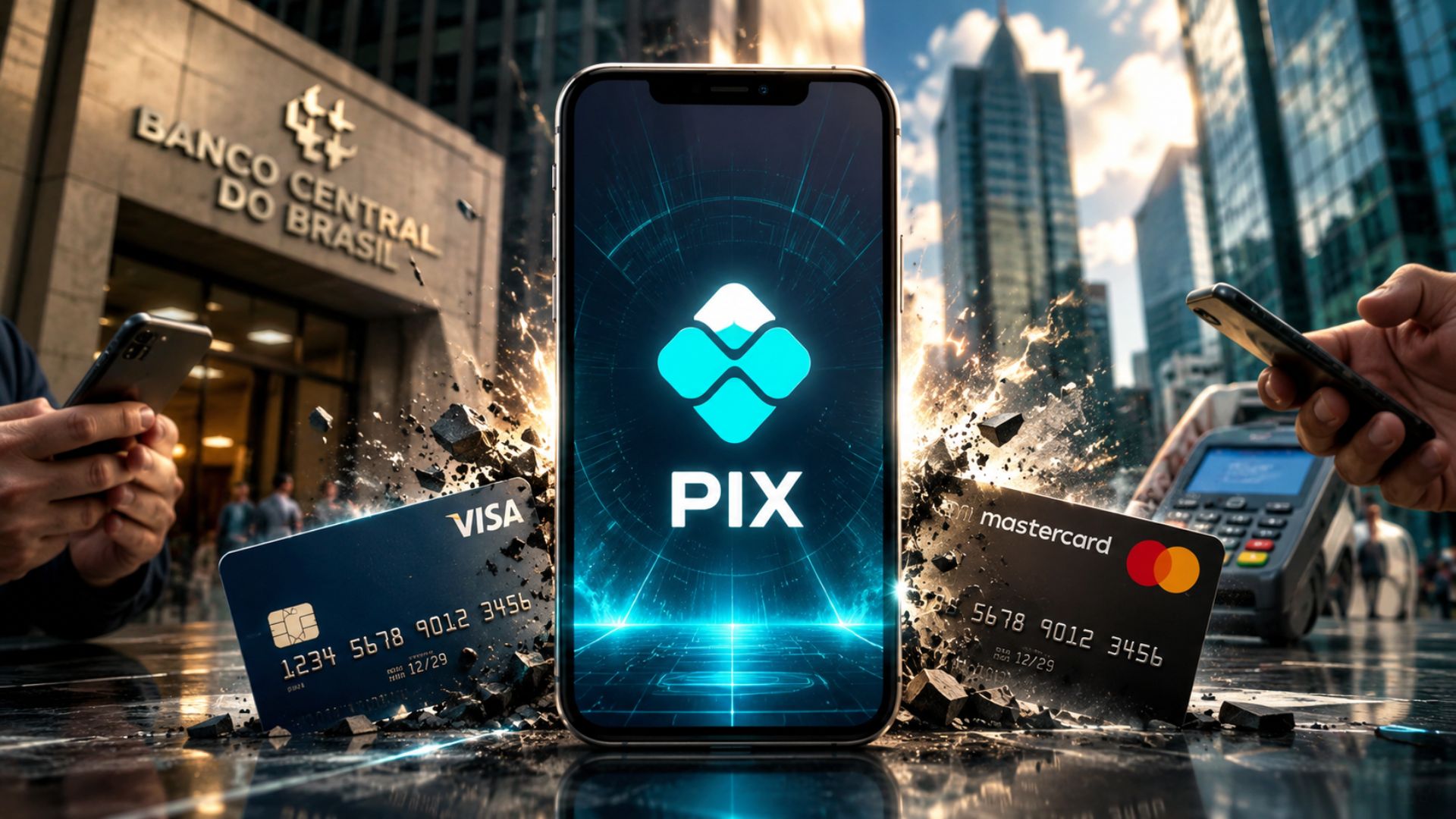

The Brazilian payment system has become a sensitive point in the trade dispute between Brazil and the United States, as the advancement of Pix pressures cards, banks, fintechs, and large global technology companies operating in the digital transactions market.
The proposal by Donald Trump’s government to apply a 25% tariff on part of Brazilian exports has placed Pix at the center of a trade dispute between Brazil and the United States, alongside issues such as digital commerce, intellectual property, ethanol, and illegal deforestation.
According to the Office of the United States Trade Representative, the USTR, Brazilian practices could be discriminatory or harmful to American trade, including the Central Bank’s role in the instant payment system.
With the inclusion of Pix in the investigation, criticisms made by American business entities representing global technology companies, cards, and payment methods have returned to the debate.
-
Brazilian Civil Servant Earns $2,800 Monthly but Seeks Legal Help as Bank Loans Consume Nearly 80% of Income

-
Brazilian Pet Industry Giant with $6 Billion Valuation Targets 24 Million Customers, Launches Franchise Model with Six Revenue Streams and $7.80 Subscription Plan for National Expansion

-
Daughter of a Mechanic, Roberta Pirolla Turns Passion for Cars into a Million-Dollar Vehicle Wrapping Business Set to Grow 75% in a Male-Dominated Industry

-
At 30, Thyago Plácido turned Innova into a solar energy operation serving central Brazil with over 300 projects completed.


This group includes organizations linked to companies like Visa, Mastercard, Apple, Amazon, and Google, all operating in markets directly affected by the expansion of the Brazilian system.
At the center of the American accusation is the idea that the Central Bank would have favored Pix over private payment services, including solutions offered by United States companies.
The USTR also targeted the dual role of the Central Bank, which acts as a regulator of the financial system and, at the same time, operates the Pix infrastructure.
Among specialists and representatives of the Brazilian financial sector, however, the assessment follows another path: the American offensive seems more like a reaction from competitors in the face of a successful technology than proof of unfair trade practices.
Pix enters the trade dispute between Brazil and the United States
Created by the Central Bank and launched at the end of 2020, Pix emerged with the promise of allowing transfers and payments in a few seconds, at any time of the day and on all days of the week.
Since its debut, the system has been adopted by individuals, companies, banks, fintechs, and commercial establishments of different sizes, forming a broad network within the Brazilian financial system.
By reducing costs, speeding up transactions, and simplifying everyday payments, the tool gained scale and helped expand access to financial services for millions of Brazilians.
According to Reuters, the Central Bank associates the advancement of Pix with the entry of more than 70 million people into the financial system since the platform’s launch.
With this growth, the dynamics of a market previously dominated by credit and debit cards, bank slips, and traditional bank transfers also changed.
As consumers and companies began to use Pix for in-person and digital purchases, some operations stopped going through card networks, a sector in which Visa and Mastercard have a significant presence.
The pressure became more evident in e-commerce, where instant payment began to directly compete for Brazilian consumers’ preference.
Data from Ebanx, based on a PCMI study, indicates that Pix accounted for 42% of online purchases in Brazil, surpassing credit cards, which accounted for 41%.
According to the same projections, the system is expected to reach 50% of Brazilian e-commerce by 2028, consolidating a significant change in the digital payments market.
USTR Criticisms Echo American Business Lobby


The USTR’s criticisms of Pix follow a similar line to that presented by American business entities during the consultation phase of the investigation.
In the documents submitted to the process, these organizations pointed out alleged favoritism of the Brazilian system and mentioned a possible conflict of interest in the Central Bank’s actions.
Among the cited statements are contributions from groups representing technology, commerce, and payment companies, areas directly interested in Brazilian rules for digital transactions.
Although the debate also involves artificial intelligence, intellectual property, and digital platform regulation, the presence of Pix drew attention due to its direct impact on private companies in the payment sector.
In Brazil, the Brazilian Federation of Banks, Febraban, countered the American allegations and defended the open nature of the infrastructure created by the Central Bank.
For the entity, Pix should not be treated as a commercial product but as a public payment infrastructure accessible to national and foreign institutions.
“Pix is a payment infrastructure, not a commercial product,” said Febraban in a statement released after the USTR’s statement.
In the same position, the federation stated that the model favors competition and the functioning of the payment system, without discriminating against banks, fintechs, or foreign financial institutions.
The accusation against Pix, in the view of experts, ignores the normal effect of a technological innovation on markets that were already established.
When a faster, cheaper, or more efficient solution gains scale, companies operating under the previous model tend to lose ground and need to adapt.
Credit cards feel the advance of Pix in Brazil
The discomfort of card networks with Pix predates the American commercial offensive and accompanies the accelerated expansion of the system since 2020.
Gradually, instant payment began to replace transactions that depended on cards, invoices, or traditional transfers, especially in lower-value operations and purchases with immediate settlement.
With new functionalities, the concern of the private sector gained strength and began to reach segments historically associated with credit and debit cards.
Aimed at recurring payments, Pix Automático increases competition with charges made by card, automatic debit, and invoices.
Meanwhile, Pix Parcelado, offered by participating financial institutions, brings the system closer to the consumer credit market and competes with traditional consumer financing modalities.
Market reports had already been pointing to this movement before the dispute gained new political weight in the United States.
Fitch Ratings assessed that installment modalities associated with Pix can compete directly with credit cards.
Studies by PCMI, in turn, indicated that recurring payments through the system tend to reduce volumes currently concentrated in debit and credit cards.
Even in the face of this advance, analysts highlight that the credit card still maintains strength in Brazil, especially because of interest-free installments, a practice widely used in higher-value purchases.
Ebanx itself recognizes that cards should preserve a significant user base, although Pix continues to advance at a rapid pace.
Central Bank defends Pix as open infrastructure

For the Central Bank, Pix functions as a neutral infrastructure, built to enhance efficiency, inclusion, and competition within the Brazilian financial system.
Unlike a private company, the BC does not operate Pix as a commercial brand aimed at its own profit or restricted to a specific group of participants.
In practice, traditional banks, credit cooperatives, payment institutions, and fintechs use the system, including companies with foreign capital.
This open architecture supports one of the main defense arguments of the Brazilian model against the accusation of discrimination against American companies.
The United States investigation is based on Section 301 of the American Trade Act, an instrument that allows for the investigation of practices considered unfair or restrictive to US trade.
Opened by the USTR in July 2025, the investigation included electronic payment services among the points evaluated by the American government.
Still without a definitive decision, the proposed 25% tariff depends on formal steps in the United States before any potential application.
According to Reuters, the process includes a public consultation until July 1st and a hearing on July 6th, before a decision on trade measures against Brazil.
Digital payments enter the geopolitical game
The dispute around Pix shows how payment systems have become strategically important in international economic relations.
Topics like control of digital transactions, data, tariffs, and financial infrastructure have ceased to be merely banking issues and have entered the field of trade policy.
In the Brazilian case, the rapid adoption of Pix reduced dependence on cash, accelerated operations, and altered the revenue division among market participants.
With this change, companies that previously held a central position in payments began to face competition from a public network operated by the Central Bank.
The digitization of payments is also advancing in other countries, albeit with different models and greater or lesser direct state participation.
In China, private platforms linked to large technology companies have gained prominence in the intermediation of digital payments.
In Brazil, however, the infrastructure was organized by the regulator and opened to financial system participants, which expanded the scale of Pix in a short time.
The clash with the United States, therefore, is not limited to the proposed tariff on Brazilian products, as it reflects a larger dispute over who controls the digital payments infrastructure.
It also shows how governments can create public systems capable of competing with global private networks, shifting revenues, reorganizing markets, and provoking reactions from already established companies.