






 Portuguese
  Spanish
  6 min of reading
  0 comments


Whirlpool ends washing machine operations in Pilar, transfers production to São Paulo, and reinforces Brazil as a strategic base to serve Latin America
Whirlpool, owner of the brands Brastemp, Consul, and KitchenAid, has decided to concentrate in Brazil the production of washing machines that was previously done in Argentina. The change involves the Rio Claro factory, in the interior of São Paulo, which will receive more than R$ 300 million in investment to expand its industrial capacity.
The move is noteworthy because it occurs shortly after the closure of manufacturing activities at the Pilar unit, in the metropolitan region of Buenos Aires. The Argentine plant had been inaugurated in 2022 to produce washing machines but ceased operations before completing three years.
In practice, Brazil now absorbs an important part of the multinational’s washing machine production chain in Latin America. The strategy is to transform Rio Claro into a more robust manufacturing hub, with automation, robotics, greater use of national parts, and scale gain.
-
With an estimated fortune of up to R$ 1 billion, Ratinho maintains a beachfront mansion in one of the most valued areas of SC, with a rare private dock among luxury properties and an exclusive view of the sea in Itapema.

-
The fragrant wood that can be worth up to US$ 100,000 per kilo: agarwood comes from wounded trees, supplies luxury perfumes in the Middle East, and has become one of the most valuable and threatened forest resources on the planet.
-
Scientists unveil the mystery behind the island where dark-skinned inhabitants are born with naturally blonde hair due to a rare genetic mutation.

-
At 25 years old, Vini Jr chose a ‘castle’ worth R$ 55 million, with a daily rate that can exceed R$ 78,000, to host his mother, father, and three siblings while he competes in the World Cup in the United States.




The decision also reignites a silent dispute among South American countries for factories, jobs, and productive investments. While Argentina loses an industrial operation, Brazil gains more weight within Whirlpool’s regional structure.
Production leaves Pilar and Rio Claro takes over front-load washers
The main change is in the manufacturing of front-load washers, known in the market as front-load. These models, which include washers and washer-dryers, were produced by Whirlpool at the Pilar factory in Argentina and will now be concentrated in the São Paulo unit.
According to information released by the company to the market, the transfer was approved in April 2026 by Whirlpool’s board of directors. The company stated that the decision is part of a process of reviewing the production structure, focusing on operational efficiency, optimization of installed capacity, and better resource allocation.
Whirlpool also acquired industrial assets and operational goods linked to the Argentine operation. These equipment will undergo adaptation and installation within a transition schedule so that the Brazilian factory absorbs the production previously done in the neighboring country.
The Rio Claro unit already had significance within the company’s operations in Brazil. Now, with the transfer of front-load washers, it takes on an even more strategic position in the manufacturing of laundry products for the Latin American market.
Investment of R$ 300 million will have robots and more parts manufactured in Brazil
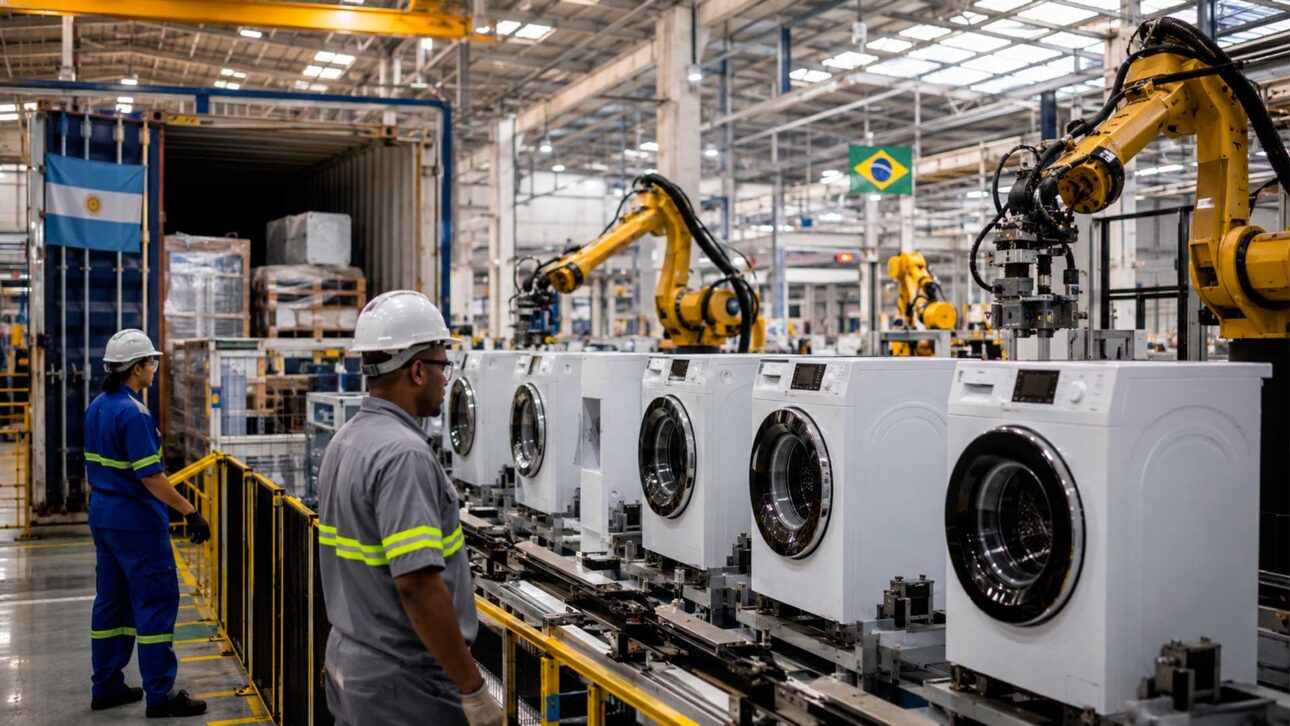
The investment package announced for Rio Claro exceeds R$ 300 million and will be used for factory modernization, production nationalization, and industrial structure expansion. Whirlpool intends to make the unit one of the company’s most advanced bases in the region.
One of the most relevant points of the project is the introduction of more than 20 industrial robots in the production lines. Automation is expected to help increase productivity, reduce bottlenecks, and allow the unit to work with products of greater technological complexity.
Another important detail is the plan to use about 95% of components manufactured in Brazil in the new washing machines. This decision reduces dependence on imported parts and makes the operation less exposed to issues like unstable dollar, logistical delays, and abrupt changes in international trade.
The forecast reported in the articles is that the first machines within the new structure will start coming off the assembly line in September 2026. Thus, the transfer is not just symbolic but a practical reorganization of the company’s regional production.
Direct and indirect jobs become central point of the announcement
The expansion in Rio Claro also has a local economic impact. The Rio Claro City Hall reported the opening of 200 new job vacancies linked to the investment in Whirlpool’s industrial plant.
Moreover, the broader estimate released by economic media points to about 2,800 direct and indirect jobs driven by the project. This number considers not only hiring within the factory but also suppliers, logistics, services, and other activities surrounding the industrial chain.
This point is important because the white goods industry tends to generate effects beyond the factory floor. When a company increases production, buys more national components, and expands logistics, part of the impact reaches metalworkers, plastic parts manufacturers, transportation companies, industrial maintenance, and service providers.
For Rio Claro, the investment reinforces the city’s image as an industrial hub in the interior of São Paulo. The presence of authorities at the announcement, including Vice President Geraldo Alckmin and representatives of the state and municipal governments, shows the political and economic weight of the decision.
Closure in Argentina reignites debate about loss of factories
The departure of washing machine production from Argentina draws attention because the Pilar factory was recent. The unit had been inaugurated in 2022 with the promise of strengthening local production of home appliances and had a reported capacity of up to 300,000 washing machines per year.
Less than three years later, the operation was closed, and its assets became part of Whirlpool’s productive reorganization. The company, however, states that it will continue to serve Argentine consumers through products manufactured in other units of the group and distributed by the local operation.
This decision comes at a time of strong industrial reorganization in South America. Multinational companies have been seeking to reduce costs, increase scale, and concentrate production in units considered more efficient, especially in sectors that depend on logistics chains, credit, technology, and regional demand.
In the case of Whirlpool, the official explanation was not presented as a commercial break with Argentina, but as a competitiveness strategy. Even so, the closure of the Pilar plant fuels the debate about deindustrialization in the neighboring country and about Brazil’s ability to attract productive investments.
Brazil gains scale and can expand exports in Latin America
By concentrating production in Rio Claro, Whirlpool gains industrial scale in Brazil. This means producing more in an already structured base, with nearby suppliers, installed technology, and the possibility of serving different markets from a single plant.
According to an interview with a company executive by Bloomberg Línea, the change also opens up space to expand exports from Brazil to Argentina. The reason is that the Argentine market has a greater presence of front-load models, precisely the category that will be manufactured in Rio Claro.
This detail helps explain why the transfer goes beyond a simple change of address. The Brazilian operation can become a regional supply base, serving not only Brazilian consumers but also other countries in Latin America.
For the home appliance sector, the movement reinforces the importance of local production in higher value-added items. Front-load washers and washer-dryers tend to have more embedded technology, digital functions, and specific components, which require more modern assembly lines.
What changes for Brastemp, Consul, and for the consumer
For the Brazilian consumer, the change does not necessarily mean an immediate drop in prices. The impact may first appear in the product offering, in the replenishment capacity, in the reduction of import dependency, and in the company’s greater flexibility to serve the market.
In the medium term, more localized production can help reduce some supply risks. When a company uses more components manufactured in the country, it becomes less vulnerable to international delays, exchange rate fluctuations, and external logistical costs.
For the brands Brastemp and Consul, the decision reinforces the industrial presence in Brazil at a time of strong competition in the white goods sector. The market has been pressured by high interest rates, tight income, and competition from imported products, but still depends on innovation and scale to grow.
Whirlpool is trying to position itself in this scenario with a more automated factory and greater capacity to serve Latin America. The bet is that Rio Claro will become a production center for washing machines with more technology and greater regional relevance.





Be the first to react!