Portuguese
  Spanish


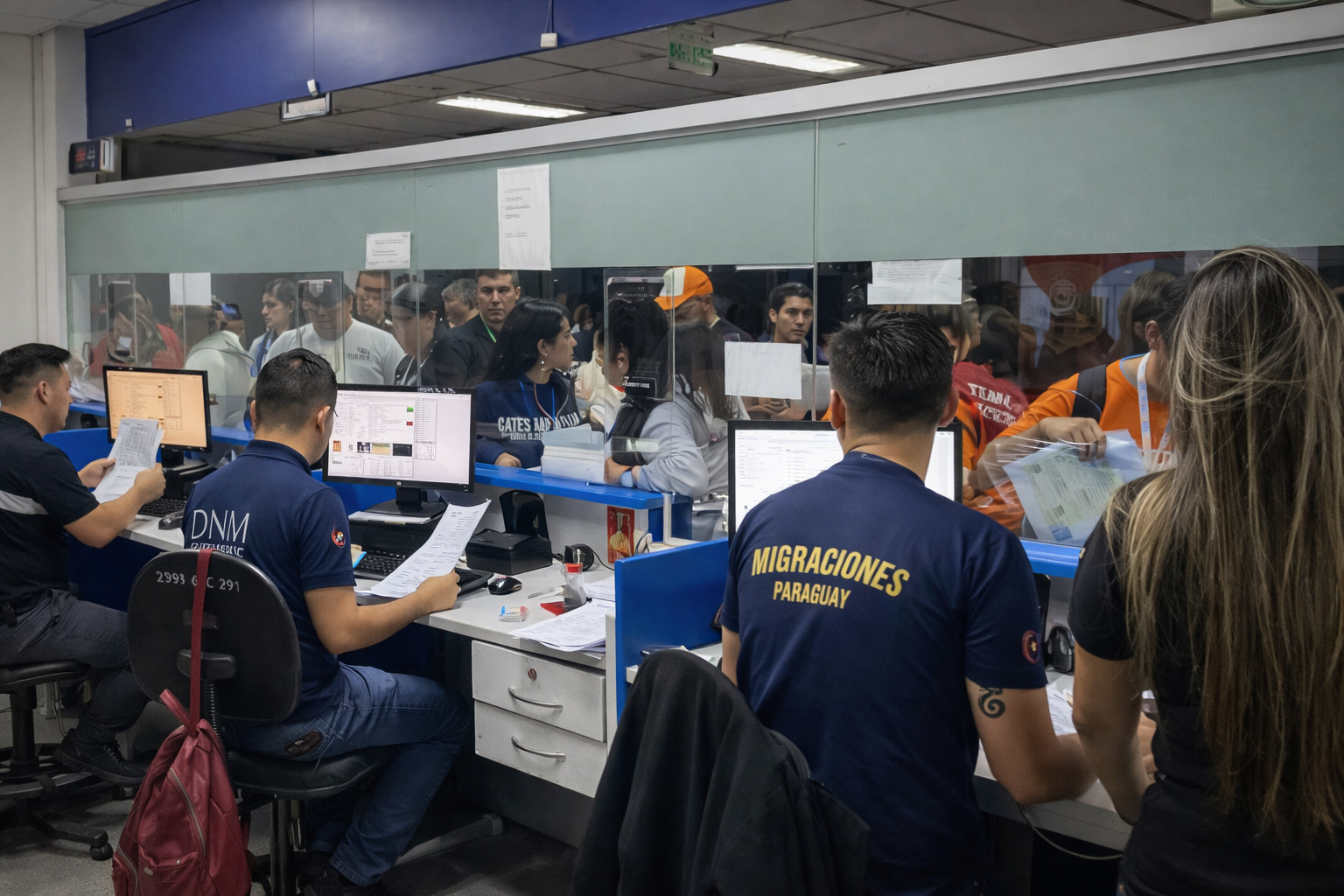

Does Brazil export residents? Paraguay becomes a destination for businessmen and retirees, attracts factories and expands the exit of Brazilians where low taxes attract residents. A movement that is already growing behind the USA and Portugal.
The movement has ceased to be an isolated border story and has gained the scale of a phenomenon. In 2025, Paraguay granted 23,526 residences to Brazilians, equivalent to 58% of all residences granted to foreigners in the country. The number came within a historical record: in total, the National Directorate of Migrations granted 40,600 residences and received 47,687 applications that year.
The beginning of 2026 also showed that the pressure has not cooled: in just the first 20 days of January, there were already 2,817 new residence applications.
The old image of Brazilians crossing the border to study Medicine still exists, but it no longer solely dominates the flow.
-
21-Year-Old Moves Back to Parents’ Home in Arizona, Finds New Private Apartment in Converted Garage as Families Tackle U.S. Housing Pressures

-
Innovative Container Studio in Brazilian Beach Town Thrives with High Demand and Plans for Expansion
-
Brazil Opens Permanent Tax Office in Beijing to Streamline Trade and Combat Customs Fraud with China, Its Largest Trading Partner

-
Eco-Friendly Brick Mini-Factory Fits in a Garage, Starts with a $1,800 Press, Produces Bricks for $110 per Thousand and Sells for Up to $290





Recent reports show that the profile is changing and that businessmen have come to occupy the center of the new wave, driven by lower taxes, lower operational costs, and more predictability for investment.
This shift adds to the old movement of students and helps explain why Paraguay is no longer seen only as a university route and has come to be treated as a business and residential address.
What is pulling Brazilians out of Brazil
The tax difference helps to understand the size of the attraction. Brazil closed 2025 with a gross tax burden of 32.4% of GDP, according to the National Treasury.
Paraguay, on the other hand, officially promotes a leaner system, with VAT of 10%, corporate income tax of 10%, and personal income tax reaching 10%, in a design that the Paraguayan government itself sells as one of the most competitive in the region.
The other pillar is industry. The maquila regime allows for the import of inputs and machinery with customs duties suspended and operates with a single tax of 1% on the value added or on the export invoice, according to the applicable rule.
This model has become a magnet for production aimed at Mercosur. A report from Band stated in January that more than 200 Brazilian industries had already crossed the border to operate in Paraguay. Among the concrete examples, Lupo inaugurated its first factory outside Brazil in the neighboring country.
Factories leave, retirees arrive, and Paraguay grows faster
The appeal is not just in the tax spreadsheet. The IMF stated in January that the Paraguayan economy remains resilient and that growth in 2026 is expected to remain robust.
The Ministry of Economy of Paraguay was even more direct and projected an expansion of more than 4% in 2026, after a very strong 2025.
For those looking at the country as a business or retirement destination, this environment weighs in alongside cheaper energy, less bureaucracy, and simpler rules for residency.
The industrial map confirms the change. Paraguay already has 320 maquiladora industries, according to Band, and the Paraguayan government describes the regime as a tool to generate formal employment and increase value-added exports. The movement of factories from Brazil to the neighboring country affects not only the border but also the productive logic of Mercosur.
The other side weighs on work: without the same safety net as Brazil
However, the charm has its limits. Paraguay carries a structural fragility in the labor market. The National Institute of Statistics of the country reported that informal employment was 62.5% in 2024, affecting about 1.52 million people.
The ILO notes that Paraguay does not have unemployment insurance, which reduces protection in case of loss of income.
On the Brazilian side, the comparison becomes even more visible because FGTS and unemployment insurance remain formal instruments of protection for workers dismissed without just cause.
This changes the weight of labor benefits in the final account. Paraguay may be more friendly to capital and lighter for those wanting to start a business, but it offers a smaller social safety net for those who depend on formal employment.
The country attracts those wanting to start a business, cut costs, or change their lives, but it charges this price on the side of worker protection.
After the USA and Portugal, Paraguay has already become a giant in the Brazilian diaspora
The numbers from the Itamaraty show that Paraguay is not a peripheral destination for Brazilians.
In 2023, there were 263,200 Brazilians living in the country, making the neighbor the third largest Brazilian community abroad, behind only the USA and Portugal.
This data reveals that the change of address is not a passing trend: it has already become an important part of Brazil’s migratory map.
What is at stake now goes beyond the dry border. When Brazil sees entrepreneurs, retirees, and owners of factories exchanging their ZIP codes for Paraguay, the debate shifts from merely who has left to what is pushing so many people out.
Do you think Brazil is really exporting residents and companies to Paraguay, or is this movement still just beginning? Share this article with those following the economy, migration, and the effects of the contrast between Brazil and Paraguay.