






 Portuguese
  Spanish
  3 min of reading
  0 comments


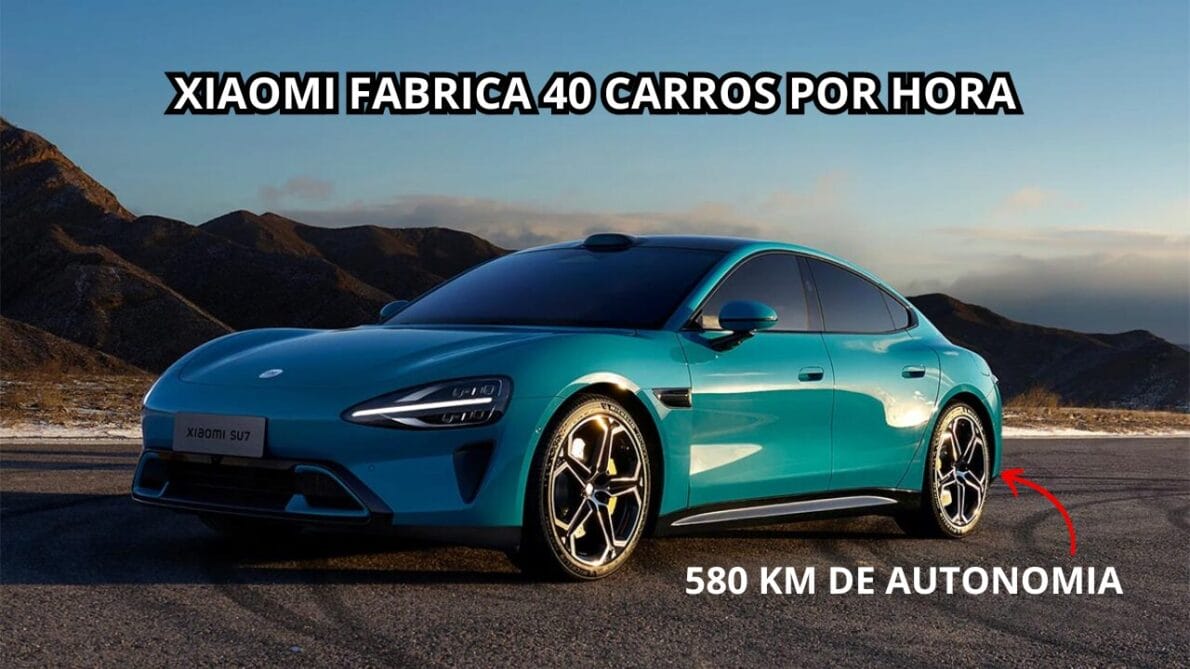
Xiaomi Revolutionizes The Automotive Industry With The SU7, An Electric Car Produced In Just 72 Seconds. Utilizing Advanced Technologies, Automated Systems, And Rigorous Quality Inspection, The Company Establishes New Standards Of Efficiency And Innovation In Vehicle Manufacturing.
Xiaomi, globally known for its smartphones and electronic devices, is causing quite a stir in the automotive market with the launch of its first electric car, the SU7. Since its launch, the SU7 has been a sales success, even facing stock issues due to high demand.
Moreover, the novelty boosts the company’s stock, which now stands out not only in the technology sector but also in the automotive industry.
How Does Xiaomi Manage To Assemble The SU7 In 72 Seconds?
What is truly impressive is the efficiency in the production of the SU7. Lei Jun, CEO of Xiaomi, revealed that the factory responsible for manufacturing the vehicle can produce 40 units per hour, or one every 72 seconds.
-
Two new 300cc models from QJ Motor are expected to arrive in Brazil as SBM to target the CB 300F and shake up the low-displacement market, with more power and liquid cooling than Honda.

-
Camaro may reappear in 2027, but not as you remember: Chevrolet prepares the return of the icon with four doors, manual transmission, and an extreme performance version to face the new era of sports cars.

-
Is the BYD Song Pro worth it? The Anderson Sincero channel says it doesn’t exceed R$ 140,000, and the price dropped by R$ 47,000, reinforcing the depreciation of the plug-in hybrid in the Fipe table.
-
Caoa Changan CS75 arrives for R$ 199,990 with 4.77 m in length, a trunk of up to 1,620 liters, 8-speed Aisin transmission, 180 hp, 37.2 inches in screens, and Zero Gravity seat with massage.


But how does Xiaomi achieve such efficiency? The secret lies in the advanced production processes adopted by the company, known as gigacasting and stamping.
Gigacasting, one of the key processes, utilizes materials from alloy casting and a large equipment cluster system, all developed in-house by Xiaomi.
This process allows for many individual components to be grouped into a single cast piece, resulting in faster and more efficient production.
This method not only saves space in the factory but also ensures greater rigidity for the vehicle.
Another highlight is the 9100t assembly system, developed in partnership with the company Haitian.
Covering an area of about 850 m², this machine is responsible for creating the entire rear part of the SU7 in just 100 seconds, eliminating the need for 72 individual parts in the process.
This results in a 45% savings in production time and a 17% reduction in the vehicle’s weight, increasing its electric range.
The 9100t System And Its Contribution To The Efficiency Of The SU7
The 9100t system is just one of 60 devices and 433 processes that make up pressure casting in the manufacturing of the SU7.
In addition, Xiaomi employs 700 robots and 181 autonomous mobile robots on the assembly line, contributing to the impressive production of 40 units per hour.
Although the math suggests that one unit is produced every 72 seconds, in practice, the manufacturing of each vehicle involves various complex stages.
After the car’s body is formed by the 9100t system, it is sent to a workstation where eight robots install the vehicle’s doors in just a few seconds.
Then, the units are taken to the painting shop, where a rapid color change system optimizes filling, cleaning, and paint application, allowing for quick changes according to customer orders.
This process reduces order delivery times by 25%.
Ensuring The Excellence Of The SU7
In the final assembly shop, the windshields and panoramic roofs are installed by robotic arms in a process that takes an average of 30 seconds, half the time compared to most car factories.
During all these procedures, Xiaomi utilizes the X-Eye quality inspection system, which has a 99.9% accuracy in detecting production defects, ensuring the high quality of the vehicles.
Xiaomi’s High-Tech Assembly Line That Produces 40 Cars Per Hour
The success of the SU7 reflects not only on technological innovation but also on the positive impact on Xiaomi’s stock.
The efficiency in production and the adoption of advanced technologies place Xiaomi in a prominent position in the automotive industry, competing with major traditional brands.
The SU7 is not just an efficient electric car; it represents a significant shift in how vehicles are produced, combining Xiaomi’s technological expertise with innovations in automotive manufacturing.
With such an efficient production process and advanced technologies, Xiaomi promises to continue revolutionizing the market, providing consumers with high-quality and high-performance products.


With the SU7, Xiaomi not only expands its portfolio but also establishes new standards in the automotive industry, demonstrating that the future of electric cars can be more efficient, faster, and sustainable.
Text with information from Mobi Auto.


Be the first to react!