Portuguese
  Spanish


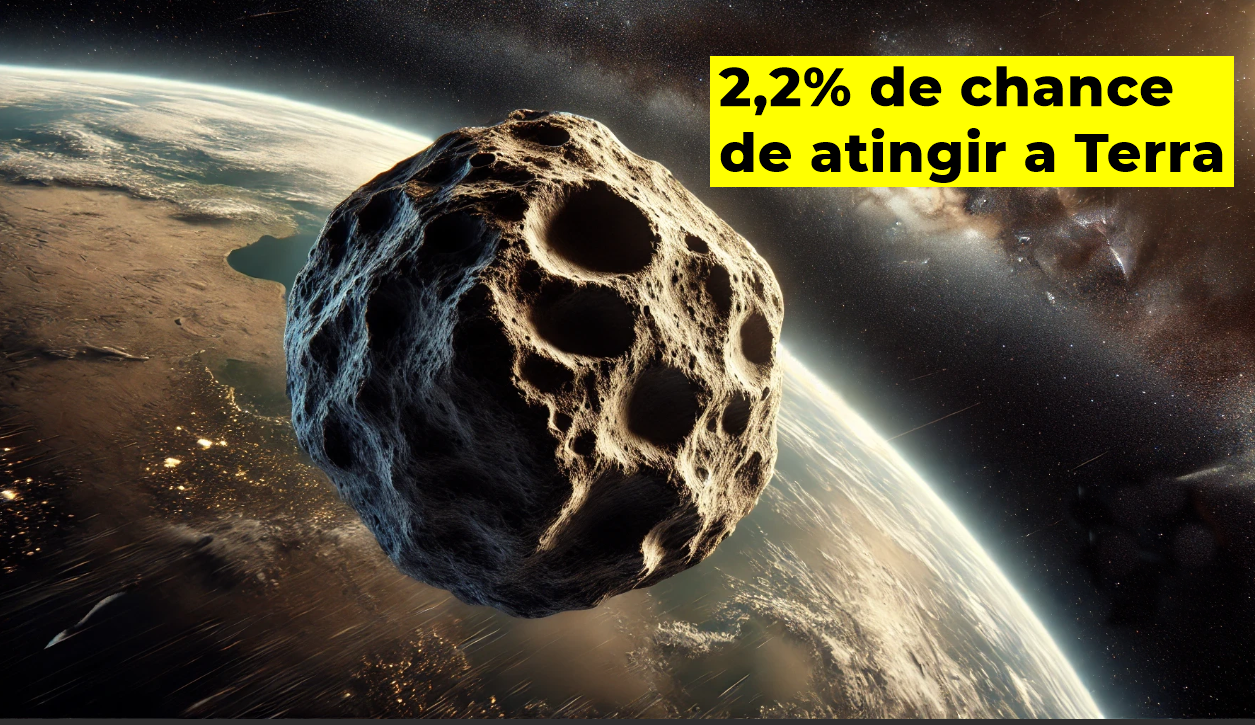


Scientists Monitor Asteroid 2024 YR4, Which Has a 2.2% Chance of Colliding with Earth in 2032. If This Happens, What Areas Will Be Affected? Find Out the Details!
Recently, the astronomical community has turned its attention to a new celestial object that may pose a risk to Earth. This is the asteroid 2024 YR4, whose trajectory suggests a possibility of impact on December 22, 2032.
According to the European Space Agency (ESA), the chance of collision was initially calculated at 1.2%, but rose to 2.2% after new observations. Although the number is still small, its significance cannot be underestimated.
Scientists say this percentage may change as more data are collected.
-
Brazilian Startup Converts Tucumã Seeds into Bioplastic for Bicycle Pedals, Cups, and Construction Materials

-
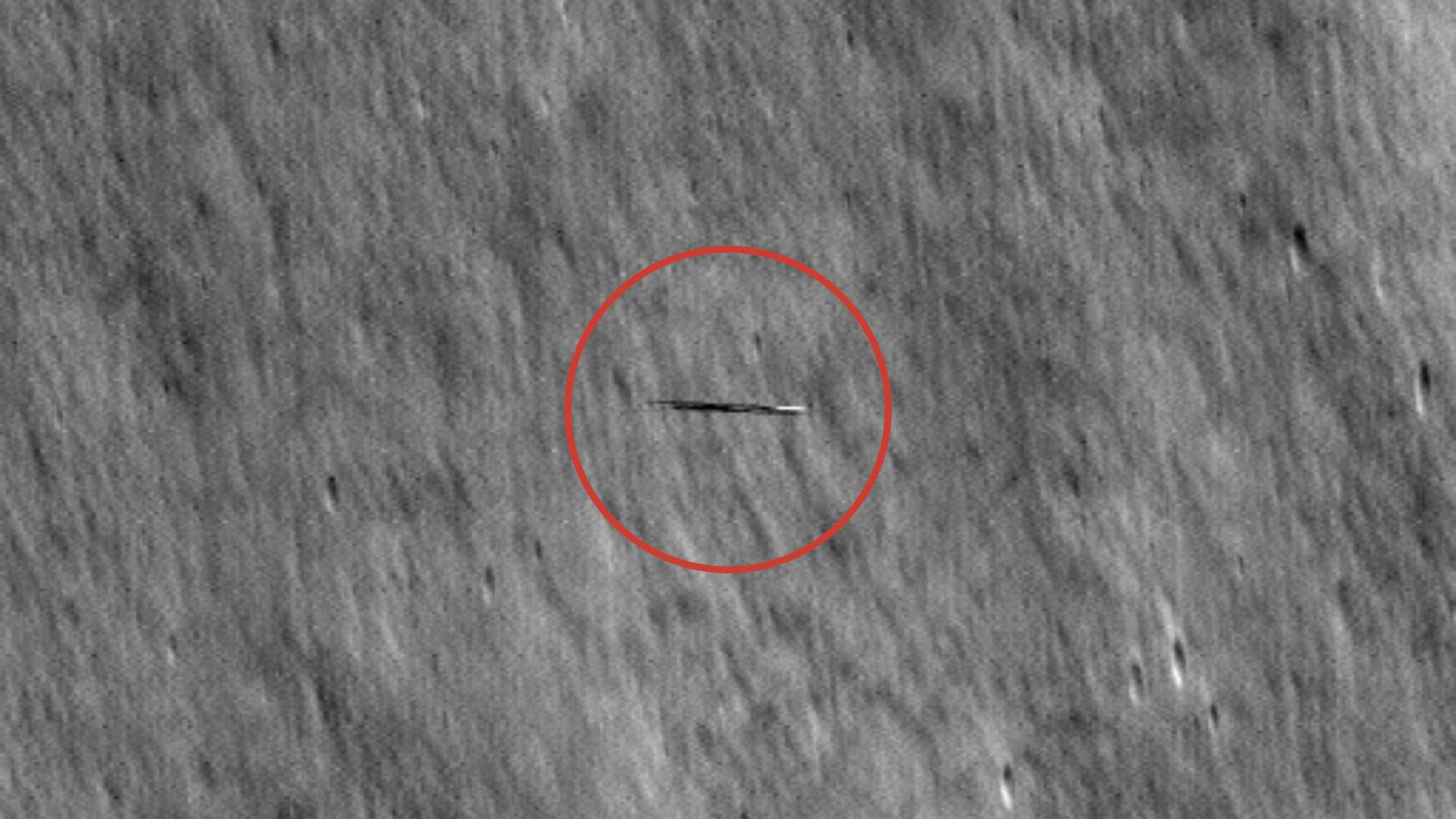
NASA Captures Rare Encounter of South Korean “Surfboard” Spacecraft Crossing Lunar Orbit at Over 11,000 km/h

-
Germany Opens World’s Largest Smart Power Semiconductor Factory with €5 Billion Investment, Creating 1,000 Jobs and Doubling Capacity for AI and Energy Needs

-
Kazakhstan’s Torysh Valley Holds Thousands of Giant Stone Spheres, Intriguing Scientists with Ancient Oceanic “Cannonballs”



A similar phenomenon occurred in the past, such as with the asteroid Apophis, which was considered a significant threat after its discovery in 2004 but had its impact probability reduced to zero in 2021, after new analyses.
The same may happen with 2024 YR4 as astronomers refine its trajectory.
In recent years, technological advances have allowed for faster and more precise discoveries, which is essential for any planetary defense strategy.
Continuous tracking of these objects is one of the keys to ensuring the safety of Earth against catastrophic events.

Credit: ATLAS
Characteristics of the Asteroid
The asteroid 2024 YR4 is estimated to be between 40 and 90 meters wide, equivalent to a large building.
Its speed upon entering the Earth’s atmosphere can reach an impressive 38,028 km/h. In the event of an impact, it could cause destruction within a radius of 50 km, depending on the density and angle of entry.
Similar events have occurred before. In 1908, an asteroid approximately 30 meters wide exploded over the Tunguska region in Siberia, devastating an area of 2,150 km².
In 2013, a smaller asteroid, about 20 meters in diameter, entered the atmosphere over Chelyabinsk, Russia, exploding with energy 20 to 30 times greater than that of the Hiroshima bomb, damaging thousands of buildings and injuring more than 1,000 people.
If an impact were to occur over a densely populated region, the damage would be even more severe. Shockwaves caused by the atmospheric explosion could shatter windows kilometers away and injure thousands of people.
Additionally, the asteroid’s interaction with the atmosphere could generate a large flash and intense heat, affecting adjacent areas.


Tracking the 2024 YR4
The asteroid was discovered by the Atlas telescope in Chile on December 27, 2023, as part of a NASA program for monitoring near-Earth objects. After its detection, it was added to the ESA risk list and NASA’s Sentry monitoring system.
Since then, various observatories around the world, such as the Very Large Telescope (Chile) and the Magdalena Ridge Observatory (USA), have been tracking its trajectory.
Currently, it is over 45 million kilometers from Earth and moving away. Its visibility will continue until April 2024, before disappearing from direct observation. However, it will return to the neighborhood of Earth in 2028, allowing for new measurements.
The accuracy of predictions directly depends on the amount of data collected. As Davide Farnocchia from NASA’s Jet Propulsion Laboratory explains, “the longer we track an asteroid, the more accurate the prediction of its trajectory.”
The Importance of Planetary Defense
If the probability of impact remains significant, international space agencies may take preventive measures. In response, China has begun recruiting specialists to develop early detection and warning technologies for asteroids.
The UN has two groups responding to space threats: the International Asteroid Warning Network (led by NASA) and the Space Mission Planning Advisory Group (chaired by ESA). These entities are responsible for coordinating mitigation and response strategies in the event of a real threat.
Among the possible actions, asteroid deflection stands out, a technology successfully demonstrated in 2022 by NASA’s DART mission.
In that mission, a spacecraft was crashed into an asteroid to change its trajectory. If necessary, a similar approach could be employed for 2024 YR4.
Another option would be the evacuation of potentially affected areas. However, due to uncertainty about the exact impact point, this strategy would only be feasible when more refined predictions are available.
Where It Might Fall?
The asteroid 2024 YR4, discovered in December 2024, has a small chance of impacting Earth on December 22, 2032. If a collision occurs, possible impact areas include:
- East of the Pacific Ocean
- North of South America
- Atlantic Ocean
- Africa
- Arabian Sea
- South Asia
Countries that could be affected include Ecuador, Colombia, Venezuela, India, Pakistan, Sudan, Ethiopia, Bangladesh, and Sudan.
Information from CNN and Huffingtonpost.