Portuguese
  Spanish


The TV Juruá Online report shows the homemade biodigester of Rosindo Alves Magalhães, the organic garden where no insecticide is used, and the 50 and 100-liter drums of liquid fertilizer sold to producers in the region, which took place in Cruzeiro do Sul, in the state of Acre
While the price of a gas cylinder weighs on the budget of millions of families, a retiree solved the problem in his backyard, with the most abundant raw material of any pasture. According to TV Juruá Online, in a report published in August 2016, Rosindo Alves Magalhães, aged 61, had been producing his own cooking gas from cow manure for a year and since then had not used a gas cylinder.
The story did not stop at the stove flame. The retiree began reselling the biofertilizer, which is the leftover manure after the biodigester extracts the gas, as TV Juruá Online shows. The product leaves the property in 50 and 100-liter drums, straight to the vegetables of other producers.
One year without a gas cylinder: the cooking gas that comes from manure
The cycle set up on the property is deceptively simple. According to TV Juruá Online, the cow manure feeds the system that produces the so-called methane gas, channeled directly to the house kitchen, where it fully replaces the purchased gas cylinder.
-
Ghana to Launch Public Library Offering Over 100 Air Quality Sensors for Community Use, with Plans to Expand Across West Africa

-
Desalination Program Transforms Brackish Water into Drinking Water in Brazil’s Semi-Arid Region, Benefiting 26,000 Residents with $2 Million Investment

-
Man Attempts to Measure Brazilian Sinkhole with Fishing Line, Loses Camera, Captures Mysterious Footage, Rekindling Debate on Hidden Underground Labyrinths

-
Brazilian Company Sells Portable Manual Press That Produces Eco-Friendly Bricks Every 10 Seconds



The result is measured in routine. An entire year of the stove lit without a single refill, with the raw material for the cooking gas coming from a few cows in the backyard, as recorded by the TV Juruá Online channel on YouTube. In the words of the retiree, what goes to the kitchen is the gas, and what remains in the equipment is a byproduct too valuable to be thrown away.
What is the homemade biodigester, and why does it work
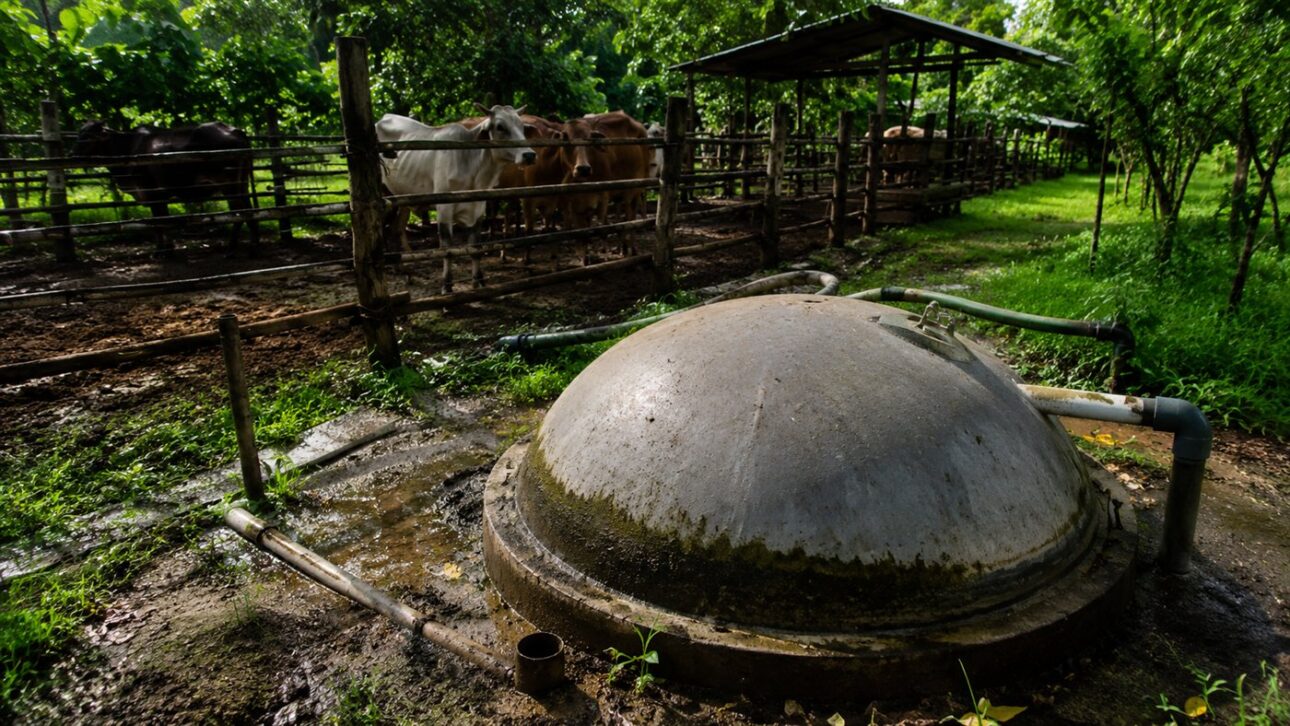
The magic has a biology book name. In general, a biodigester is a closed tank where bacteria decompose organic matter without oxygen, in a process called anaerobic digestion, which releases biogas, a methane-rich mixture capable of powering stoves, heaters, and even engines.
What remains is the system’s second harvest. The liquid residue from digestion, the biofertilizer, concentrates nutrients already processed by the bacteria and ready for plants to absorb, in a natural fertilizer that closes the property’s cycle: the pasture feeds the cow, the cow feeds the biodigester, the biodigester feeds the kitchen and the garden. It is exactly this circuit that the report captures functioning in the retiree’s backyard.
The leftover biofertilizer becomes income
The sale of the fertilizer transformed the economy system into a business. According to TV Juruá Online, any producer can collect the biofertilizer from the property, taking 50 or 100-liter gallons of the already processed product to use on vegetables.
The sales pitch comes with conviction. Chemical products affect the plant and the consumer, and nature needs to grow naturally, as TV Juruá Online records in the words of Rosindo Alves Magalhães. The retiree leaves his contact available and welcomes interested parties in his own garden, where the customer can see up close how the food is produced.
The garden where no poison enters
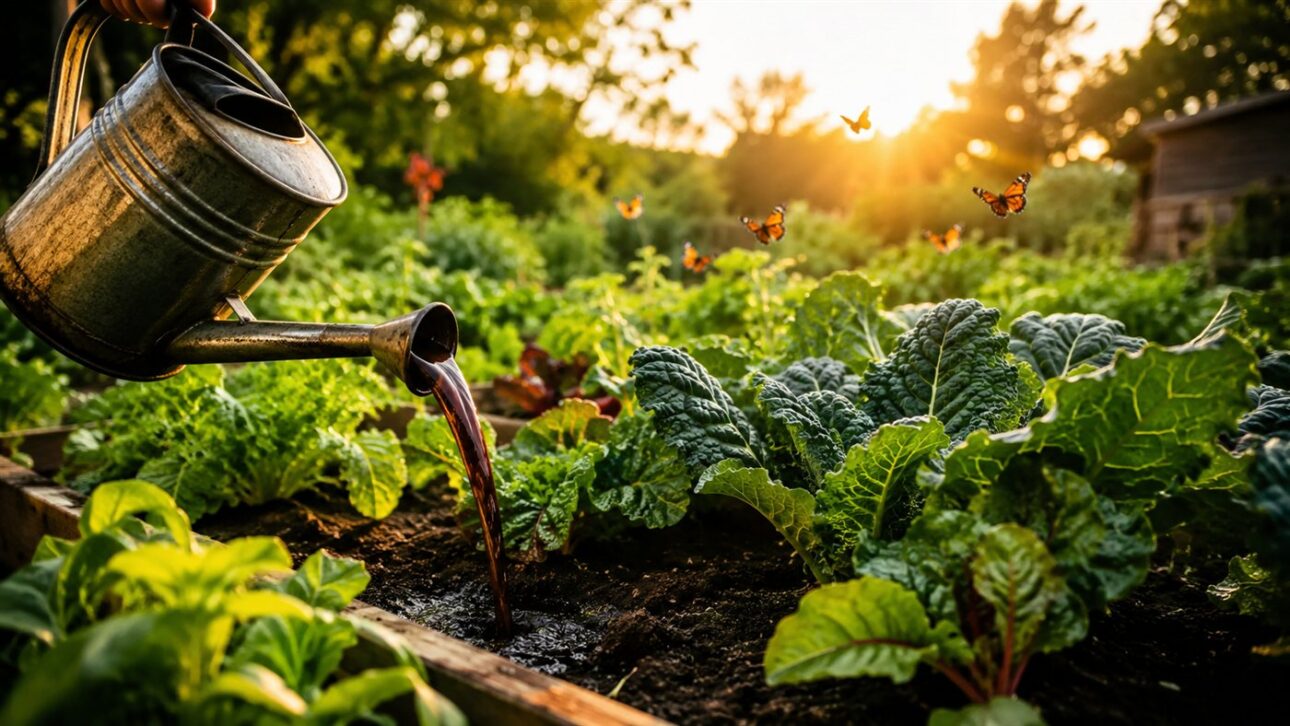
The backyard is the showcase of the philosophy. According to TV Juruá Online, all the material used in the garden is organic, and the owner does not accept insecticide under any circumstances: his argument is that the poisoned plant also ends up affecting the human body of those who consume it.
The rule of coexistence with nature is taken to the extreme. On the property, not even ants are killed, and the presence of insects and butterflies on the plants is presented as proof that there is no poison there, as TV Juruá Online shows. The retiree’s reasoning is ecologically rooted: eliminating predators disrupts the entire chain, and tampering with nature always comes with a cost.
The path to organic certification
Selling as organic, however, requires more than clean practice. According to TV Juruá Online, the product goes through a transition phase until the organic producer certificate is issued by a federal agency linked to the Ministry of Agriculture, in a process that takes from 6 months to 2 years and includes inspection.
While the seal is not yet available, the audit is popular. The quality is certified by the consumer themselves, invited to visit the garden and see with their own eyes what they are buying, as reported by TV Juruá Online. It is the informal certification that has always supported the countryside market: trust built in the field, not with a stamp.
A Few Cows Are Enough to Supply the House
The most encouraging data from the report is the minimal scale of the system. According to TV Juruá Online, with just a few cows, the retiree can obtain the necessary material to produce household cooking gas and still generate biofertilizer sold to neighbors.
This is the arithmetic that makes the model replicable. Any small property with half a dozen animals generates enough manure to never buy a gas cylinder again, and the investment in the biodigester pays off with the sum of refills that no longer exist. The retiree’s declared dream goes beyond his own kitchen: to teach the younger generation and make producers in the region aware that it is possible to produce without harming the environment.
What the Case Teaches About Biogas in the Brazilian Countryside
The story filmed in 2016 has only become more relevant. Brazil has one of the largest cattle herds in the world, and each dairy farm is a small biogas reservoir wasted when manure is left in the open, releasing methane directly into the atmosphere, without generating either flame or fertilizer.
The biodigester reverses the problem twice. The methane that pollutes turns into energy inside the tank, and the residue becomes fertilizer that replaces purchased fertilizer, a double saving that rural programs and cooperatives have been encouraging across the country, from homemade systems like the retiree’s to industrial plants in farms and dairies. The backyard lesson applies to energy policy: the frontier of Brazilian biogas begins with those who have cows, manure, and determination.
For Whom the Homemade System Makes Sense
The backyard model has a natural audience: the small property that already raises animals and pays for gas cylinders. In this combination, the system delivers returns on two fronts, cutting a fixed monthly expense and creating an agricultural input that was previously bought or simply did not exist on the property.
Standard precautions apply as with any gas installation. A homemade system requires well-sealed piping, a safe distance between the tank and the flame, and maintenance of the daily feeding of manure and water so the bacteria do not stop working, practices that rural biodigester suppliers and extension agencies teach along with the installation. The backyard cooking gas is safe when treated with the same respect as the city gas cylinder, and the reward is one less bill for the rest of the system’s useful life.
Watch the report
The video shows the stove lit with gas from the backyard, the system’s operation, and the garden that became a showcase for the biofertilizer.


The retiree’s kitchen sums up what renewable energy has most concrete: a flame lit every day with what was once a problem in the pasture, and a fertilizer that returns to the earth what came out of it. Tell us in the comments: do you know someone who has already switched the gas cylinder for a biodigester?