The Lagoon of Niquelândia returned to the agenda after a lost camera in an improvised measurement attempt, reigniting doubts about the blue sinkhole, underground cave, and depth of the lagoon, while the Record Goiás report showed fishing line, images at 600 meters, and suspicion of still unknown tunnels in the interior of Goiás.
The Lagoon of Niquelândia, in Goiás, has sparked curiosity again after publicist Júlio César tried to measure the depth of the lagoon using fishing line, a stone, a flashlight, and a small camera. The camera lost on the second attempt reignited doubts about the blue sinkhole and a possible underground cave beneath the water.
The story was aired by the channel Record Goiás, on YouTube, on July 1, 2026. According to the report, the lagoon is approximately the size of a soccer field, impresses with its intense blue color, and is described by researchers as the visible part of a possible underground structure formed by collapse, with channels, caves, and passages not yet fully understood.
A small blue lagoon on the surface, but giant in mystery
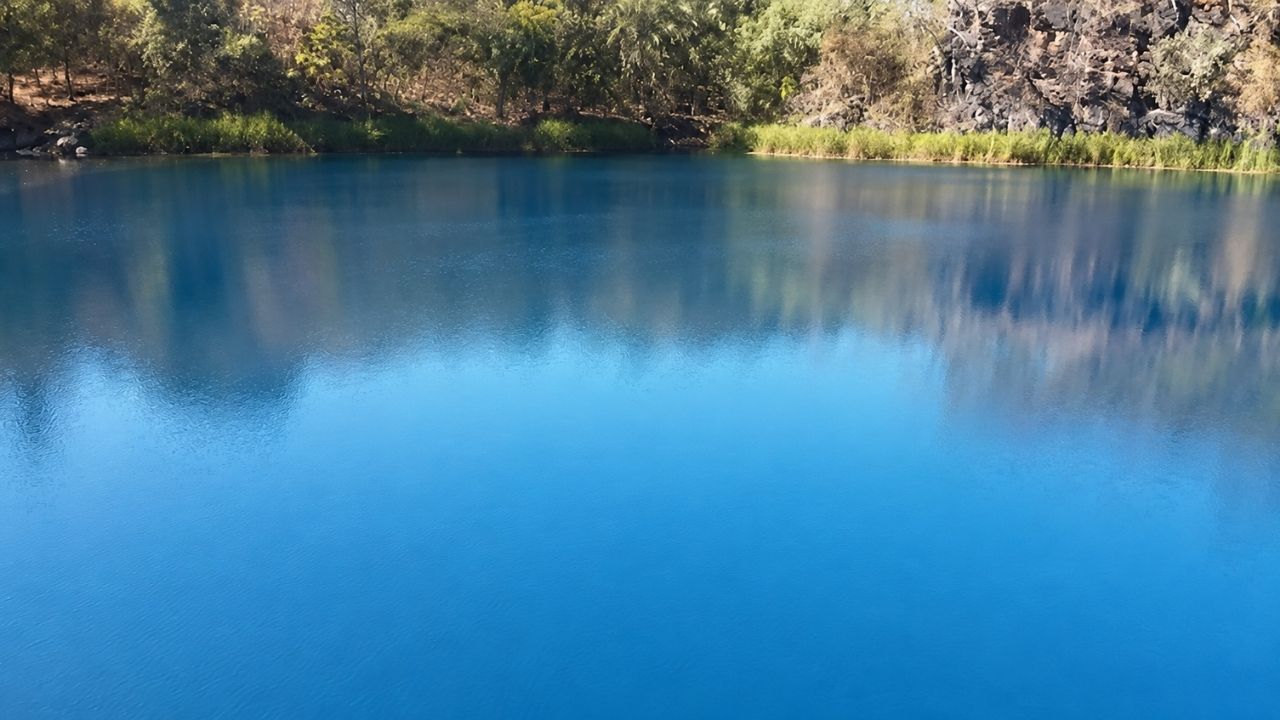
The Lagoon of Niquelândia draws attention even before any measurement. Seen from the outside, it has an almost tranquil appearance, with sky-blue water and a size compared by the report to that of a soccer field. But it is precisely this seemingly simple surface that hides the biggest question: how deep does it go?
-
Brazilian Company Sells Portable Manual Press That Produces Eco-Friendly Bricks Every 10 Seconds

-
Dairy Farm Prevents Manure Lagoon Overflow with High-Powered Tractors and Industrial Pumps, Turning 100,000 Gallons of Waste into Fertilizer

-
Masked Man Claims to Have Traveled to 2118, Predicts World War Starting with North Korea and Reveals Secret CIA Technology

-
At 54, Brazilian Artisan Turns Textile Waste into a Successful Handbag Brand, Earning Over $6,000 Monthly




According to the account shown by Record Goiás, the Federal University of Goiás had already used equipment and technology to reach 200 meters. There were also attempts with divers, who reached about 45 meters, as well as measurements with steel cables and initiatives by amateur enthusiasts, who reportedly descended to 350 meters. Even so, the bottom of the lagoon remained without a definitive confirmation.
Júlio César tried to measure the depth with an improvised solution
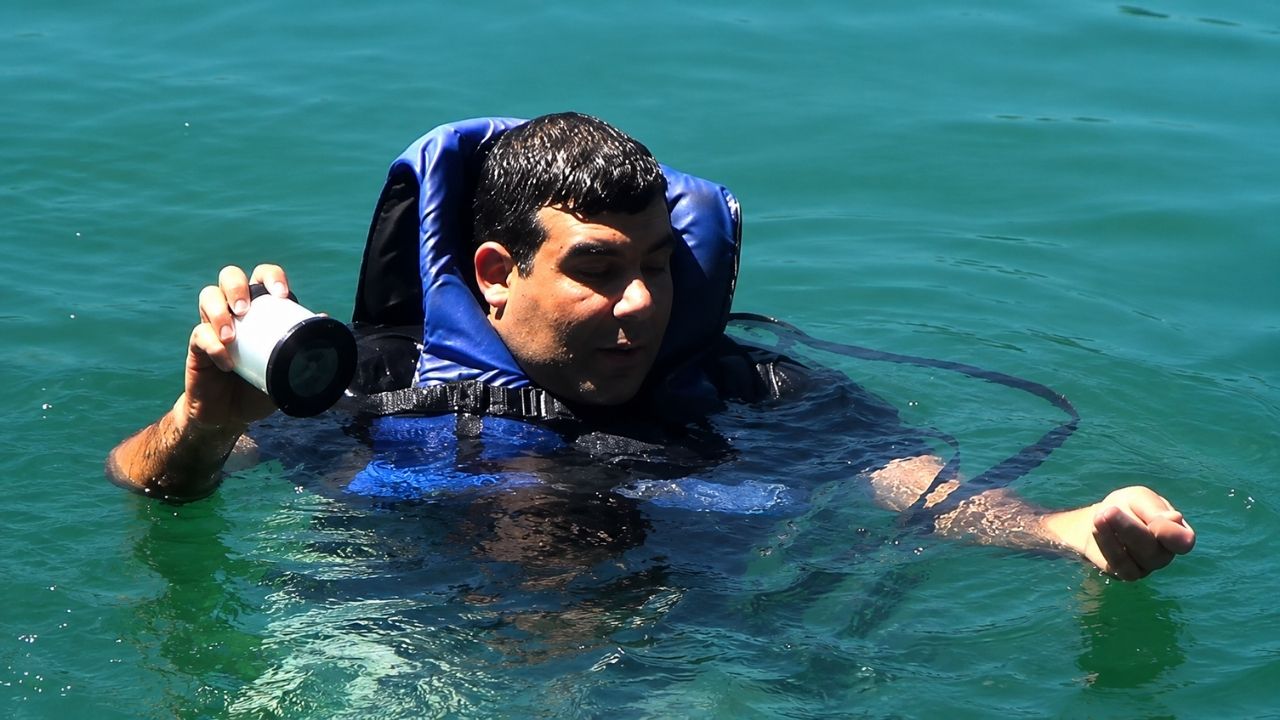
It was in this mysterious setting that Júlio César, an advertiser from Goiânia, decided to make his own attempt. Instead of using sophisticated scientific equipment, he tied a 600-meter fishing line to a stone, attached a flashlight and a camera to the end, and dropped the setup into the Lagoa de Niquelândia.
The first experiment drew attention because, according to the account, he did not find the bottom but managed to retrieve the camera. The equipment returned with footage recorded at great depth, including scenes described as mysterious, where something shiny appears passing in front of the lens. The footage did not answer the main question but further increased curiosity about what lies beneath the blue water.
Images at 600 meters reignited the doubt about the sinkhole

The report states that the camera captured scenes at about 600 meters deep. This number draws attention because it surpasses previously mentioned measurements and reinforces the hypothesis that the Lagoa de Niquelândia is not just a common lake but the visible opening of a much more complex formation.
A researcher from the Federal University of Goiás explained, according to the report, that the lagoon is part of a vast underground cave. The formation process would be linked to the collapse of the terrain, with subsidence and possible connection to deep systems. This means that the visible water may be connected to channels, tunnels, and rocky spaces that extend far beyond what appears on the surface.
The second attempt used 1,000 meters of line and ended with the camera lost
After the first experience, Júlio César decided to return with a larger line. This time, he used 1,000 meters, a heavier stone, and the same small camera. The goal was to go deeper and try to understand if the lagoon really had an accessible final surface or if it continued to be connected to other underground channels.
The attempt, however, ended badly. According to the report shown by Record Goiás, the line became heavy, snapped, and took the camera down. The report states that the equipment might have reached a hard surface at about 700 meters, but the experiment failed because the camera was lost in the depths. Without retrieving the device, part of the possible recording also remained buried in mystery.
The measurement with the car showed that the camera was more than 600 meters
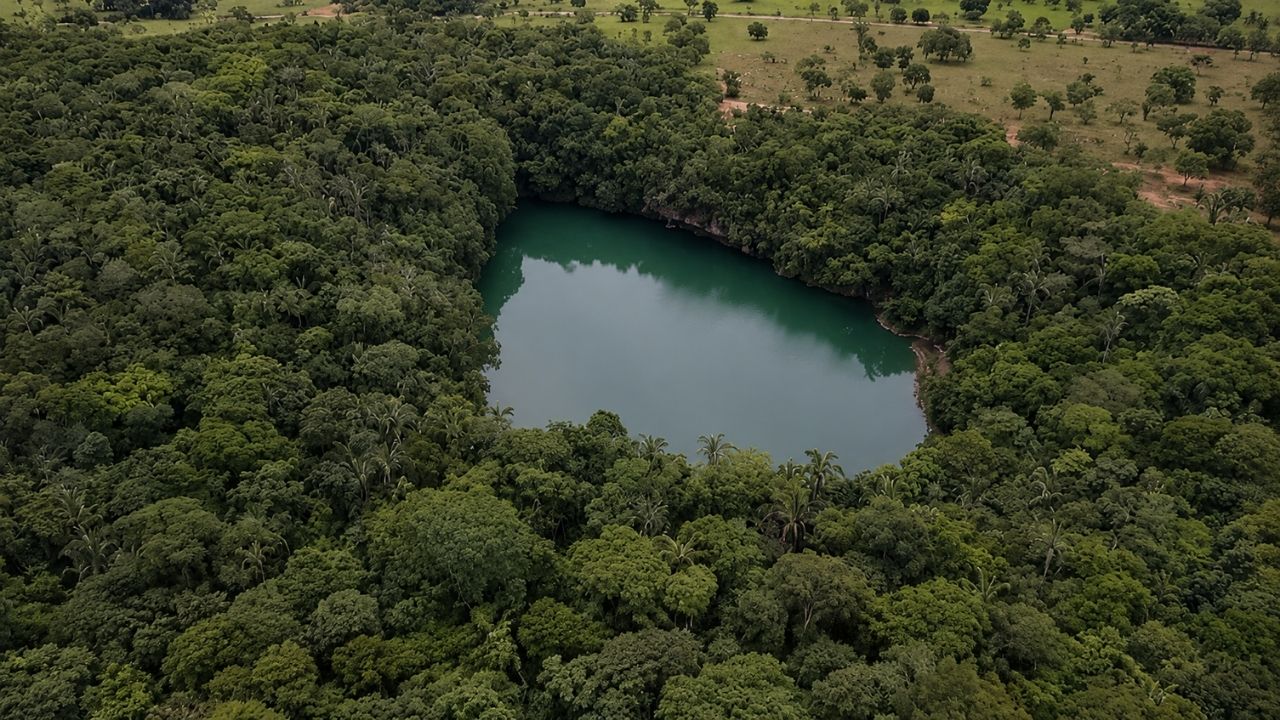
After losing the equipment, Júlio César tried to calculate how much of the line had descended using the car’s odometer. He measured the remaining line and reached a distance greater than 600 meters, with a reference of approximately 700 to 710 meters traveled in the measurement.
This procedure does not replace a controlled scientific measurement, but it helps to understand why the case attracted so much attention. The camera not only disappeared: it might have gotten stuck or lost in an extremely deep region of the Lagoa de Niquelândia, reinforcing the perception that the sinkhole may hold still unknown sections.
Researchers talk about caves, channels, and underground labyrinths
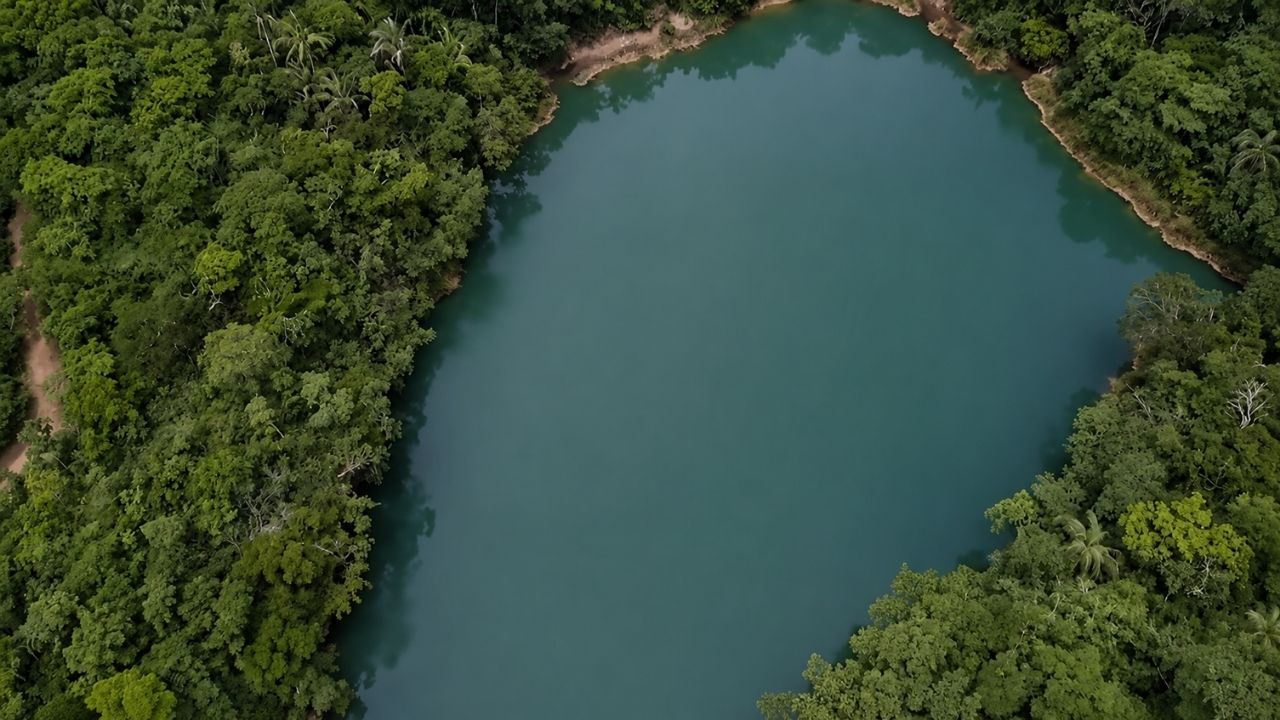
The scientific explanation presented in the report points to a system formed by collapse, with the possibility of underground connections. Instead of a simple vertical cavity, the Lagoa de Niquelândia may be part of a structure with branches, channels, and passages within the rock.
This hypothesis helps to understand why different attempts can find results so difficult to interpret. If there are tunnels, uneven levels, or connected galleries, a camera may touch a hard surface without necessarily having found the final bottom. It may have reached a wall, a channel, or an intermediate area within a much larger system.
The mystery deepens because the depth still has no definitive answer
Despite attempts with diving, cables, equipment, and improvised experiments, the actual depth of the Niquelândia Lagoon remains shrouded in uncertainty. The report mentions measurements at different levels but does not present a definitive confirmation of the absolute bottom of the formation.
This makes the case even more intriguing. The combination of intense blue water, depth records, camera loss, and the possibility of underground caves creates a narrative that mixes popular curiosity and geological interest. The central point is not just knowing how many meters the lagoon has, but understanding what kind of structure exists below it.
The blue sinkhole has become a symbol of a hidden enigma in Goiás


The Niquelândia Lagoon gathers rare elements to attract attention: strong visual appearance, uncertain depth, and a recent story involving a camera lost hundreds of meters deep. At the same time, researchers’ explanations prevent the case from being treated merely as a legend or exaggeration.
What lies beneath the water may be part of a much larger natural system, with caves and labyrinths formed over time. Therefore, Júlio César’s attempt did not close the mystery; on the contrary, it gave new momentum to the question that accompanies the lagoon: how far does it really go?
A mystery that still calls for careful investigation
The story of the Niquelândia Lagoon shows how a natural formation can continue to surprise even after several measurement attempts. The experience with fishing line does not offer a definitive scientific answer, but it once again exposed the strength of the enigma and the difficulty of reaching the bottom of a sinkhole possibly connected to deep caves.
For you, did the lost camera find a real surface of the bottom or just another stretch of an underground labyrinth? Share your opinion and say if the Niquelândia Lagoon seems like a natural mystery that still deserves a major scientific investigation.