Portuguese
  Spanish


The guide from the Próximo Negócio channel details the complete business account, from the mix of 70% sand and 30% clay to the estimated profit of R$ 7,000 per month for those who produce 15,000 bricks, in 2021 values
A business that fits in a garage, requires no kiln, and transforms earth and cement into a sought-after product: this is the promise of the mini ecological brick factory. According to the Próximo Negócio channel, in a video published on September 8, 2021, which has already surpassed 288,000 views, the venture combines low initial investment, environmental appeal, and an impressive margin: each thousand bricks costs about R$ 530 to produce and was sold, at the time of the survey, for up to R$ 1,400 in the market.
The video became a niche reference precisely because it opens the spreadsheet. From the type of soil to the exact number of cement bags, everything is calculated to show how much goes in and how much comes out of the production of 1,000 bricks, as detailed by Próximo Negócio. The values are from 2021 and vary by region, but the structure of the account remains the roadmap for those who want to enter the field.
What is the ecological brick, and why it doesn’t go to the kiln
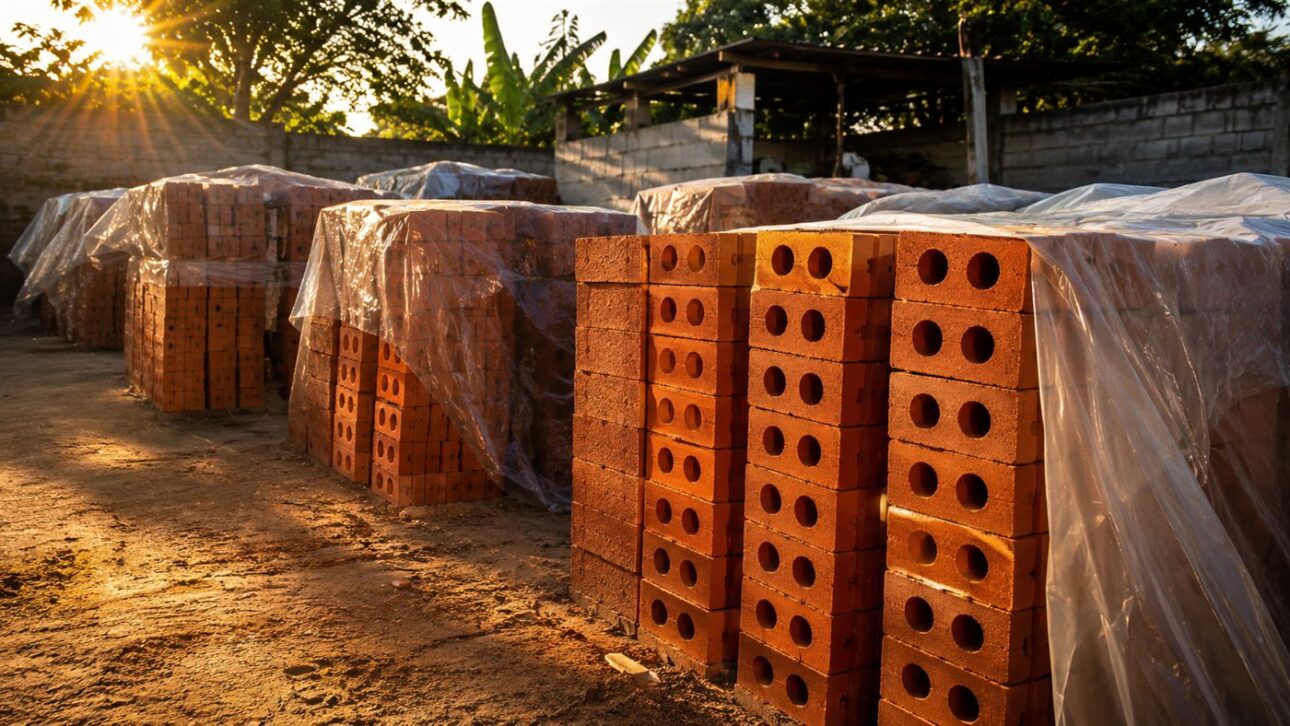
The name is misleading: it is not made from recycled material. According to Próximo Negócio, the ecological brick is made from soil, cement, and water, which is why it is also called soil-cement brick, and the “ecological” comes from the process: it cures with water, without going through the fire of the kilns.
-
Cameroon’s Wealthiest Billionaire to Invest Nearly Entire Fortune in $900 Million Airline to Boost Central African Connectivity

-
China Transforms South China Sea Landscape by Dredging Sand to Build Artificial Islands with Runways, Hangars, Radars, and Ports on Contested Reefs
-
Brazil to Phase Out Gasoline Subsidy, Fuel Prices Set to Rise Amid National Debate

-
Brazil Aims to Boost Critical Mineral Production to 12.2% of Global Output, Targeting Battery and Tech Industries




The environmental difference has numbers. To burn 1,000 conventional bricks, the cited research points to the wood of 8 trees, not to mention the emission of greenhouse gases, as explained by the Próximo Negócio channel on YouTube. The pressed brick hardens through the reaction of the cement, comes out of the machine with a fine finish and identical dimensions, and still rides a growing demand from consumers looking for cleaner construction.
The soil recipe: 70% sand and 30% clay
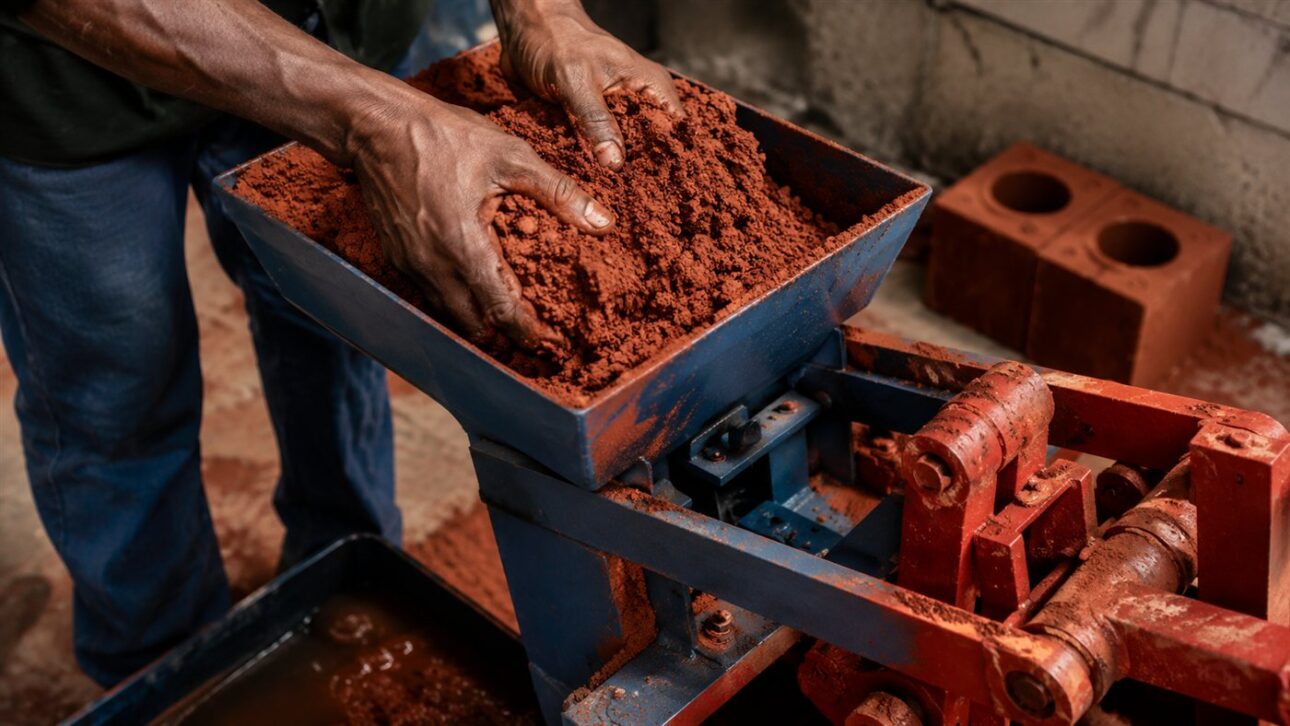
The heart of quality is underfoot. According to Próximo Negócio, the ideal soil has 70% sand, which provides strength, and 30% clay, which provides binding, and in this condition, the mix is 7 parts soil to 1 part cement, whether the measure is a bucket or a can.
Soil that is not up to standard does not doom the business, it just changes the recipe. With too little sand, the mix becomes 5 parts soil, 2 parts fine sand, and 1 part cement; with too little clay, 6 parts soil, 2 parts clay, and 1 part cement, as Próximo Negócio teaches, citing the proportions from the machine manufacturer itself. The doubt about the soil is resolved for about R$ 50 with a laboratory analysis, and with practice, the producer learns to recognize the ideal texture by hand.
No good soil? Filito solves it
The alternative for those without quality soil is a little-known mineral. According to Próximo Negócio, it is possible to manufacture with fine sand or stone dust using filito as a binding material, a cheap input found in practically all of Brazil, which changes the brick from reddish to grayish.
The calculation for this version also appears in the video. For 1,000 bricks, it takes 1 cubic meter of sand for R$ 120, 40 bags of filito for R$ 200 in total, and 5 bags of cement for R$ 150, plus R$ 200 for labor, totaling R$ 670, as Próximo Negócio calculates. It costs a bit more than the version with soil, but it saves the business in regions where good soil does not exist or cannot be extracted.
The cost per thousand: R$ 530 in the version with soil
The spreadsheet of the classic version is the most viewed part of the video. According to Próximo Negócio, a 12 cubic meter dumpster of soil, priced on average at R$ 600, yields about 5,000 bricks, which amounts to R$ 120 of soil per thousand; add 7 bags of high initial strength cement, at R$ 30 each, totaling R$ 210 for cement.
Labor completes the package. With 2 people at R$ 100 per day producing 1,000 bricks daily, the cost per thousand is R$ 530, including raw materials and daily wages, as Próximo Negócio sums up, noting that it used deliberately high values. The recommended cement is the high initial strength one, CP V-ARI, precisely so the brick gains firmness quickly and allows handling.
Profit of R$ 470 per thousand and R$ 7,000 per month
The margin appears when the spreadsheet meets the market. According to Próximo Negócio, a thousand was sold on average for R$ 1,400 in the ads of the time, and even rounding the price down to R$ 1,000, well below the market, a profit of R$ 470 remains for every 1,000 bricks.
The monthly projection is the number that made the video go viral. Producing and selling 15,000 bricks per month, the estimated profit reaches R$ 7,000, even with costs calculated on the higher side, as projected by Próximo Negócio. It’s a margin close to 100% over the cost, rare in businesses with such a low initial investment, explained by the simplicity of the process: pressing earth is cheap, and bricks are a product that every construction consumes by the thousands.
How much it costs to set up: from manual to hydraulic press
The entry ticket is the final argument. According to Próximo Negócio, the small manual press, accompanied by molds that produce more than 30 brick models, cost R$ 9,000; the professional press, medium-sized with hydraulic compaction that reduces the operator’s effort, was priced at R$ 18,000.
There is also an important supporting player. The crusher that prepares and homogenizes the mixture cost R$ 12,000, but many producers adapt a concrete mixer to fulfill the function, as recorded by Próximo Negócio. In practice, you can start the operation with the manual press and the improvised concrete mixer, and the manufacturer even includes a manufacturing course with the equipment purchase, which lowers the barrier for those who have never produced a brick in their life.
The bonus that sells the product: house built in 20 days
The best seller of the ecological brick is the client’s construction. According to Próximo Negócio, a house of 50 to 60 square meters that takes 90 days with conventional masonry, with a team of one bricklayer at R$ 150 per day and two helpers at R$ 75 each, costs R$ 27,000 just in labor; with the interlocking modular brick, the same team delivers in about 20 days, for R$ 6,000.
The difference is the counter argument. There is a R$ 21,000 saving in labor for a single small house, in the estimate that the video attributes to the machine manufacturer, according to Próximo Negócio. For the mini factory owner, this means that the product doesn’t just compete on price per thousand: it sells a construction schedule that common bricks can’t match.
Precautions before investing
The video is optimistic, and the reader’s measure needs to be realistic. The values are from 2021: soil, cement, daily rates, and machines have increased since then, and the calculation needs to be redone with local quotes before any investment. The soil dump, for example, already varied at the time between R$ 200 and more than R$ 1,000 depending on the city, and this dispersion has only increased.
The other precaution is about quality, not price. Construction brick is a product with technical standards, and a serious producer tests resistance and absorption before selling, a topic that the market itself increasingly demands. Those entering the field treating the ecological brick as a backyard commodity compete for pennies; those entering with a report and standard compete for the premium thousand that supports the business margin.
Watch the complete business guide
The video covers the product definition, the mix recipes, detailed costs, and machine prices, in the lesson format that made the channel grow.


The mini ecological brick factory follows the logic of good interior businesses: local raw material, simple process, and a product that the construction industry never stops buying. Tell us in the comments: would you invest R$ 9,000 in a press to start?