Portuguese
  Spanish


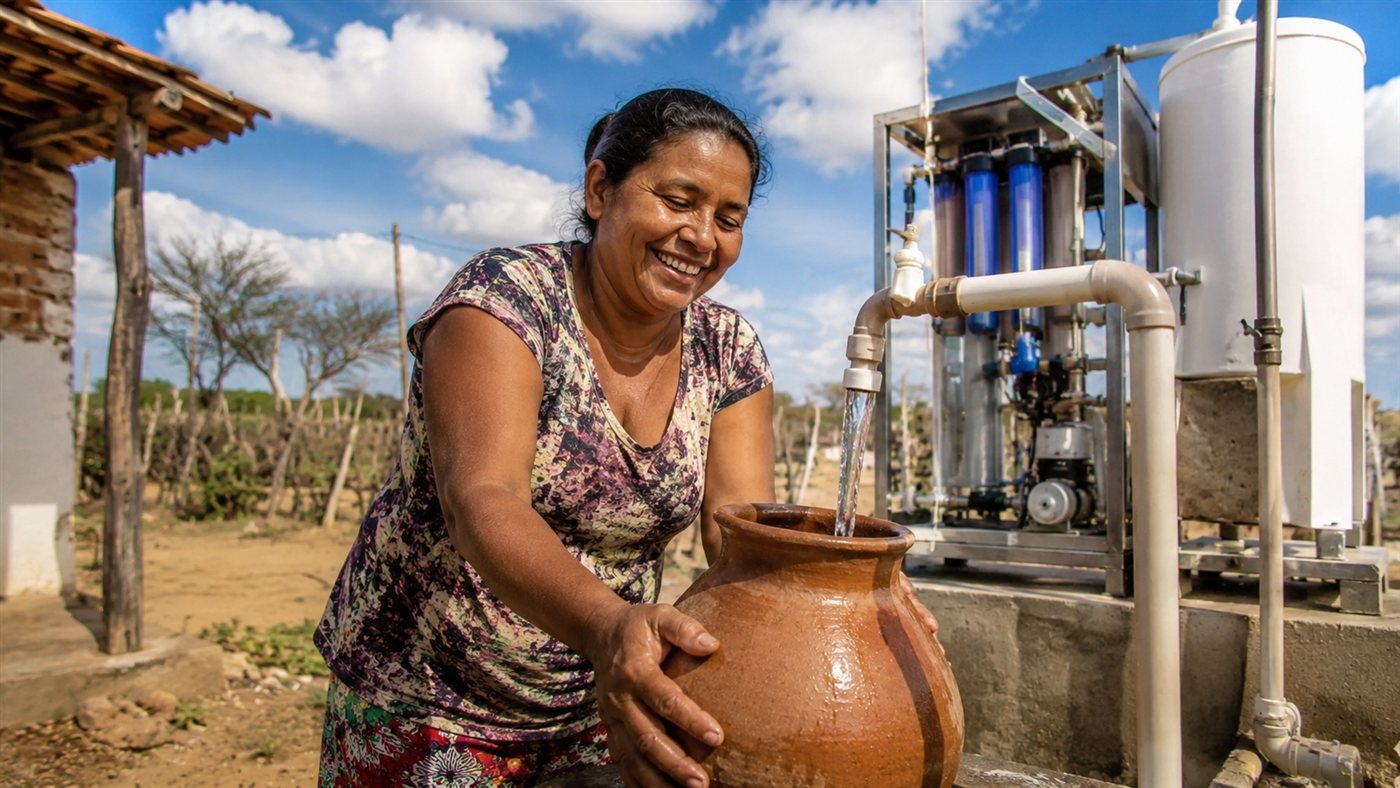

The TV Cidade Verde report shows the Água Doce program in action, from well analysis to reverse osmosis, and the intelligent destination of the salty waste: fish, shrimp, and plant farming such as sorghum and palm
In the driest region of Piauí, the water that comes out of the well is often too salty to drink, and the solution arrived through technology. According to TV Cidade Verde, in a report published in May 2018, the governmental program Água Doce had been transforming brackish water into potable water in 12 municipalities of the semi-arid region of Piauí, with 67 desalination systems planned and an estimated population of 26,000 beneficiaries.
The size of the investment matches the ambition. The federal government and the state government invested R$ 11 million in the program, coordinated by the Ministry of the Environment and executed in Piauí by Emater, as detailed by TV Cidade Verde. In the evaluation recorded in the report, the communities served experienced total happiness: many families had never had the opportunity to drink water of that quality.
The program that transforms the brackish water of the Piauí backlands
The logic of Água Doce starts with screening. According to TV Cidade Verde, the team collects the well water, conducts laboratory analysis, and only then installs the desalination system sized to leave that specific water at the best possible quality.
-
Man Attempts to Measure Brazilian Sinkhole with Fishing Line, Loses Camera, Captures Mysterious Footage, Rekindling Debate on Hidden Underground Labyrinths

-
Brazilian Company Sells Portable Manual Press That Produces Eco-Friendly Bricks Every 10 Seconds

-
Dairy Farm Prevents Manure Lagoon Overflow with High-Powered Tractors and Industrial Pumps, Turning 100,000 Gallons of Waste into Fertilizer
-
Masked Man Claims to Have Traveled to 2118, Predicts World War Starting with North Korea and Reveals Secret CIA Technology



The prioritization follows a technical, not political, criterion. The 12 municipalities served were defined by the ministry’s ranking among the most water-deprived in the state, as the TV Cidade Verde channel on YouTube records in the coordinators’ statements. At the time of the report, 5 municipalities were already served, and the goal was to complete the 67 systems by August of that year, with 18 systems ready, 9 already in use, and 9 receiving equipment that week.
How reverse osmosis cleans the well water
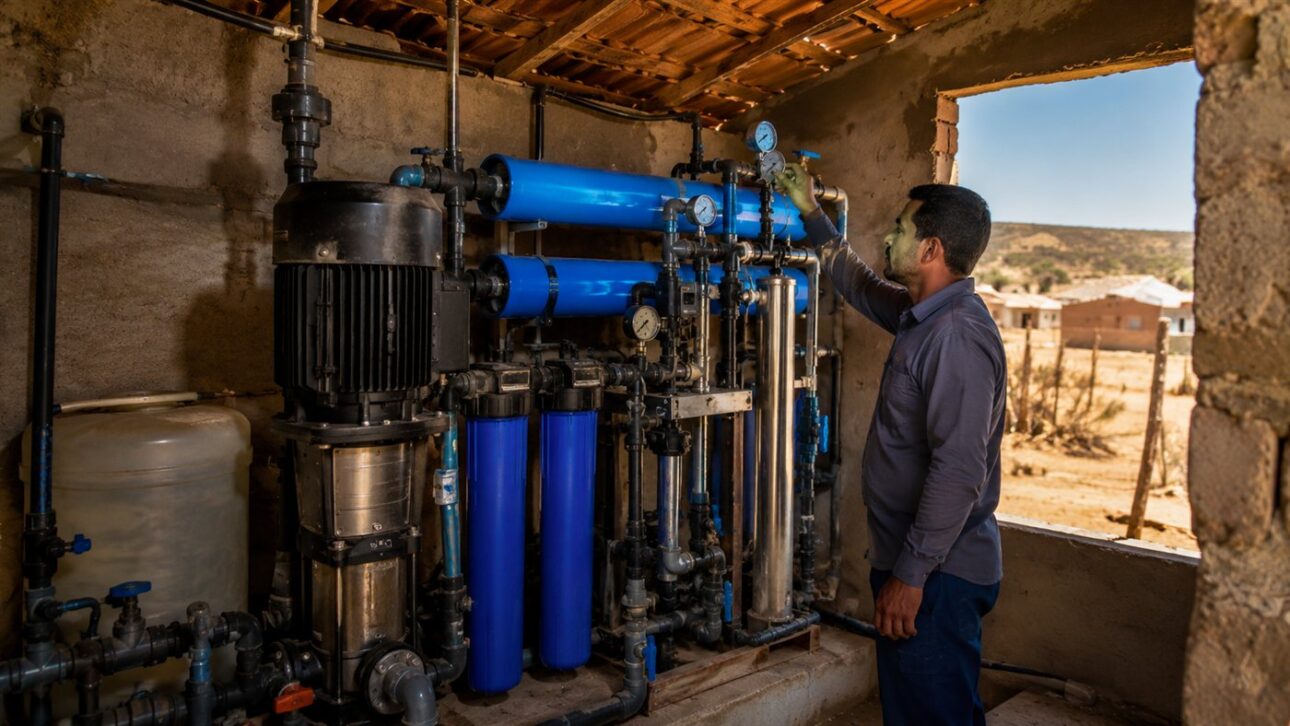
The technology behind the transformation has a chemistry class name. According to TV Cidade Verde, the systems use the physico-chemical process of reverse osmosis, a molecular scale filtration that removes not only salts but also viruses and bacteria from the water.
The fine-tuning is the detail that separates treatment from exaggeration. The water comes out with the amount of salts necessary for human health, neither too salty nor demineralized, as TV Cidade Verde explains in the words of the national coordinator. The result, in practice, is water of superior quality to what many of these rural communities knew, coming from equipment compact enough to serve villages, settlements, and small communities.
12 municipalities, 67 systems, and a goal with a deadline
The program’s map covers the heart of the semi-arid region of Piauí. According to TV Cidade Verde, the list includes municipalities like Campo Alegre do Fidalgo, Vila Nova do Piauí, Lagoa do Barro do Piauí, São Francisco de Assis do Piauí, and Betânia do Piauí, where Governor Wellington Dias participated in the launch of the new stage, in the Sete Lagoas community.
The official speech reinforced the social reach of the machine. A small piece of equipment like that allowed the entire community to be served with fresh water, serving villages, settlements, and rural communities, as TV Cidade Verde records in the governor’s speech. In the balance cited by him, the investment also generated employment and economic activity around the systems.
The waste that turns into fish, shrimp, and cactus
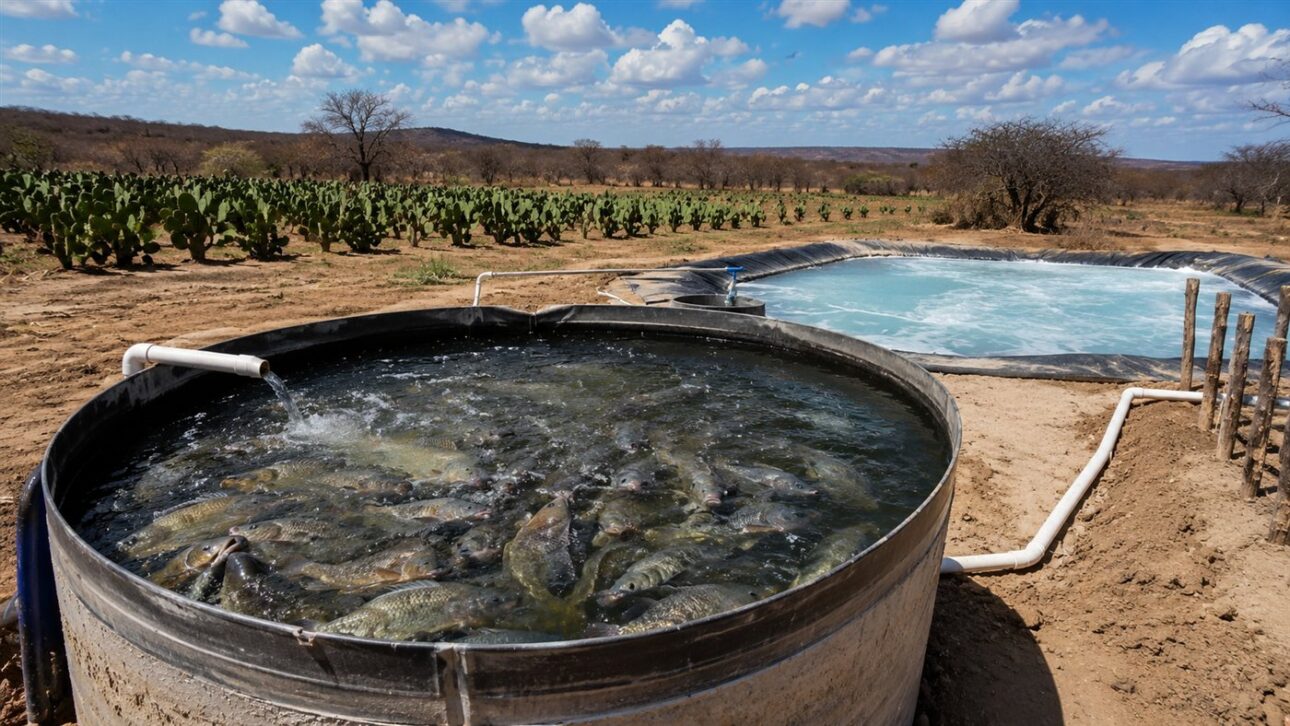
Desalination has an inevitable byproduct, and the program turned the problem into production. According to TV Cidade Verde, out of every thousand liters treated, approximately half becomes fresh water, and the other half, the saltier waste, goes to a deposit with a planned destination.
The list of uses is a small lesson in living with the sertão. The waste supplies the farming of fish varieties that tolerate saltier water, such as tilapia, some types of shrimp, and the cultivation of adapted plants, such as sorghum and forage cactus, as TV Cidade Verde details in the governor’s speech. Part evaporates, the rest becomes protein and fodder: in the semi-arid, even the brine does not have the luxury of being wasted.
The water that the communities had never drunk
The program’s thermometer appears in the testimonials collected by the report. According to TV Cidade Verde, in the 5 municipalities where the systems were already operating, the communities’ response was one of joy and total happiness, in the words of the state coordinator.
The phrase that sums up the impact needs no statistics. These families had not had the opportunity to drink water of that quality, as reported by TV Cidade Verde. In regions where the historical alternative was brackish well water or water trucks, the faucet with water treated by reverse osmosis changes health, routine, and the community’s relationship with their own territory.
Education to Avoid Waste
The program not only delivers the machine but also the manual for coexistence. According to TV Cidade Verde, the communities actively participate and are educated to use only what is necessary, without waste, a requirement considered fundamental for the sustainability of the systems.
It makes sense in the arithmetic of the sertão. Each liter of fresh water produced costs energy, maintenance, and half a liter of waste, so saving in use is part of the treatment itself. It’s the difference between equipment that lasts decades and one that becomes scrap: the technology solves the salt, but the community that operates it with discipline ensures the future of the system.
Why Desalination is the Key to the Semi-Arid
The Piauí case illustrates a problem that spans the entire interior of the Northeast: a large part of the wells in the northeastern crystalline produce brackish water, unfit for direct consumption, and irregular rains do not allow reliance solely on cisterns and reservoirs. Small-scale desalination targets exactly this stock of water that exists but is unusable.
The potential is enormous precisely because the problem is underground and permanent. Unlike a reservoir, which depends on the year’s rain, a brackish water well produces all year round, in drought and winter, and each installed desalination unit converts this constant source into reliable supply. It’s the difference between managing scarcity and managing a resource: the sertão always had water beneath its feet, lacking technology cheap enough to make it drinkable on a community scale.
The evaluation metric for these programs is twofold. Installing the system is the visible part; maintaining water analysis, membrane replacement, and waste management year after year is what defines success, and that’s why execution by extension agencies like Emater, with reach in the municipalities, weighs as much as the equipment. Water in the sertão is not an inauguration event; it’s a maintenance routine.
Watch the Report
The video shows the systems in operation, the communities served, and the statements of the coordinators and the governor at the launch of the stage.


The program recorded by TV Cidade Verde summarizes the possible engineering of the semi-arid: taking the brackish water that has always been there, removing the salt from it, and returning to the sertanejo the most basic right of all. Tell us in the comments: do you know any community that still depends on salty well water?