Portuguese
  Spanish


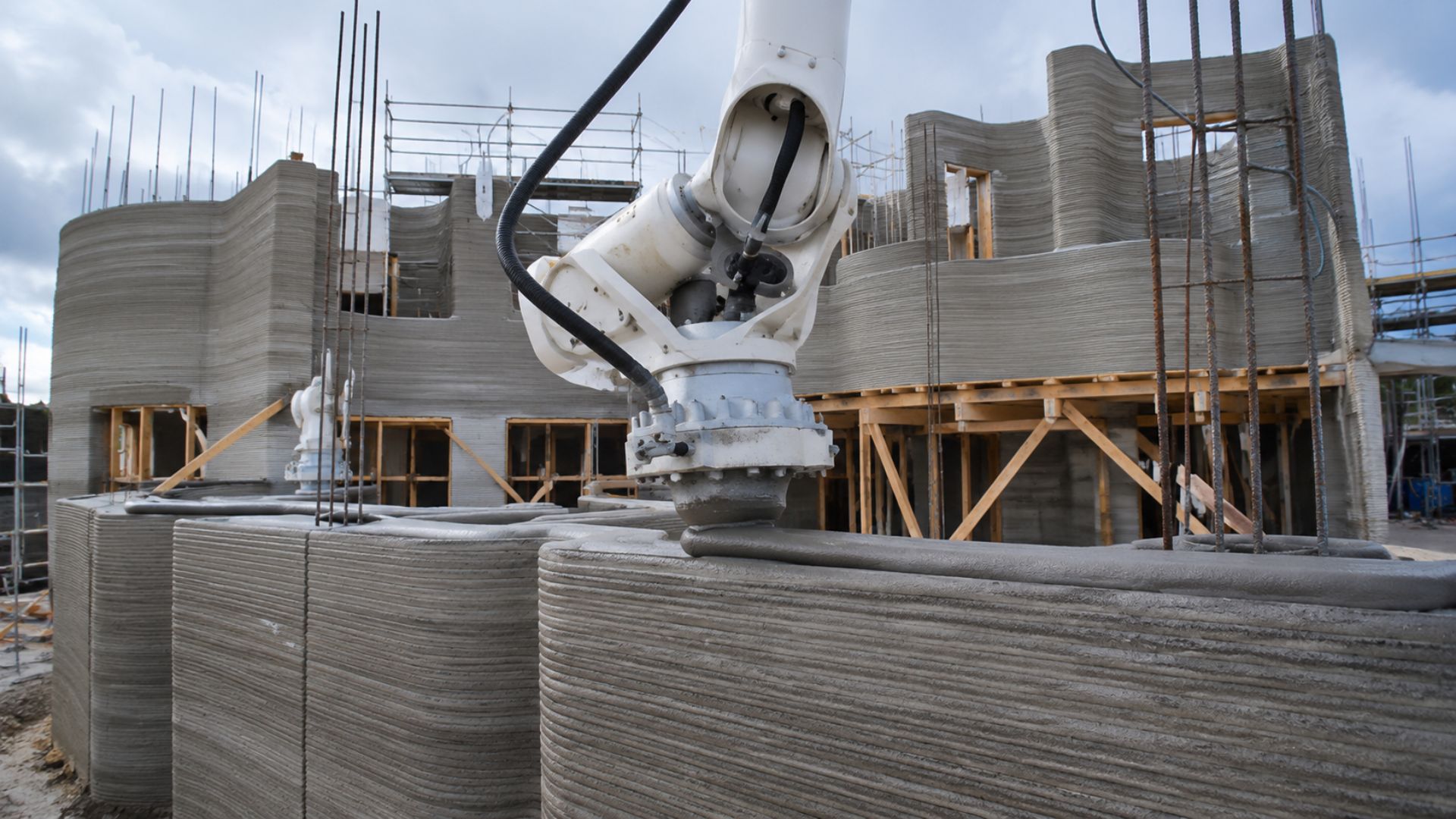

In Perth, Contec erected Australia’s first two-story 3D printed house: a concrete 3D printer raised the walls in about 18 hours. The 3D printed house was 22% cheaper than masonry, with concrete that hardens in less than 3 minutes.
Imagine watching the walls of an entire two-story house rise in less than a day’s work. That’s exactly what happened in Tapping, a suburb of Perth, where a machine deposited layer upon layer of concrete until it raised the two floors of a house. The result is presented as Australia’s first fully 3D printed two-story house.
According to New Atlas, the project was undertaken by the company Contec, and the two stories were printed on-site in about 18 hours. The company claims that the method cut costs by 22% compared to traditional masonry construction. The final house has three bedrooms, two bathrooms, a garage, and a small balcony.
The 3D printed house that rose in 18 hours
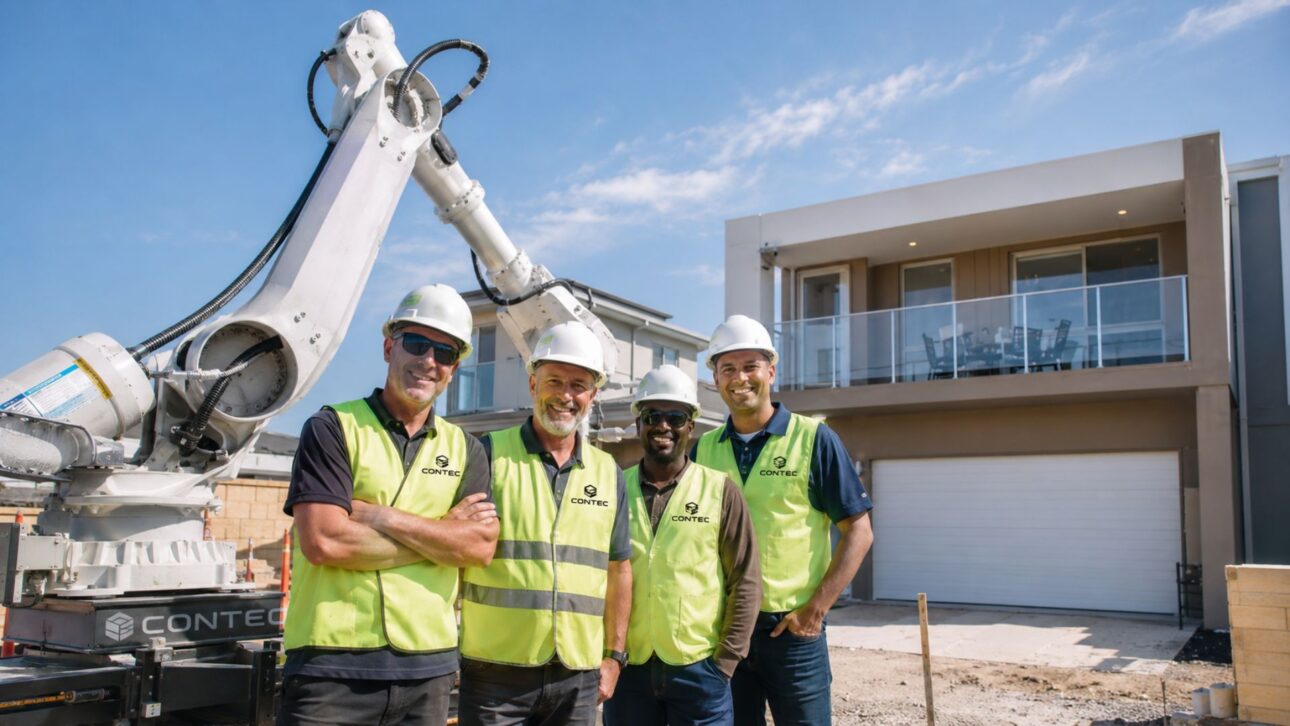
While a common masonry construction takes weeks just to raise the walls, here it was about 18 hours.
-
81-Meter Bridge Made from Over 7 Tons of Recycled Plastic Connects Isolated Communities in Panama Canal Basin, Allowing Safe Passage for Over 300 Residents

-
Architect Converts 1955 Grain Silo into 31m² Home with Full Amenities, Including Kitchen, Bathroom, Curved Living Room, and Loft Bedroom

-
Egypt Partners with China to Build 2 GW Wind Turbine Factory and 2,000 MW Wind Farm in Gulf of Suez, Aiming to Export Across Africa
-
Family of Six Leaves Georgia to Live in a $300,000 Cold War-Era Underground Bunker Since 2020: Unlikely 557 m² Home with 60 cm Concrete Walls



The 3D printed house was erected layer by layer, directly on-site, without wooden forms or rows of bricks.
The great technical feat is that the two stories came from the same print, in concrete.
Most projects of this type worldwide are limited to one floor or use wooden structures on the upper floor.
Printing the second floor also in concrete is what makes this 3D printed house a milestone for Australia.
Still, it is worth separating the accounts: the 18 hours refer to the printing of the walls, not the house ready to live in.
How the 3D concrete printer works
Behind the speed is equipment that seems straight out of fiction.
The 3D concrete printer is a robotic arm guided by software, which follows the digital design of the house.
Instead of ink, the nozzle pours a continuous stream of concrete, stacking layers until forming the wall.
The outline is defined on the computer, then the 3D concrete printer repeats the project with millimetric precision.
As the mixture hardens almost instantly, each layer supports the weight of the next without collapsing.
This speed gain reduces the need for labor and almost eliminates material waste.
The same 3D concrete printer that raises the walls also leaves the door and window openings ready.
The concrete that hardens in less than 3 minutes
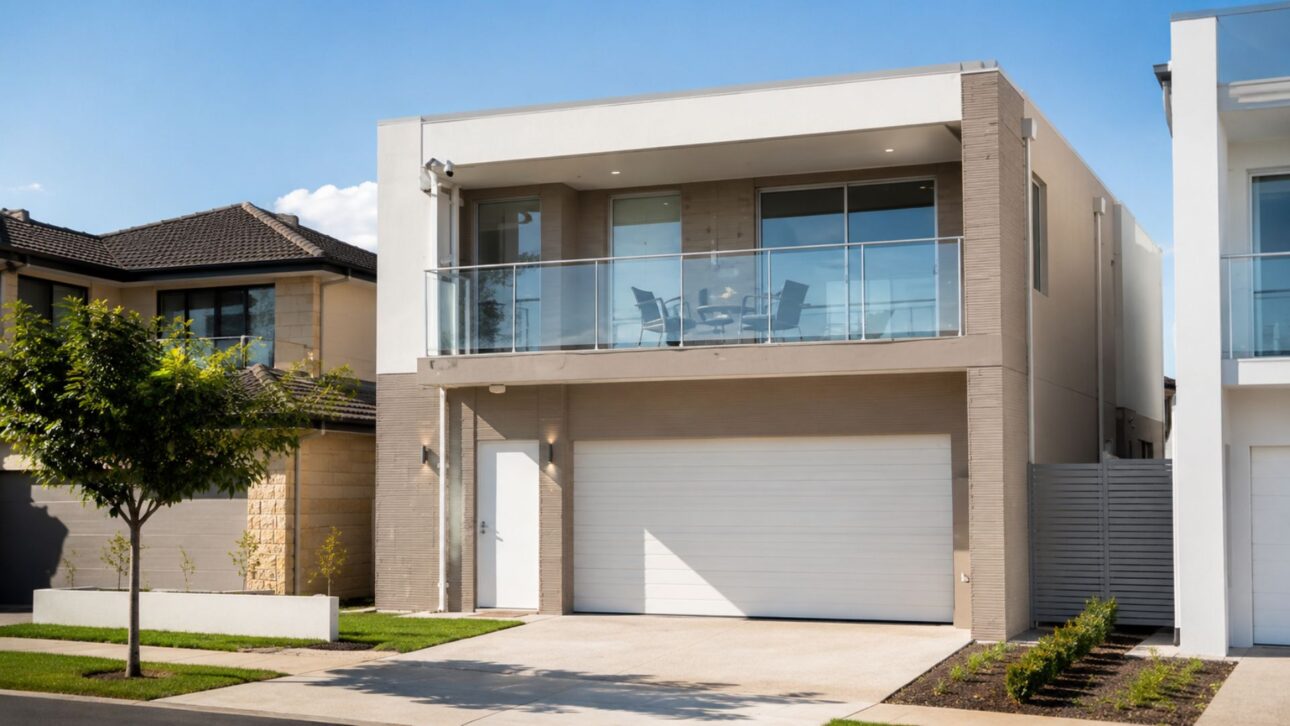
The mixture used by Contec is self-supporting and hardens in less than three minutes after leaving the nozzle.
This short curing time is what allows layers to be stacked at a fast pace without the wall bending.
The resistance numbers are impressive: the concrete reaches 50 MPa, more than three times the strength of a common brick.
According to the 3D Printing Industry, the walls are classified as cyclone-resistant.
The same concrete is described as resistant to fire, water, and termites, three classic enemies of construction.
For the Australian climate, subject to cyclones and extreme heat, this combination of durability is advantageous.
The 22% cheaper than masonry: where the savings come from
The promise of lower cost is what most interests the market.
Contec claims that the house was 22% cheaper than it would have been with conventional masonry.
The savings come from three fronts: fewer people on site, less material waste, and much more speed.
Where masonry requires bricklayers laying brick by brick, printing needs a lean team operating the machine.
Each day less on the job also means lower site costs, equipment rental, and interest.
According to Contec, switching from masonry to printing changes the cost structure of an entire project.
It is worth remembering, however, that masonry is still cheaper in labor in Brazil, where the cost scenario is different.
Why printing two floors is the game changer
Building one floor with a printer has almost become routine worldwide.
The real challenge is the second floor, which needs to support its own weight and the roof.
That’s precisely where the two-story house made headlines: it printed the upper floor in concrete, not wood.
For this, the ground floor wall needs to be strong enough to receive the slab and continue the printing.
Fast-curing, high-strength concrete is what enables building a two-story house this way.
Mastering the two-story house expands the technology’s market, which no longer serves only simple ground-floor houses.
It’s the difference between printing a chalet and printing a family townhouse like the one in Perth.
What this changes in civil construction
The case in Australia fits into a global race for faster and cheaper construction.
Several countries are testing 3D printing as a response to housing shortages and rising construction costs.
The promise is to tackle three bottlenecks at once: long deadlines, scarce labor, and high waste.
A two-story house printed in a few hours points to entire neighborhoods erected in weeks.
For regions with severe climates, walls that withstand cyclones and fire are an extra safety attraction.
If the technology scales, construction may shift from artisanal brick to software-programmed concrete.
For now, however, each of these projects is still a showcase and test, not a market standard.
What the case of the 3D printed house shows
The Perth project is a powerful proof of concept of what 3D printing can already do.
It shows that it’s possible to build an entire concrete two-story house without a single brick laid by hand.
But it’s worth keeping your feet on the ground when reading the numbers.
The 18 hours are only for printing the walls, while the complete house took about five months to be ready.
The 22% savings and resistance data come from the company itself, without independent auditing here.
And turning a pioneering house into mass production still depends on standards, financing, and scale.
Even so, few examples summarize so well where the construction industry might head in the coming decades.
From a plot in Perth, the 3D printed house showed that concrete walls can also come out of a machine.
And you, would you live in a 3D printed house if it were cheaper and more resistant than masonry? Comment here if you think the concrete 3D printer will replace the brick in the coming decades.