






 Portuguese
  Spanish
 3 min of reading


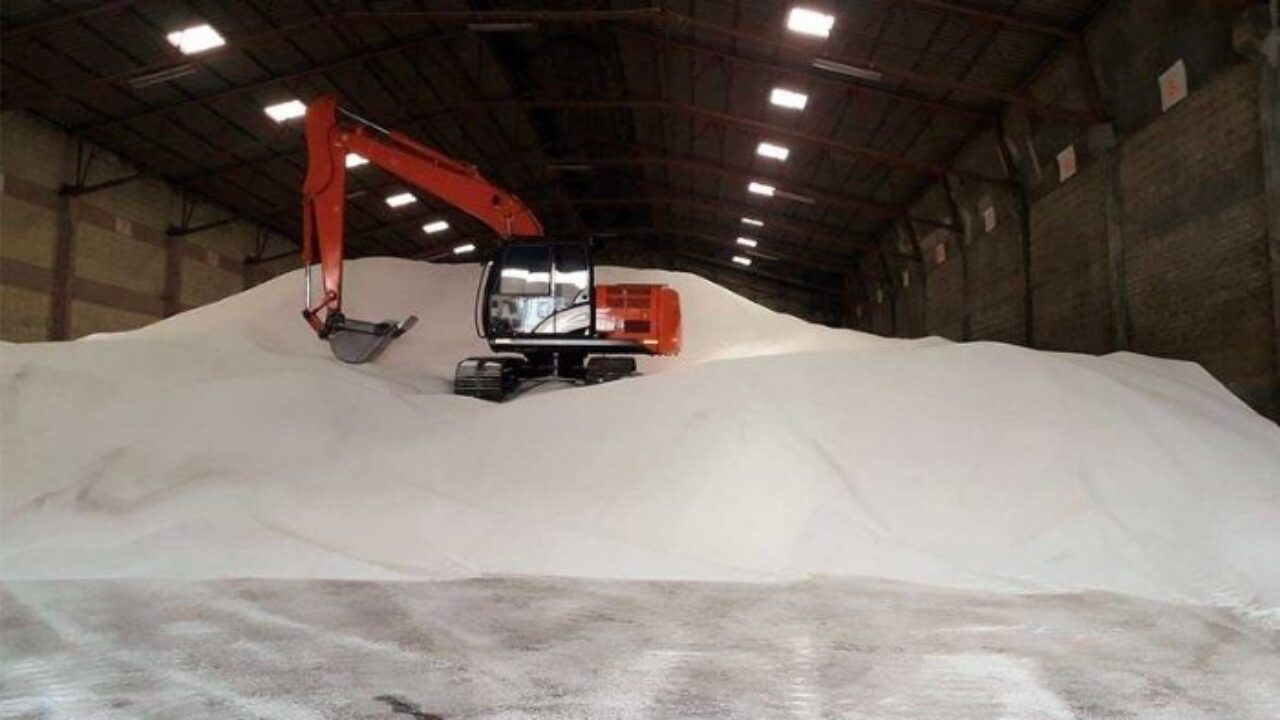
Moroccan Company, OCP, Announced the Arrival of Its Phosphate Plant. The Unit Will Be Installed in São Luís — Maranhão Six Kilometers from the Port of Itaqui, Generating Thousands of New Jobs.
The Moroccan group, OCP, is planning to install a new plant in Brazil for the production of phosphate products. The announcement came from the president and CEO of the Group, Mostafa Terrab, during a meeting in Rabat with Brazil’s Minister of Agriculture, Livestock, and Food Supply, Marcos Montes. The expectation is that the Moroccan company’s plant will be built in São Luís, Maranhão.
OCP Will Prioritize the Brazilian Market
The meeting also included members of the agribusiness delegation accompanying the mission, at OCP’s headquarters, where the executive provided details about the Moroccan company’s plans to invest abroad and stated that it intends to do so in Brazil.
Terrab states that it will be something very valuable to have the plant in Maranhão and the company is ready to prioritize the Brazilian market with phosphates. After the meeting, the president of OCP Fertilizers in Brazil, Olavio Takenaka, told ANBA that it will be the company’s first phosphate plant in Brazil and that the products will be made with phosphate rock imported from Morocco.
-
How much does a bricklayer charge to build a covered garage in 2026? See the average labor costs per square meter and the factors that most influence the final price.

-
While traditional grass loses ground, a heat and drought-resistant alternative is advancing through Brazilian yards and attracting attention for requiring less frequent mowing and maintaining a uniform appearance even during prolonged drought periods.

-
End of bricklayers? A robot smaller than a refrigerator and battery-powered challenges the most exhausting routine of construction sites: it plasters, sands, and finishes an entire drywall by itself, cutting the time for this service from five days to two and capturing 99.9% of the dust that would make workers sick.

-
They built an entire village in Wales with houses made of straw, clay, wood, and recycled materials, where families produce their own energy, collect rainwater, and live in one of the most famous sustainable housing projects in Europe.


The project is underway and the company already has the land, six kilometers from the Port of Itaqui, in Maranhão. According to the executive, the engineering project is being finalized so that the authorities can approve it.
Moroccan Company Plans Dicalcium Phosphate Plant
The unit will be located in São Luís do Maranhão and according to Takenaka, the company even plans to install a dicalcium phosphate plant for animal feed. The product is used as an ingredient and source of phosphorus in animal nutrition.
The Brazilian cattle raising, which is moving from the Midwest to the northern regions of Brazil, following national agriculture, was cited as a reason for the project by the executive. Brazil’s Minister of Agriculture is in Morocco specifically to ensure that fertilizers do not lack in the Brazilian market and OCP is already a major supplier of products to the country, including having headquarters and operations in Brazil.
It is important to highlight that Julio Bitelli, Brazil’s ambassador to Morocco, Nilson Guimarães, agricultural attaché of the embassy, and Celso Moretti, president of the Brazilian Agricultural Research Corporation (Embrapa), were also present at the meeting.
Additionally, executives from the Ministry of Agriculture and the Strategic Affairs Secretariat of Brazil, the Organization of Brazilian Cooperatives (OCB), and the National Confederation of Agriculture and Livestock (CNA) were also present.
About the Company
Mostafa Terrab mentioned to the Brazilian minister the responsibility of having one of the largest phosphate reserves in the world and making it available to the community in other places, such as Maranhão.
Minister Marcos Montes tells the executive that Brazil has immense responsibility in the world regarding the country’s role in global food security. It is important to remember that OCP is a global leader in phosphorus and phosphate production.
The company possesses 70% of the world’s phosphorus reserves. The company’s president shared a bit of OCP’s history, which began operations in the 1920s, initially focused on the production of phosphate rock only, and after a significant development process, expanded to final products.
The company produces phosphoric acid and fertilizers such as MAP, TSP, DAP, NP, NPKs, in addition to nutrients for animal feed, among others.









Be the first to react!