






 Portuguese
  Spanish


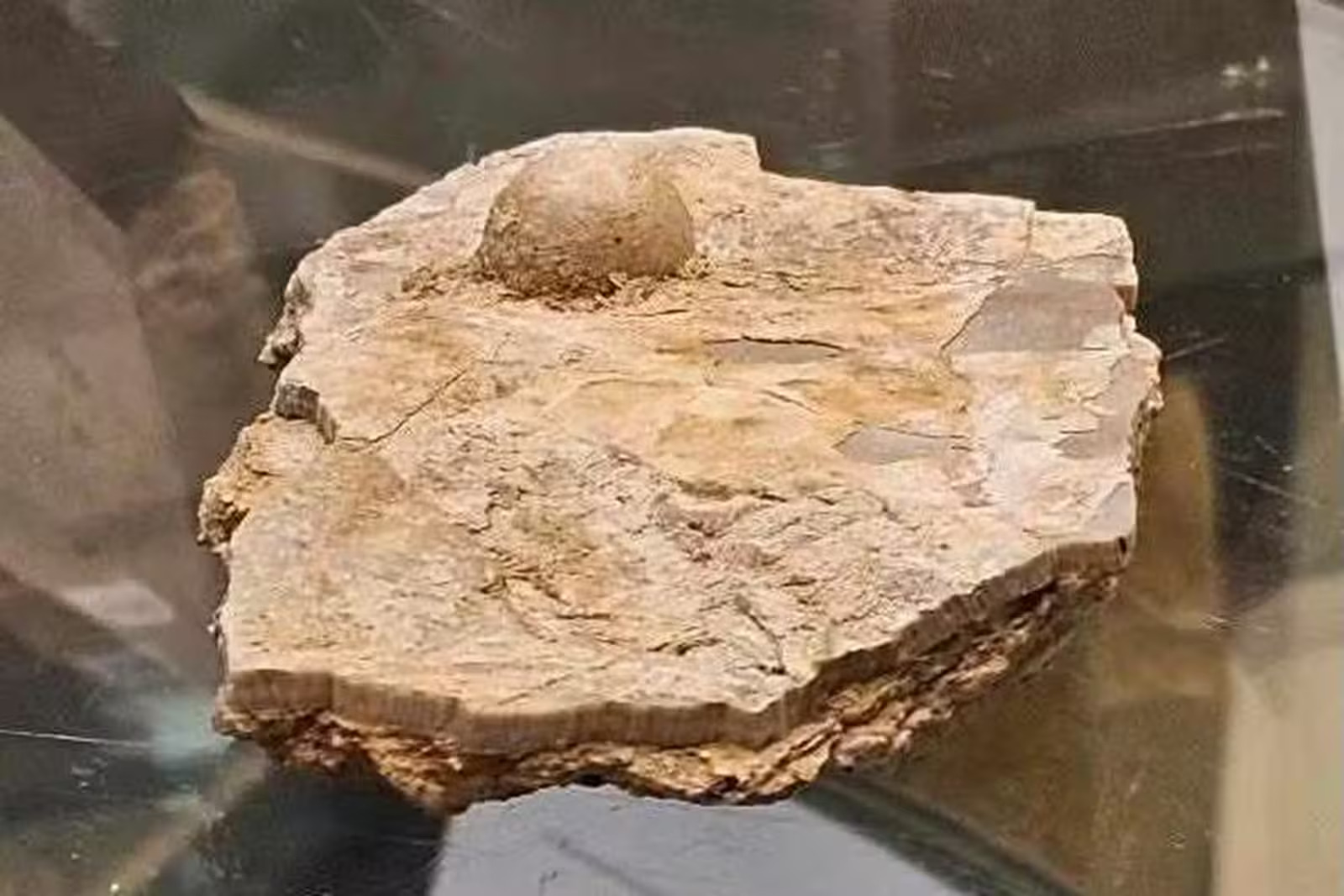


Gigantic Fossil Pearl From 100 Million Years Ago Discovered in Richmond, Interior Australia, Revealing Details About Mollusks From the Cretaceous Period
A rare discovery has captured attention in Queensland, Australia. An extremely ancient fossil pearl was excavated in Richmond, a small town known for its paleontological finds.
According to Gregory Webb, a paleontologist at the University of Queensland, the pearl measures nearly two centimeters in diameter, larger than a marble.
It is the largest ever found in the country. For him, the find is “one of the most significant discoveries of fossil mollusks in Australia, due to its enormous size.”
-
Brazilian School Turns Coffee Grounds into 3D Printer Material for Cost-Effective, Coconut Fiber-Reinforced Roof Tiles

-
13-Kilometer Smart Highway in the U.S. Manages Traffic Flow to Prevent Congestion

-
Scientists Used Space Particles to Reveal Structures Above a Submerged Tunnel Without Drilling
-
Astronomers Use James Webb Telescope Data to Trace the Path of Giant Exoplanet WD1856b, Which Survived Its Star’s Destruction and Migrated to a Close Orbit 80 Light-Years from Earth





Discovery Made by Tourist
The find occurred in 2019, when a tourist visiting the Kronosaurus Korner museum participated in a dig at one of the local sites.
In the town, with just over 500 residents, visitors can obtain permission to excavate fossils but must turn over everything of scientific value to the museum.
The tourist followed this rule and handed the pearl to volunteer Barbara Flewelling. The piece was then analyzed by Webb and his team over two years.
The process was delayed because the museum faced staff turnover and the Covid-19 pandemic interrupted research activities.
Analyses Confirmed Authenticity
Webb explained that the team used advanced technology to investigate the fossil without damaging it. “We confirmed that it is indeed a pearl,” he stated.
In Australia, only two other prehistoric pearls had been found. Both were smaller and formed of silica, which made them opalized specimens.
Unlike them, the new pearl is composed of calcium carbonate, the same material as true pearls.
Pearl Over 100 Million Years Old
The fossil, now on display at the Kronosaurus Korner museum, has been described as of extremely high quality, nearly intact after 100 million years.
Webb noted that the preservation is due to the fact that the pearl formed within a calcite shell, a mineral more stable than aragonite used by modern pearls.
Although today it is considered rare, the appearance of these pearls was common during the Cretaceous period.
They were produced by mollusks of the genus Inoceramus, which could reach up to 50 centimeters in diameter in the Australian region. In other parts of the world, these animals could grow to two meters.
Window to Understand Biology
For Webb, fossils like this help to better understand current biological processes.
“By observing how ancient biology, ecosystems, and communities reacted to changes around them, we can better understand how our modern biology also reacts,” concluded the researcher.


