






 Portuguese
  Spanish


Meet the FPSOs, the Floating Production Storage and Offloading (FPSO) Vessel That Extracts 180,000 Barrels of Oil Per Day and Is Essential for Oil Production in Brazil
Far from the Brazilian coast, in waters that reach depths of 2,000 meters, operate true “floating cities.” The FPSO type vessel, enormous structures that can be anchored in the same place for 25 years, extract, process, and store valuable oil from the pre-salt layer.
These vessels are the backbone of oil production in Brazil, led by Petrobras. A single FPSO can produce 180,000 barrels of oil per day, and its advanced technology is crucial to overcoming the challenges of the pre-salt and ensuring the country’s energy security in an increasingly sustainable manner.
What Is an FPSO and How Does It Operate in the Pre-Salt?
FPSO stands for Floating Production, Storage, and Offloading Unit. As the name suggests, it is a floating platform that functions as a complete plant offshore. It is connected to wells on the ocean floor and carries out the entire production cycle.
-
Mother Leaves Stable Job to Support Gamer Son’s Dream, Sees Channel Surpass 10 Million Subscribers, Now Helps Run a Million-Dollar Online Empire: The Story of Angie Baker

-
72-Year-Old Retired Chinese Engineer Builds Personal Cable Car for $1,200 to Avoid Climbing Stairs, Uses It for 5 Years Before Ordered to Dismantle

-
Neymar’s 14-year-old son, Davi Lucca, launches 3D dinosaur brand “Amigo Dino,” gaining attention on social media for his entrepreneurial spirit.
-
Improper Outlets Can Cause Fires and Damage Devices: How to Identify the Correct 10A or 20A Model for Each Appliance




First, it extracts oil, gas, and water from the reservoirs. Onboard, a complex processing plant separates these elements. The oil is treated and stored in large tanks within the hull of the vessel. The gas, in turn, is compressed and sent to the shore via pipelines or reinjected into the reservoir. Periodically, smaller tankers come alongside to offload the stored oil.
300-Meter Giants Anchored for 25 Years: Sizes and Lifespans
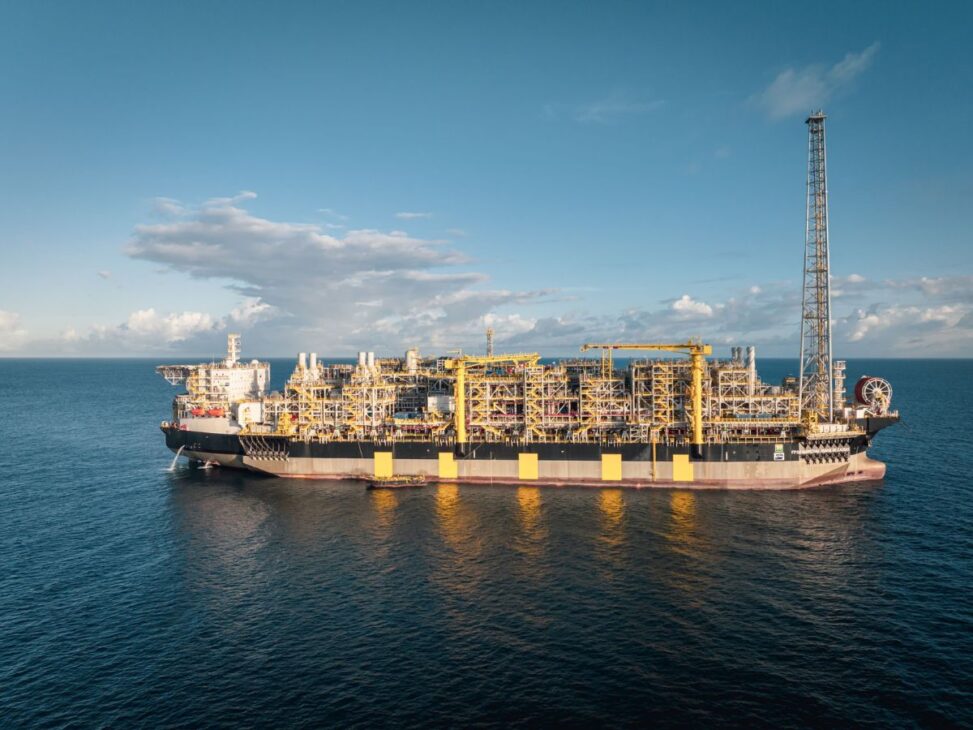
The FPSOs operating in the pre-salt are colossal. Their length can exceed 330 meters, and the width reaches over 60 meters. They are designed to operate at depths of up to 2,000 meters, anchored by a system that keeps them fixed in the same location for the entire lifespan of the field.
And that lifespan is long. An FPSO is built to operate for a minimum of 25 years, with a lifespan of up to 30, without the need to return to a shipyard for dry-dock maintenance. This demonstrates the robustness and complexity of the engineering involved in these structures.
The Case of the Búzios Field, the FPSO Almirante Barroso, and the “Super FPSO”
The Búzios Field, in the Santos Basin, is the largest deepwater oil field in the world. One of the units operating there is the FPSO Almirante Barroso, which began production in May 2023. It has the capacity to process up to 150,000 barrels of oil per day.
To further increase production, Petrobras is bringing in the Almirante Tamandaré FPSO, considered a “Super FPSO.” With operations expected to begin in February 2025, it will have the capacity to produce 225,000 barrels of oil per day and will be the first in Brazil to receive international certification for its low environmental impact.
The Mero Field, the FPSOs Sepetiba and Alexandre de Gusmão in 2025
Another giant of the pre-salt is the Mero Field, the third largest in the world. There, production is also in full swing with the help of modern FPSOs. The FPSO Sepetiba began operations at the end of 2023 and, in less than a year, has already reached its production peak of 180,000 barrels of oil per day.
In May 2025, the newest unit of the field, the FPSO Alexandre de Gusmão, went into operation. It also has the capacity to produce 180,000 barrels of oil per day and is part of a new generation of standardized platforms that expedite construction and commissioning.
Petrobras’ Leadership and Technologies to Reduce Emissions

Petrobras is the largest FPSO operator in the world and a pioneer in the use of this technology. The company plans to install 15 new units by 2030, reinforcing its focus on the pre-salt. However, growth comes with a strong commitment to sustainability.
The FPSO Sepetiba, for example, already operates with a carbon capture and storage (CCUS) system that reinjects CO2-rich gas into the reservoir. Additionally, Petrobras is testing the HISEP® technology, which separates gas from oil directly on the seabed. These innovations allow Brazilian pre-salt oil to emit up to 70% less CO2 than the global average, demonstrating that it is possible to combine production with environmental responsibility.


Muito dinheiro, para onde vai tudo isso?