Portuguese
  Spanish




Few Know, But There Is a Brazilian Municipality That Practically Rose From the Ashes After a Natural Disaster — and Today Holds Vestiges of a Forgotten City Below the Ground.
You have probably heard of Pompeii, the Roman city buried by a volcanic eruption from Mount Vesuvius in AD 79.
But what many people don’t know is that Brazil has its own “Tropical Pompeii” — and it holds a story as surprising as that of the famous Italian city.
In the heart of the Northeast, there is a municipality that needed to be completely rebuilt after being swallowed by the force of nature.
-
Rare fox feared “extinct” found alive on Caribbean island after over two decades without official sightings

-
21-Year-Old Brazilian Student Turns Homemade Popsicle Hobby into $100,000-a-Month Business

-
Australia Dumps Hundreds of Thousands of Tons of Gravel into Rivers to Restore Natural Barriers and Reverse 150 Years of Erosion

-
Bird-Inspired Robot Glides on Air Currents up to 10 m/s, Balances Itself, and Aims to Save Energy in Industrial Inspections and Meteorological Balloons



We are talking about Remanso, in Bahia — a city that is literally built upon its own ruins today.
And yes, this is more real than it seems fiction.
It All Started With the Arrival of the Waters
The city of Remanso was one of many that suffered the direct consequences of the construction of the gigantic Sobradinho Hydroelectric Power Plant in the 1970s.
To raise the reservoir of the plant, it was necessary to flood hundreds of kilometers of land, including entire cities, villages and rural areas.
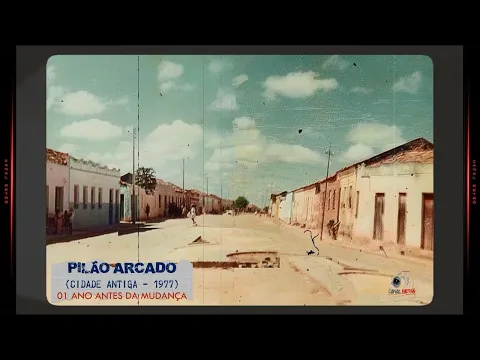
Remanso, with its riverside population and historic buildings, was completely submerged.
The population was relocated to a new site, in a higher and drier area, and a new Remanso was built from scratch, with new streets, new neighborhoods and new life.
But what remained underwater was never completely forgotten — especially during droughts, when part of the old city reappears among the shores of the lake.


Visible Ruins and the Submerged Mystery
In years of severe drought, such as in 2014 and more recently in 2021, the level of the Sobradinho reservoir drops so much that it is possible to see part of the old houses, churches, squares, and even the original pavement of the old Remanso.
People who lived there and were forced to move return to visit the ruins of their old homes, now covered in moss, sand, and silence.
It is like visiting a swallowed past — a memory that comes back to life in the midst of the drought.
The similarity with Pompeii goes beyond the visual aspect: just like the Italian city, Remanso has become an involuntary archaeological site, a frozen record of an era that no longer exists.
Nostalgia Tourism: An Underrated Attraction
The phenomenon of the ancient city rising from the lake attracts curious visitors, former residents, and tourists.
But it is still a type of tourism underestimated in Brazil, unlike Pompeii, which is commercially exploited and attracts millions of visitors each year.
Some proposals to create a kind of open-air museum have been considered, but they face logistical and environmental barriers.
Still, the rebuilt city keeps the memory of old Remanso alive, with stories, old photographs, and a culture that has never faded.
Other Similar Cases in Brazil
Remanso is not an isolated case.
Petrolândia (PE), Carmo (RJ), and even districts of Três Marias (MG) also had entire areas submerged by dams.
But the case of Remanso is one of the most emblematic because the original city is practically intact beneath the surface of the water.
The “Brazilian Pompeii” is, therefore, more than just a metaphor: it is a reality hidden among the calm waters of the Sertão.
Why Is This So Fascinating?
Stories like that of Remanso activate a powerful trigger: the mystery beneath our feet.
Knowing that there is an entire city submerged, with houses, churches, streets, and human stories, provokes curiosity, nostalgia, and a certain existential discomfort.
It is the feeling that something was left behind, but never completely forgotten.
Like Pompeii, Remanso holds the portrait of an interrupted time — a reminder that nature, or progress, can change everything in a matter of days.