






 Portuguese
  Spanish
  7 min of reading
  0 comments


The most resilient coral reefs on the planet cover 165,000 km² in 71 countries and can face climate change, ocean warming, and local pressures. Treated as living banks, they depend on protected areas to preserve food, income, coastlines, and coastal communities in the coming decades on an urgent global scale.
The coral reefs received a rare piece of positive news amid climate change: scientists identified about 165,000 km² with a higher potential to resist ocean warming and recover. The research was released in June 2026, with data involving 71 countries and a warning about protected areas.
The report from Oceanographic Magazine shows that the study, linked to the Wildlife Conservation Society and Macquarie University, expands previous estimates and points out priority areas for conservation. The discovery shows that part of the reefs can function as living recovery banks for ecosystems, coastlines, and communities that directly depend on the sea.
Study changes the view on the future of reefs
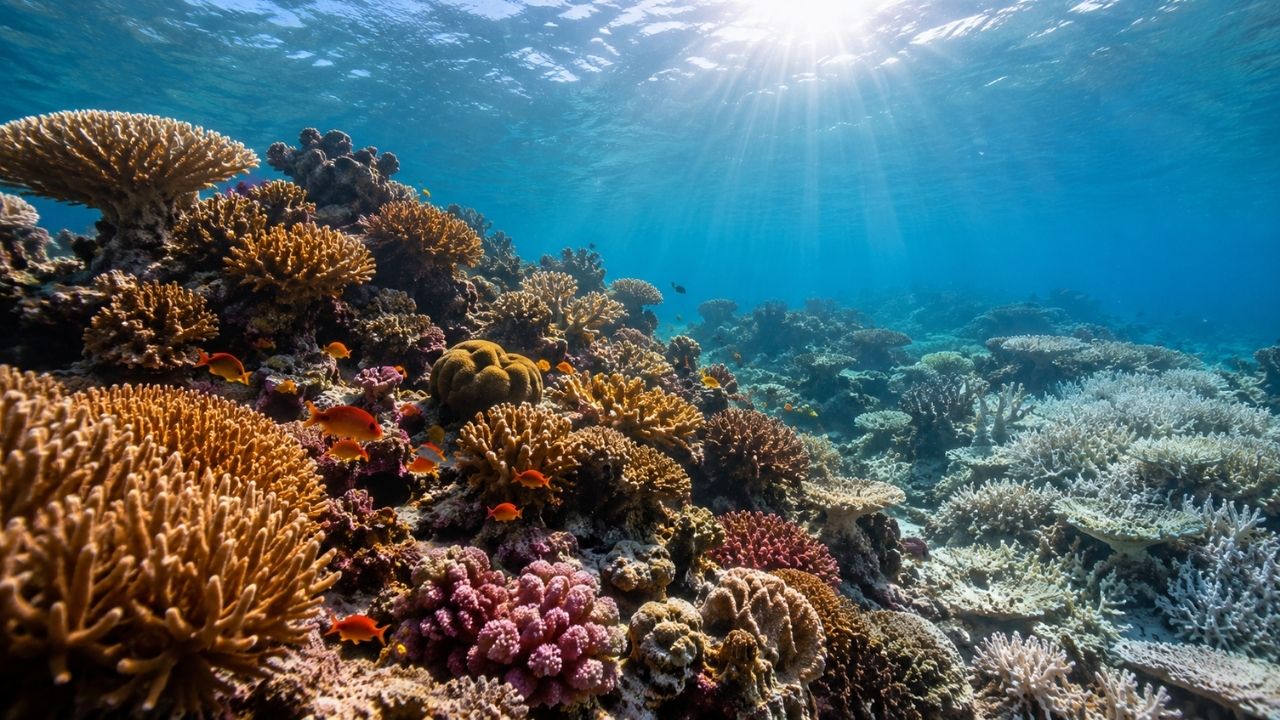
For years, coral reefs have been treated as one of the most fragile symbols of the climate crisis. Marine heatwaves, bleaching, pollution and coastal pressure reinforced the idea that many of these ecosystems were heading towards irreversible losses.
-
An American giant could disappear in five years: Utah’s Great Salt Lake has already shrunk by two-thirds, exposing a bed full of arsenic, and scientists are calling its collapse an “environmental nuclear bomb” about to explode over a city of more than a million people.

-
Children give more meaning to life, but not more happiness: study with over 5,500 people in 10 countries reveals surprising discovery about well-being, relationships, and the true impact of parenting throughout life.

-
New Philips Air Fryer Series 4000 arrives with only 24 cm in width, vertical dual basket, and technology that synchronizes the preparation of two different dishes to be ready at exactly the same time.
-
Owner of a 980 m² house in Paraná installs 48 solar panels for R$ 70,000 and sees electricity bill drop from R$ 1,200 to around R$ 200 per month.



The new analysis does not eliminate the risk, but it changes the tone of the conversation. It shows that there are areas with a greater capacity to withstand thermal stress and recover after disturbances, which opens a strategic window for conservation.
Map found 165,000 km² resilient
The survey identified more than 165,000 km² of coral reefs with the potential to persist in a warming scenario. According to the release, this area triples previous estimates of climate refuges for corals.
The size is impressive because it turns hope into something mappable. Instead of speaking generically about saving reefs, scientists point out where protection can have the greatest effect in the coming decades.
Areas are spread across 71 countries
The identified reefs appear in 71 countries and dozens of territories. This shows that resilience is not concentrated in a single region, although some countries have larger areas.
The research highlights Australia, the Bahamas, Cuba, Indonesia, and the Philippines, which concentrate a significant portion of the most promising reefs. This distribution creates international responsibility because the survival of these ecosystems depends on decisions made by many governments.
Data intelligence helped refine the map
The research used machine learning models trained with decades of real observations of coral reefs, as well as climate and ocean data. The goal was to locate areas with the greatest chance of withstanding heat until 2050.
This technical advancement is important because it increases the precision of planning. More detailed maps allow governments, scientists, and communities to prioritize protection where the chance of recovery is greater.
Three types of climate refuge were identified
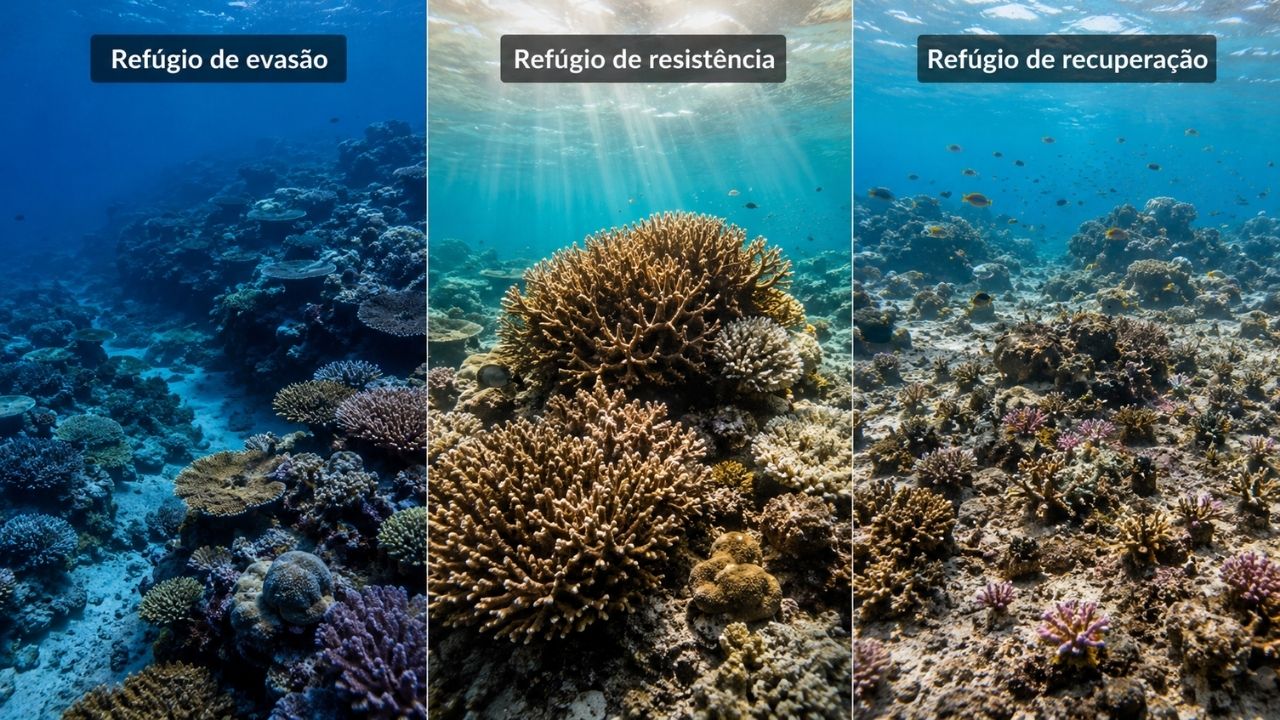
The study describes different forms of resilience. Some reefs function as evasion refuges, located in cooler spots or less exposed to the worst thermal stress.
Others are resistance refuges, with corals more capable of withstanding heat events. There are also recovery refuges, where the ecosystem can reorganize more quickly after disturbances. This division shows that not all reefs survive through the same mechanisms.
Heat remains a central threat
Despite the good news, ocean warming remains the most serious threat. When the temperature rises too much, corals can expel the algae living in their tissues, a process known as bleaching.
If thermal stress persists, the reef loses ecological function and may collapse. The discovery of resilient areas does not mean total security, but indicates where there is still a greater margin for survival.
Reefs function as living recovery banks
One of the strongest points of the research is the idea of living banks. Resilient coral reefs can maintain populations capable of helping in the recovery of degraded areas, serving as a source of diversity and ecological reorganization.
The image is powerful because it changes the perception of the problem. These reefs are not just isolated survivors; they can function as natural reserves for the future of more vulnerable regions.
Nearly 1 billion people depend on them
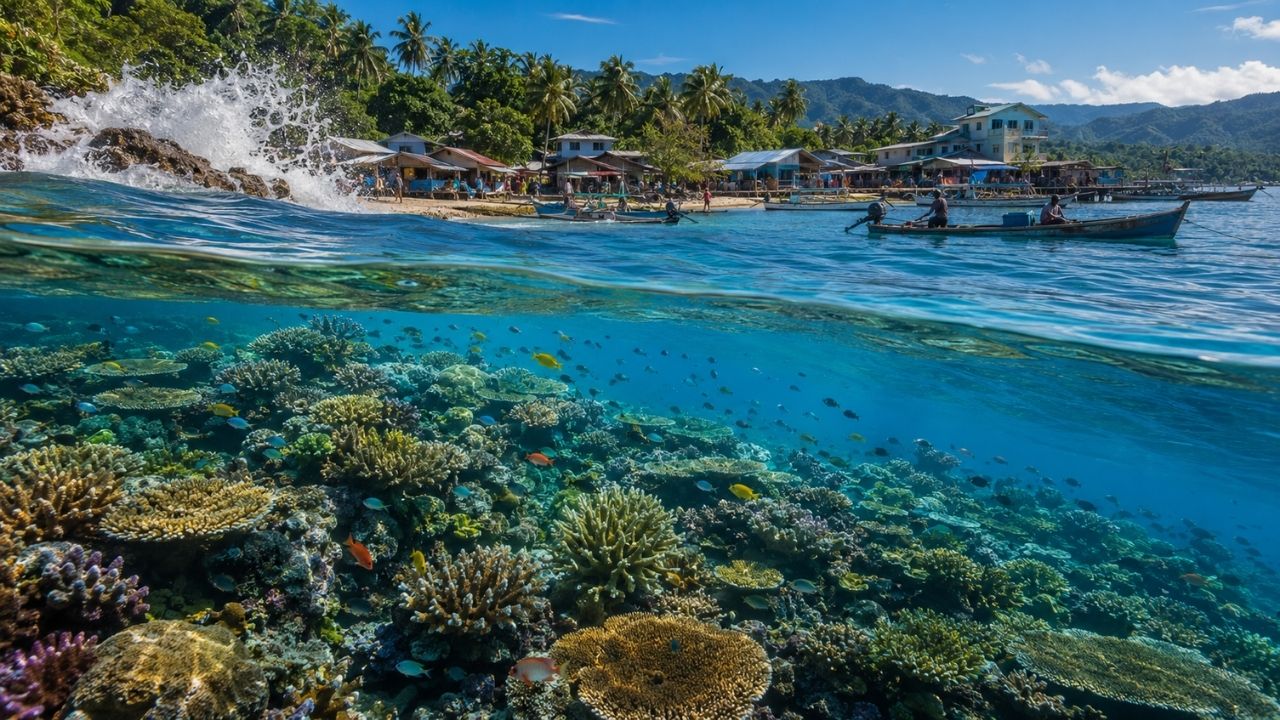
Coral reefs support food, income, tourism, fishing, and coastal protection for nearly 1 billion people worldwide. Therefore, the loss of these ecosystems is not just a distant environmental tragedy.
When a reef degrades, coastal communities lose natural barriers against waves, sources of income, and food security. Protecting resilient reefs also means protecting local economies and human lives.
Coastal protection can prevent greater damage
Healthy reefs help reduce the force of waves before they reach the coast. This function is especially important in regions exposed to storms, erosion, sea level rise, and extreme weather events.
Without this natural barrier, coastlines become more vulnerable. The conservation of coral reefs can prevent economic losses, damage to homes, and additional pressure on coastal infrastructure.
Only 28% are in protected areas
One of the warnings of the research is that only about 28% of the identified priority reefs are within protected or conserved areas. This means that more than 119,000 km² still remain outside formal protection structures.
This data makes the discovery urgent. Mapping resilient reefs is just the first step; protecting them from destructive fishing, pollution, and poorly planned coastal development is the decisive stage.
The campaign aims to accelerate protection
The Our Reefs, Our Future campaign brings together organizations like WCS, WWF, and The Nature Conservancy to pressure governments to include these reefs in conservation targets. The goal is to turn science into concrete action.
The initiative aligns with global commitments to protect 30% of the planet by 2030. The logic is simple: if we already know where the reefs with the best chance of survival are, delaying their protection increases the risk of missing this opportunity.
Local pollution can still destroy refuges
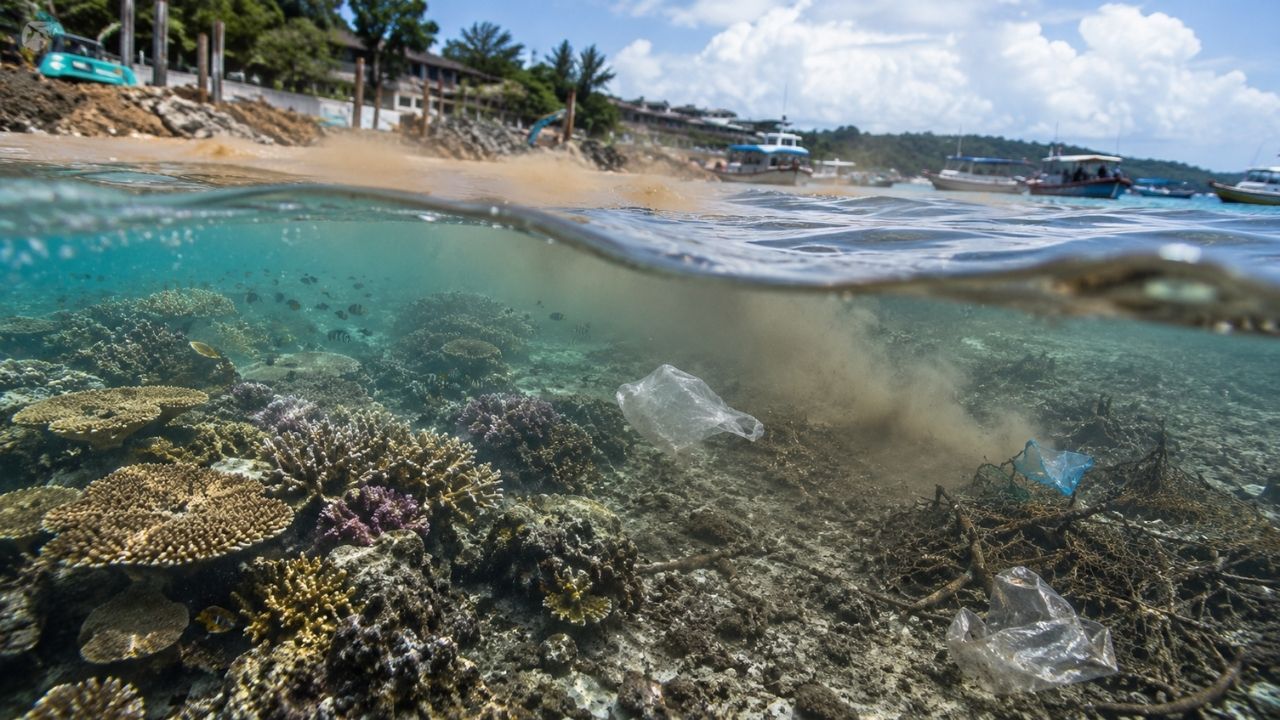
Even reefs more resistant to heat can be weakened by local issues. Pollution, destructive fishing, sediments, coastal works, and poorly managed tourism reduce the recovery capacity of these environments.
This means that climate resilience is not a shield. A reef with the potential to survive warming can still collapse if it continues to be exposed to direct and avoidable threats.
Communities need to be at the center
The protection of coral reefs cannot be decided only in conferences, maps, or offices. Indigenous peoples, coastal communities, and populations dependent on fishing need to participate in the decisions.
This social dimension is essential. Conserving reefs without considering those who live around them can create conflicts, while local partnerships increase the chance of real and lasting protection.
Caribbean gained new areas on the map
The research also identified important areas in the Caribbean, including Belize, Panama, and the Turks and Caicos Islands. Some of these regions had been less highlighted in previous assessments.
This update shows the value of more detailed models. When science improves the map’s resolution, previously invisible places can enter the conservation agenda and receive international attention.
Australia, Bahamas, Cuba, Indonesia, and Philippines stand out
More than half of the resilient reefs identified are concentrated in five countries: Australia, Bahamas, Cuba, Indonesia, and the Philippines. This concentration creates opportunities but also increases the responsibility of these governments.
If well protected, these areas can help sustain an important part of the global recovery of reefs. If neglected, the loss could affect not only the country where they are located but the entire international conservation effort.
Digital platform should guide decisions
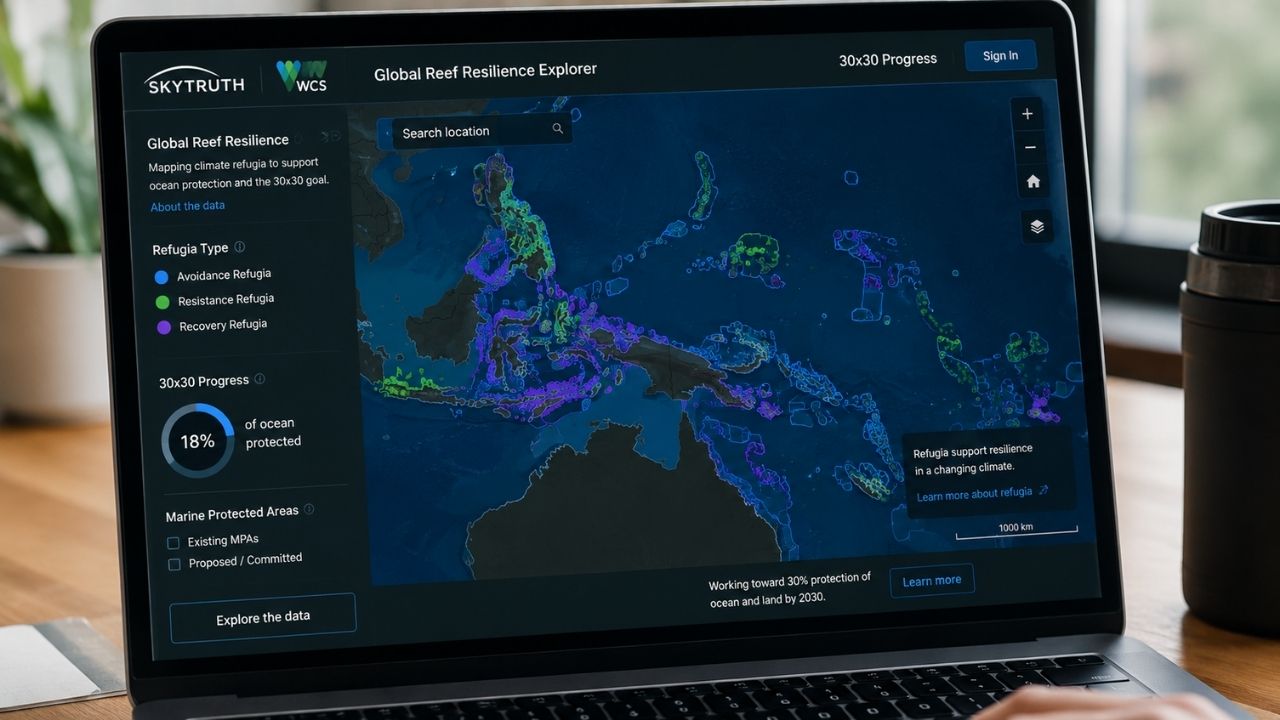
To make the data more useful, SkyTruth partnered with WCS to display the results on an interactive platform linked to the 30×30 goal monitoring. The proposal is to facilitate decisions by governments, communities, and funders.
The tool helps turn a technical study into practical planning. When reefs appear on the map more accurately, it becomes harder to claim a lack of information to delay protection measures.
Hope does not mean tranquility
The discovery of resilient reefs brings hope, but it should not be read as a sign that the crisis is over. Ocean warming continues to advance, and extreme events can surpass the resistance capacity of many ecosystems.
The study offers an opportunity, not a guarantee. The difference between recovery and collapse will depend on the speed of actions, funding, and the reduction of local and global pressures.
The future of reefs depends on scale
Protecting some isolated spots may not be enough. Coral reefs form ecological networks connected by currents, reproduction, larval dispersion, and relationships with human communities.
Therefore, conservation needs to gain scale. The challenge is to create networks of protected areas that connect refuges, reduce local impacts, and increase the chance of recovery over time.
A rare chance to act before total loss
The coral reefs are facing one of the greatest environmental threats of the century, but new mapping shows that there are still areas with real potential for resistance and recovery. The 165,000 km² identified in 71 countries can function as living banks for the future of the oceans.
The question now is whether governments, companies, and communities will act quickly enough to protect these refuges before heat, pollution, and coastal destruction close this window. Do you think the world can still save part of the coral reefs or is it already too late? Share your opinion.


Be the first to react!