Portuguese
  Spanish


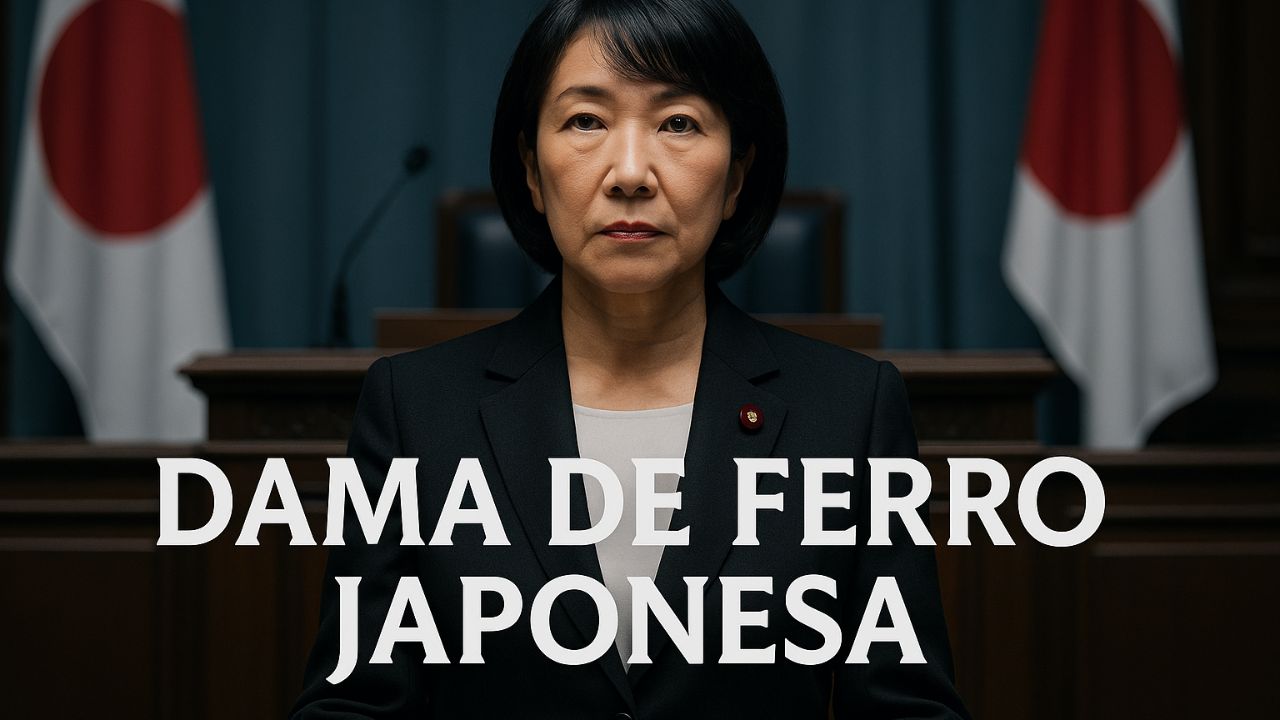

Sanae Takaichi Makes History by Becoming Japan’s First Female Prime Minister. Conservative and Firm, the “Iron Lady” Promises Austerity and Reforms.
Japan is experiencing a historic milestone. For the first time, the country will be led by a woman: Sanae Takaichi, a conservative politician and advocate of fiscal austerity. The new Japanese prime minister was elected on Tuesday (10/21/2025) to replace Shigeru Ishiba, who left office after the Liberal Democratic Party (LDP) lost in the July elections.
At 64, Takaichi ends a three-month period of political uncertainty and takes command of the world’s fourth-largest economy.
An admirer of British Margaret Thatcher, the new Japanese leader promises to implement firm and conservative policies, consolidating her image as Japan’s “Iron Lady.”
-
U.S. Women’s History Museum Stalled in Congress Amid Gender Identity and Diversity Debate

-
European Parliament Approves Digital Euro, Aiming to Challenge Visa and Mastercard’s Dominance and Transform Payments Across Europe by 2029
-
Israel finds Hezbollah militarized tunnel over 200 meters long under village, with 4 missile launch shafts, 12 chambers, anti-tank missiles, drones, and weapons depots at a depth of 25 meters.

-
Ukraine launches largest drone attack on Moscow since 2022, Russia claims to have intercepted nearly 200 aircraft near the capital, Kapotnya refinery targeted again, and offensive reignites alert about war reaching the Russian energy heart just a few kilometers from the Kremlin.




From Heavy Metal Drummer to Political Leader of Japan
Before reaching the highest office in Japanese politics, Sanae Takaichi had a peculiar journey. During her youth, she was the drummer of a heavy metal band and a motorcycle rider — traits that reveal a determined and independent personality.
Elected for the first time in 1993 from her hometown Nara, the prime minister built a solid career within the LDP.
She served as Minister of Economic Security, Internal Affairs, and Gender Equality, although she was more noted for her austere stance than for social causes.
In her first statement after taking office, Takaichi reaffirmed her motto of intense work:
“I will abandon the expression ‘work-life balance.’ I will work, work, work, and work.”
Conservatism and Resistance to the Gender Agenda
Despite breaking a historic barrier by becoming Japan’s first female prime minister, Sanae Takaichi avoids linking her victory to gender equality issues.
Known for her ultra-conservative positions, she opposes same-sex marriage, name changes between couples, and female succession to the imperial throne.
Although she has promised to increase women’s presence in the government, she has appointed only two female ministers and one special advisor.
This stance reflects the Japanese political structure, where only 15% of parliamentary seats are held by women.
“Ms. Takaichi’s policies are extremely aggressive, and I doubt she would consider policies that recognize diversity,” assessed commentator Chiyako Sato from the Mainichi newspaper.
The Prime Minister Who Follows in Shinzo Abe’s Footsteps
A disciple of former Prime Minister Shinzo Abe, assassinated in 2022, Takaichi is expected to maintain the political line of her mentor.
Among her main goals are strengthening the military, revising the pacifist constitution, and sustained economic growth.
Analysts believe the new prime minister will attempt to position Japan as a more assertive power in Asia, even if it escalates diplomatic tensions.
Takaichi has already shown resistance in acknowledging war crimes committed by the country and defended the removal of references to sexual slavery in school textbooks — a stance that could complicate relations with China and South Korea.
Recently, to avoid diplomatic conflicts, she sent only a religious ornament to the Yasukuni Shrine, a symbolic site for Japanese ultra-nationalists, instead of attending in person.
Economic Challenges and the Burden of Austerity
On the economic front, Sanae Takaichi takes power amid rising inflation and public discontent with the cost of living.
She promises an austerity package to stabilize public finances while launching fiscal stimuli to boost growth.
The expectation is that the containment measures will also raise the prices of goods and services, testing the new prime minister’s popularity in the early months of her administration.
According to internal sources from the Liberal Democratic Party, Takaichi is expected to announce a cabinet formed by allies of veteran Taro Aso, one of the most influential leaders of the party.
A New Chapter in Japanese Politics
The arrival of Sanae Takaichi to power represents more than a change in leadership: it is a sign of the rightward shift that Japan has been consolidating in recent years.
While many celebrate the historic achievement of a woman reaching the top of Japanese politics, others warn that the new prime minister symbolizes a return to traditional policies centered on authority, discipline, and the defense of conservative values.
Whether as the new “Iron Lady” of Asia or as a transitional leader, Sanae Takaichi begins her government under the watchful eyes of a nation seeking political stability — and a world observing how Japan’s first female prime minister intends to make her mark in history.