Portuguese
  Spanish



It Has Always Been Difficult to Understand Medical Prescriptions, Especially for Those Who Are Older, But Google Promises to Succeed Where Many Have Failed. Science and Technology in Recent Decades Have Been Working Together to Help Save Lives and Prevent Numerous Diseases, Yet They Have Not Been Able to Solve a Relatively Simple Problem: Translating Doctors’ Handwriting on Patients’ Prescriptions.
At an annual conference in India, on 12/19/2022, Google announced that it is studying with several pharmacists the best way to decipher what doctors write.
It is still just a research prototype. There is no date for it to be released to the public, which has been struggling for years with the difficulty of reading medical prescriptions. If the resource works, it will allow the application to process the image after taking a photo of the patient’s prescription and transform what was illegible into text that can be easily read by the person or even the pharmacist.
Those responsible for the technology assure that the application is just another tool to assist pharmaceutical professionals in providing the correct medication to each patient.
-
Pennsylvania Mine Creates Ice in Summer Heat and Melts in Winter, Turning a Mountain Crevice into a Reverse Natural Refrigerator

-
China Accelerates Global Expansion of Robotics: From Smart Vacuums to Industrial and Humanoid Machines, Millions Exported to Over 150 Markets
-
Polar Air Mass to Hit Brazil: Temperatures to Plummet in Nine States, Near Freezing in the South with Frost Risk Until Monday
-
Chinese “dark factories” produce electric cars 24/7 with minimal human intervention, as Zeekr assembles 800 units daily, raising concerns in Brazil.




Who has never been to the doctor and received a prescription with an illegible handwriting? Even many using typed prescriptions, handwritten medical prescriptions are still used by many doctors. If Google succeeds, it will be a significant advancement, once again showing that technology allied with science is one of the greatest achievements of the modern world.
Thinking about this difficulty, the company is developing AI – Artificial Intelligence that will translate doctors’ handwriting. The prototype will focus on notes and prescriptions made by doctors.
Google Lens Solves the Problem of Doctors’ Illegible Handwriting
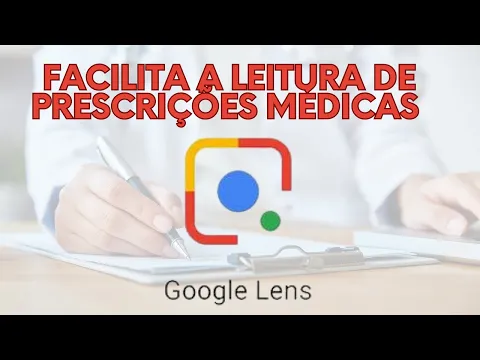

The technology will be integrated into Google Lens and can be used not only to translate doctors’ handwriting but also in some cases to recover old documents.
Google Lens is a tool that uses artificial intelligence to detect and recognize objects, animals, plants, and many other things. It is also used to translate and transcribe various languages.
During the Google for India, besides presenting the app prototype that promises to translate doctors’ handwriting, the technology company also talked about other projects in development, such as a new unified tool that promises to cover over 100 Indian languages for speech and text. All of this to facilitate communication among users in the country, which number in the millions.
Even with some difficulties faced by the company in India, it is still where Google has accumulated more than half a billion users. India is a key market that the tech giant cannot forgo, even while navigating antitrust regulators.
Even without dates for the launch of these technologies, users are already eager to check out the tools that promise to solve some of humanity’s oldest problems. Now we can only wait and hope that the prototypes become a reality.