Portuguese
  Spanish


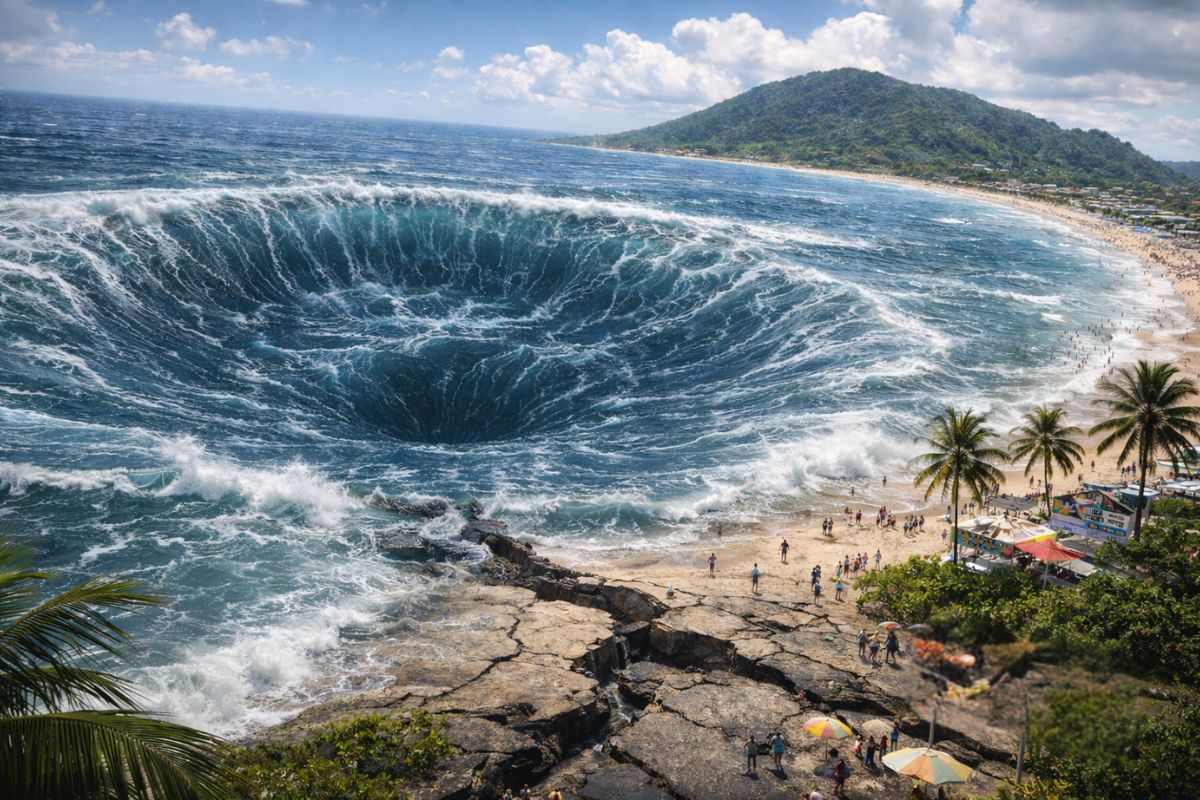

An earthquake of 2.4 degrees on the Richter scale was recorded by the USP Seismology Center at 12:28 AM on Sunday (12), in the ocean, about 13 kilometers off the coast of Paraná. Residents of Pontal do Paraná and Ilha do Mel reported being startled on social media, but there is no record of structural damage.
A earthquake of magnitude 2.4 on the Richter scale shook the coast of Paraná in the early hours of this Sunday (12) and startled residents who felt the ground shake without warning. The tremor was recorded by the USP Seismology Center at 12:28 AM, with its epicenter in the ocean, about 13 kilometers from the coast, near the seabed in the Paranaguá region. On social media, reports of being startled multiplied among residents of Pontal do Paraná and Ilha do Mel, who described the sensation of sudden vibration during the early morning, a time when silence makes any tremor more noticeable.
Despite the scare, the earthquake did not cause structural damage. Tremors of this magnitude are rarely destructive, but the proximity to the coast and the fact that it was felt by residents drew attention to a phenomenon that many Brazilians are unaware of: Brazil also experiences earthquakes, and they occur more frequently than most people think. Professor Marcelo Belentani de Bianchi from USP has previously explained, when commenting on a similar 2.5 magnitude earthquake in Contagem, Minas Gerais, that “tremors like this happen almost every week in some part of Brazil and have little chance of causing any serious damage.”
What is known about the earthquake recorded off the coast of Paraná
According to the portal ndmais, the earthquake on Sunday had its epicenter located in the Atlantic Ocean, approximately 13 kilometers from the Paraná coast, near the seabed. The USP Seismology Center, responsible for seismic monitoring in Brazil, recorded the event at 12:28 AM with a magnitude of 2.4 on the Richter scale, a value considered low by seismology, but sufficient to be perceived by people at rest, especially in higher buildings or in quiet areas like Ilha do Mel.
-
The battery that promises to change cell phones and electric cars still has a microscopic enemy: researchers discover how lithium dendrites pierce the solid electrolyte and are already testing ways to prevent cracks and short circuits.

-
An old ferry rusted for more than 10 years in New York, almost sank after the engine room was flooded, and now volunteers are rushing to clean the hull, remove wires, life jackets, and loose paint before sinking it in the Atlantic to become an artificial reef full of marine life.

-
SpaceX launch turned Falcon 9 into a giant jellyfish in the night sky, with a colorful plume illuminated by the Sun at high altitude, confusing observers and showing how a routine flight can become a rare spectacle of atmospheric physics over Earth.
-
Advancement in science: a new plastic developed by researchers in the USA combines structural strength and thermal blocking in a single technology, opening new possibilities for construction, transportation, electronics, and sustainable solutions with a direct impact on global energy efficiency.



The map released by the Seismology Center positions the earthquake in the region near Paranaguá, one of Brazil’s main ports. There is no record of any structures being compromised, and no local authority issued a risk alert after the event. The depth of the earthquake, close to the seabed, and the distance from the coast are factors that mitigated the intensity felt on land, although residents reported clear vibrations strong enough to wake those who were sleeping.
Why residents of Pontal do Paraná and Ilha do Mel felt the earthquake
The perception of an earthquake depends on several factors beyond magnitude. The early morning hour, when environmental noise is minimal, makes vibrations that would go unnoticed during the day become evident. The proximity of the epicenter to the coast, just 13 kilometers away, also contributed to the seismic waves arriving with enough intensity to be felt by residents in Pontal do Paraná and Ilha do Mel.
The composition of the coastal soil can amplify seismic waves under certain conditions. Sandy terrains and areas close to sea level tend to transmit vibrations differently than rocky soils, which explains why some residents felt the earthquake more intensely than others in neighboring locations. On social media, reports varied from “a quick shaking” to “it felt like a large truck had passed down the street,” typical descriptions of how laypeople perceive a low-magnitude earthquake.
Brazil experiences earthquakes more frequently than people think
The surprised reaction of residents on the Paraná coast reflects a widespread lack of knowledge: Brazil records hundreds of earthquakes each year, although the vast majority are of low magnitude and go unnoticed by the population. The country is not located on the boundaries of tectonic plates like Chile, Japan, or Turkey, which significantly reduces the risk of devastating earthquakes. But that does not mean that Brazilian territory is seismically inert.
Most earthquakes that occur in Brazil have natural causes and are associated with the great geological pressures acting beneath the Earth’s crust. Internal geological faults, accumulation of tectonic stress, and even the settling of deep underground layers can generate tremors that, although rarely exceeding magnitudes of 4 or 5, are real and measurable. The earthquake on Sunday in Paraná is yet another record in this continuous series of events that the USP Seismology Center constantly monitors throughout the national territory.
What to do when an earthquake is felt in Brazil
For residents who felt the earthquake in the early hours of Sunday, the experience was new and frightening. The recommendation from seismologists for low-magnitude tremors like this is to remain calm and stay away from windows, mirrors, and objects that could fall from shelves. In the case of a more intense earthquake, the guidance is to protect oneself under tables or solid structures and wait until the shaking stops before leaving the area.
In the Brazilian context, where destructive earthquakes are extremely rare, the main risk is not the collapse of buildings, but the panic that a lack of information can cause. Residents who have never experienced an earthquake may react disproportionately, running out of their homes or causing accidents on stairs and emergency exits. Understanding that Brazil has constant seismic activity, but of low intensity, is the best way to turn fear into information and information into preparedness.
An earthquake of 2.4 degrees was felt on the coast of Paraná and startled residents in the early hours of Sunday. Do you live in the area and feel the tremor? Have you ever experienced an earthquake in Brazil?