Portuguese
  Spanish


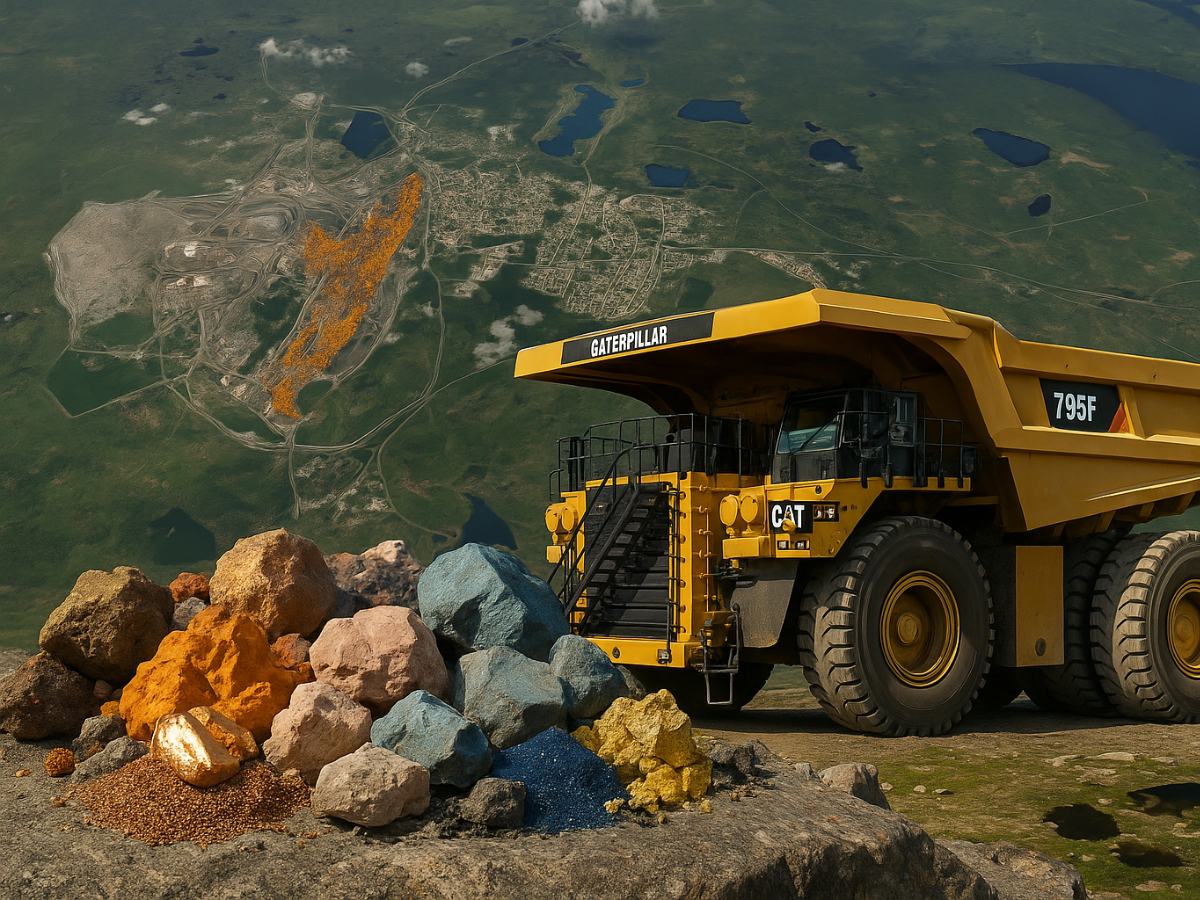

Announced by LKAB, the Per Geijer Deposit in Sweden Contains Over 2 Million Tons of Rare Earth Oxides, but Faces a Long Path to Production Amid Technical and Socio-Environmental Challenges
The discovery of the Per Geijer deposit in northern Sweden by the state mining company LKAB represents a milestone for Europe’s raw material security. Identified as the largest rare earth deposit in Europe, it promises to reduce the continent’s deep reliance on China for these minerals, which are vital for the production of electronics, electric vehicles, and wind turbines.
However, the journey from discovery to production is long and complex. The project faces technical and environmental challenges and, crucially, strong opposition from the Sámi indigenous people, whose ancestral lands the deposit is located on.
What Is the Per Geijer Deposit and Its Importance to Europe?
The initial announcement by LKAB in January 2023 mentioned over 1 million tons of rare earth elements (REE) oxides. Subsequent explorations until March 2025 drastically increased this estimate to 2.2 million tons of in situ REE oxides, within a total mineral body of 1.2 billion tons.
-
Study Reveals 97% of Pregnant Munduruku Women in the Brazilian Amazon Have Mercury Levels Above Safe Limits, 90% of Newborns Contaminated by Gold Mining

-
China could reduce iron ore imports from 80% to 50% of consumption by 2030, while its share in global steel production falls from 52% to 46%, in a shift that could reshape the global market, says CMRG.
-
Brazil is sitting on one of the largest lithium reserves in the world, in the Jequitinhonha Valley, but national mining has almost become an appendage of China: 97% of the metal’s export goes to a single country, which also dominates refining.
-
Iron ore falls to 762 yuan in China as real estate sales decline and steel production hits lowest level since 2018


This is the largest rare earth deposit in Europe known. Geologically, it is an iron-apatite oxide deposit, containing all 17 rare earth elements, including the strategic Neodymium, Praseodymium, Dysprosium, and Terbium, essential for permanent magnets. Recognizing its importance, the European Union granted the project the status of “Strategic Project” under the Critical Raw Materials Act (CRMA).
LKAB’s Strategy and the Project of the Largest Rare Earth Deposit in Europe
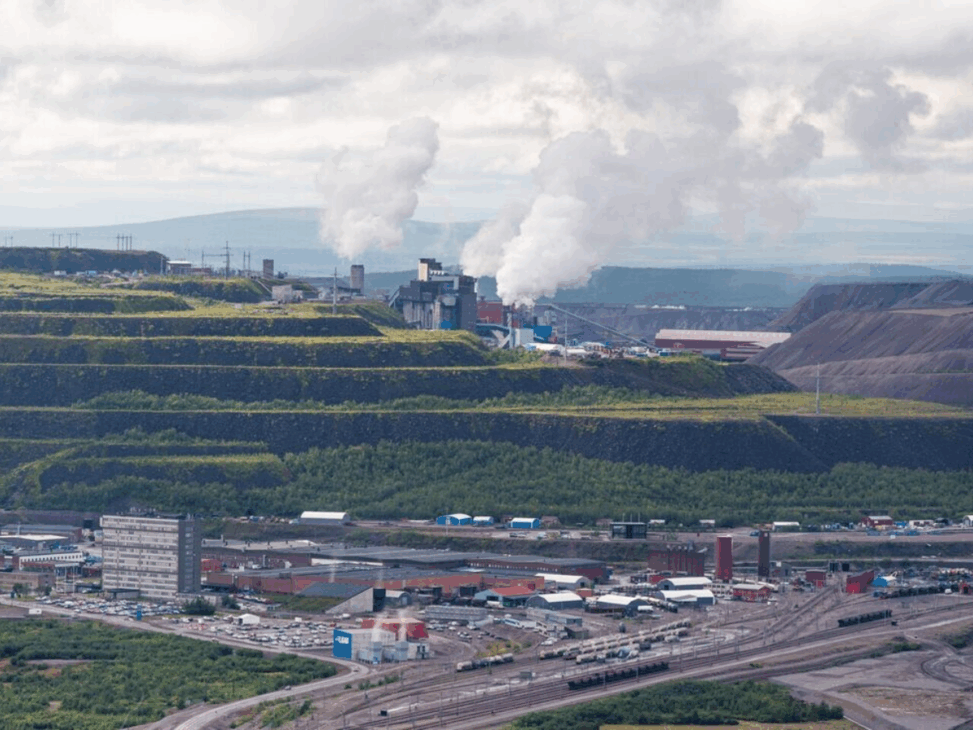
LKAB estimates that it will take at least 10 to 15 years before commercial mining at Per Geijer begins and the raw materials reach the market. The development plan is phased and includes the excavation of a multi-kilometer exploration tunnel, 700 meters deep.
The company’s strategy is innovative and is based on the ReeMAP initiative, which aims for a circular economy approach. The plan involves extracting rare earths and phosphorus (a critical nutrient for fertilizers) from apatite, a mineral present in both existing iron mining waste and the ore from Per Geijer. A demonstration plant in Luleå is under construction to validate the complex hydrometallurgical technology.
Europe’s Dependence on China
The discovery of Per Geijer is geopolitically significant. China dominates the global rare earth market, controlling about 60-70% of mining and nearly 90% of processing. This dependence leaves Europe vulnerable to supply disruptions and price manipulation.
LKAB projects that, in the long run, the Per Geijer project could supply up to 18% of Europe’s rare earth demand. While this does not represent total self-sufficiency, it is a substantial contribution that diversifies supply sources and increases the continent’s bargaining power.
The Environmental Impact and the Rights of the Sámi Indigenous People
The development of a large-scale mine in the sensitive Arctic ecosystem faces rigorous environmental scrutiny. However, the most prominent challenge is social. The Per Geijer deposit is located on ancestral lands of the Sámi indigenous people, the only recognized indigenous people in the EU.
The Sámi Council and other representatives have expressed strong opposition to the project, viewing it as a threat to their culture, traditional livelihoods (such as reindeer herding), and a violation of their rights to Free, Prior, and Informed Consent (FPIC). They fear that expedited licensing by the CRMA will prioritize resource extraction over their concerns.
The Role of the Critical Raw Materials Act (CRMA) and the Future of the Largest Rare Earth Deposit in Europe


The Critical Raw Materials Act (CRMA) of the EU, which came into force in May 2024, is a key piece of legislation. It aims to reduce dependence on imports, setting targets for Europe to achieve 10% of extraction, 40% of processing, and 25% of recycling of strategic materials domestically by 2030.
The status of “Strategic Project” granted to Per Geijer may expedite its licensing and access to funding. However, the success of the CRMA and projects like Per Geijer will depend on the ability to balance strategic development with rigorous environmental protection and respect for indigenous rights. How Europe and Sweden navigate this delicate balance will define the future of sustainable mining on the continent.