Portuguese
  Spanish


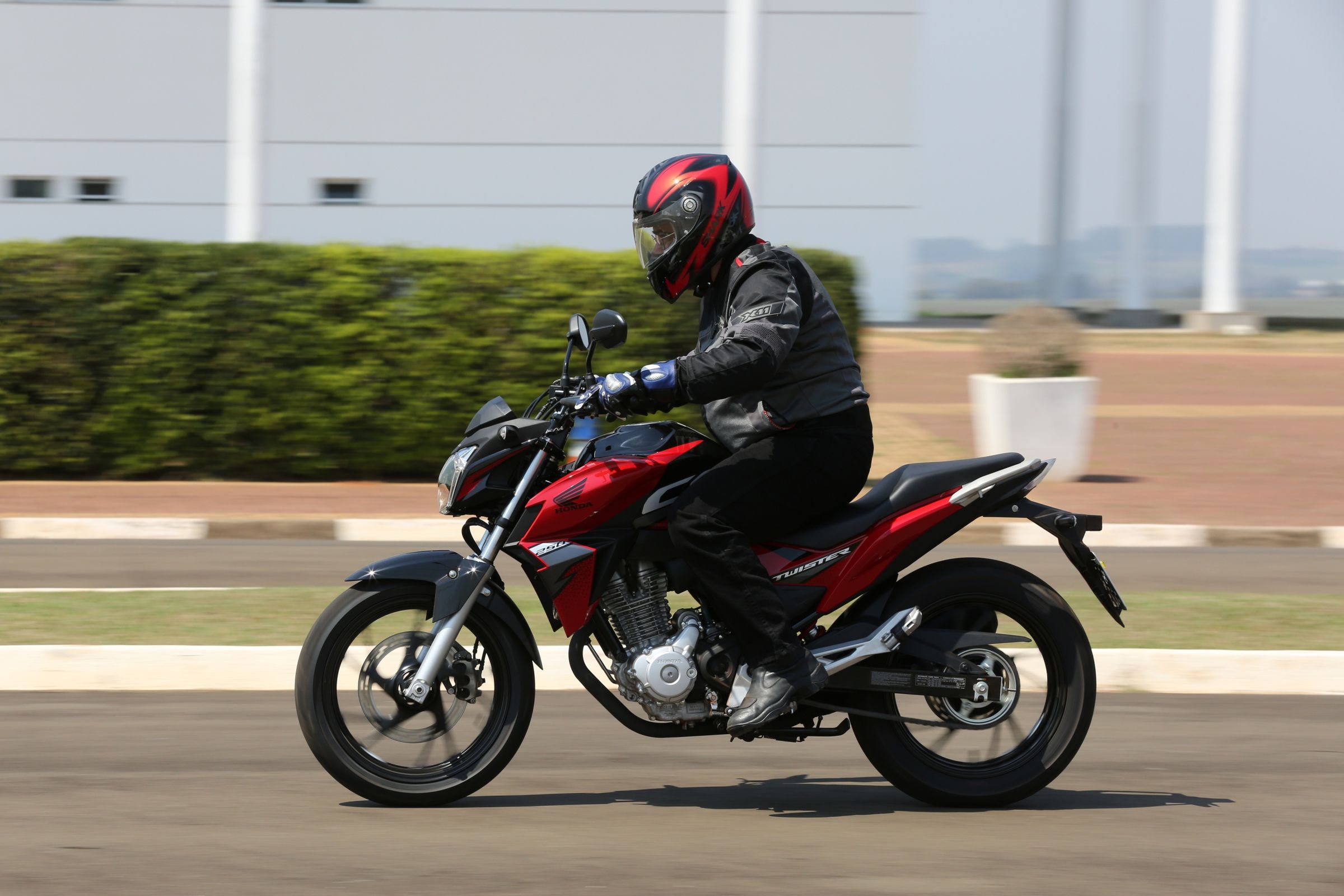


The Honda Motorcycle That Left Brazil in 2014 Made History: Up to 28 km/l, 25 hp, and a 249 cc Engine — the CBX 250 Twister Became a Legend Among Young Riders.
An icon that marked a generation of motorcyclists in Brazil is back in the spotlight — not on the streets, but in the memory and discussions among two-wheel enthusiasts. The Honda CBX 250 Twister, launched in the early 2000s, was discontinued in 2014. Nevertheless, it left a legion of fans who still consider it one of the best motorcycles ever made in the country in its category. Its secret was the almost perfect balance between consumption, performance, and maintenance costs, qualities that made it a coveted object of desire for thousands of young riders.
The Motorcycle That Brought Accessible Sportiness
At the turn of the 2000s, Honda saw a gap in the market: there was demand for a motorcycle that was stronger than the small 125 and 150 cc bikes but still affordable for students, young workers, and motorcyclists looking to take their first step towards larger models.
Thus, the CBX 250 Twister was born, equipped with a 249 cm³ engine capable of delivering 25 hp at 8,000 rpm.
-
Rolls-Royce Turns Heads with 30-Inch Floating Wheels, 6.6-Liter V12 Engine, and 563 Horsepower

-
2019 Kia Sportage EX: A Spacious and Cost-Effective SUV with 2.0 Flex Engine and Panoramic Roof
-
Fiat Strada Becomes Top Seller in June, Surpassing Onix, Polo, Hilux, and T-Cross with 107 HP Engine and 732 km Range.

-
Suitcase-sized hydrogen engine spins at 25,000 rpm, nearly doubling the efficiency of conventional cars and replacing exhaust smoke with water vapor


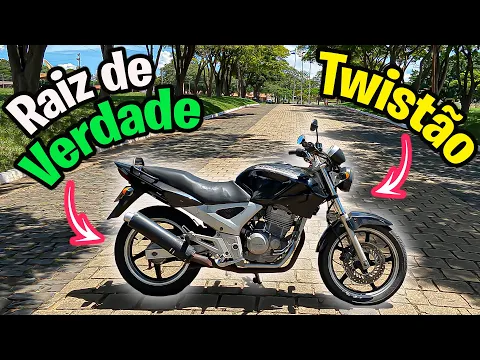

Its 6-speed transmission helped extract performance on the road, while the average consumption ranged from 26 to 28 km/l, which, combined with a 16.5-liter tank, provided a range of over 400 km without refueling. This was an impressive feat for a motorcycle with a sporty and urban appeal.
An Immediate Success Among Young People
Shortly after the launch, the Twister became a craze. Its aggressive design, with angular fairings and a sturdy tank, resembled larger displacement bikes. For young riders, it was the chance to own a “mini CBR” without breaking the bank.
In the market, the motorcycle directly competed with the carbureted Yamaha Fazer 250, but the Twister gained a reputation for having simpler maintenance, abundant parts, and reliability within the Honda network. The result was an absolute success: for over a decade, it remained among the best-selling motorcycles in the intermediate range in the country.
The End of Production and the Transformation Into a Legend
In 2014, Honda announced the end of production for the CBX 250 Twister to make way for a new generation of motorcycles, such as the CB 300R and later the new fuel-injected Twister 250.
The official justification was the need to update the portfolio with engines that met environmental standards and delivered more power.
But for many, the original CBX 250 Twister left a void. Its blend of simplicity, efficient consumption, and balanced performance was not fully replaced by the subsequent models, which were more expensive and, in some cases, less economical.
The Used Market and the Cult Motorcycle Aura
Since then, the Twister has transformed into a sort of “cult bike.” In the used market, well-maintained examples can be worth more than some brand-new motorcycles of the same displacement range.
The reliability of the engine and the low maintenance cost explain why so many people still seek a used Twister, even after more than a decade since its end of production.
Additionally, the motorcycle gained relic status among motorcycle clubs and gatherings of enthusiasts. For many, owning a CBX 250 Twister is like regaining the feeling of freedom that defined the 2000s.
A Legacy That Still Echoes
Honda may have ended the production of the CBX 250 Twister in 2014, but its name lives on. The model is still remembered as the one that popularized the 250 cc bikes in Brazil and served as a bridge for thousands of motorcyclists who dreamed of larger displacements.
The balance between consumption of up to 28 km/l, power of 25 hp, and a robust 249 cc engine solidified its image as one of the most complete motorcycles in Honda’s recent history in Brazil.
And while many debate which was the “definitive motorcycle” in the category, few disagree: the CBX 250 Twister was — and still is — a symbol of accessible freedom on two wheels.