





 Portuguese
  English
  Spanish
  3 min of reading
  0 comments



NASA Is Close to Defining a Lunar Time Zone, a Crucial Step to Coordinate Space Missions and Future Colonies on the Earth’s Satellite
As space exploration advances rapidly, NASA is working to create a solution that can simplify major logistical challenges of lunar exploration. The space agency is developing the Coordinated Lunar Time (LTC), a standardized time zone on the Moon that will help organize missions and activities.
The goal of NASA is to standardize the time zone on the Moon, the way time is recorded on the surface, a fundamental task as more countries and companies enter the landscape of space exploration.
According to Ben Ashman, aerospace engineer with NASA’s Space Communications and Navigation team, “as the commercial space industry grows and more nations are active on the Moon, there is a greater need for time standardization.”
-
The solid-state battery, promised for years as the future of electric cars, is finally starting to move from the laboratory to mass production.

-
Three teenagers surprise the world by creating a powder with tamarind seeds that removes microplastics from water, requires no electricity, and wins an international prize of $12,500 at The Earth Prize 2026.

-
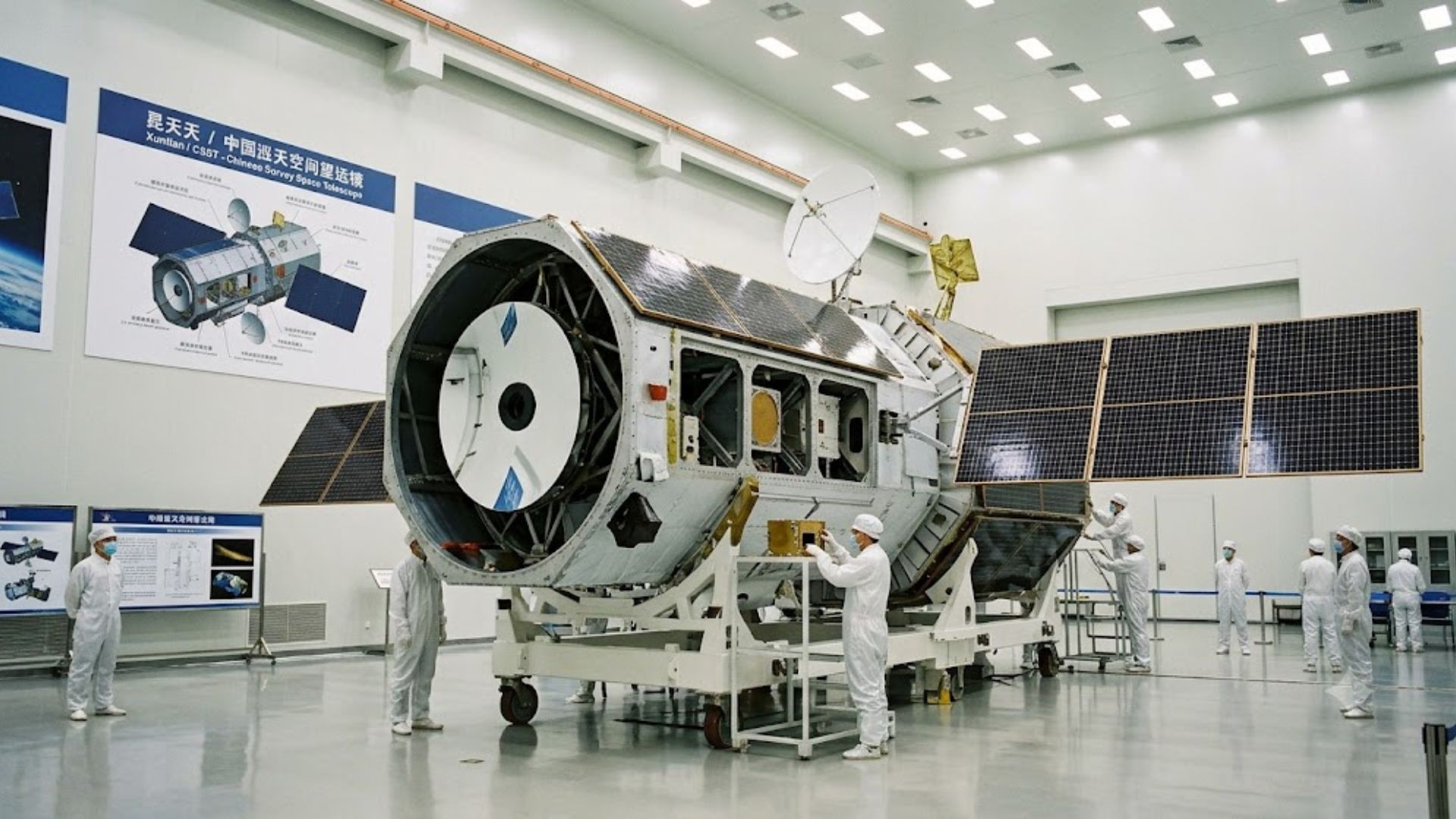
China prepares a “panoramic Hubble” with 2.5 billion pixels and a field of view 300 times larger: Xuntian will have a 2-meter mirror, resolution close to that of the American telescope, can dock at the Tiangong space station for maintenance, and promises to map 40% of the sky in a decade.

-
The deepest underground copper mine in Chile is digging deeper and deeper in search of the metal the world needs to electrify.



The LTC is part of NASA’s effort to create a more organized and secure framework for future space operations.
This shared time system is essential to ensure the safety and sustainability of missions, especially with the agency’s goal of establishing a long-term human presence on the Moon as part of the Artemis project.
Scientific and Technological Challenges
Implementing a lunar time system is not simple. The use of atomic clocks, which already provide incredible accuracy on Earth, is the proposed technology to measure time on the Moon.
These clocks operate based on the energy required to change the state of electrons in specific atoms. However, there is a crucial problem: gravitational differences between Earth and the Moon cause variations in the duration of each second.
On the Moon, clocks gain about 56 microseconds per day compared to those on Earth. Although this may seem insignificant, this difference has a significant practical impact, especially in high-precision operations. As Cheryl Gramling, senior engineer at NASA, explains, “for something traveling at the speed of light, 56 microseconds is enough time to cover the distance of approximately 168 football fields.”
This discrepancy can create complications for both lunar missions and communications with Earth. NASA scientists are working on mathematical models to correct this discrepancy and ensure that the clocks of astronauts and ground operators are synchronized.
Future Implications
Once these challenges are overcome, the LTC could be expanded beyond the Moon, with potential applications throughout the Solar System.
This means that, in the future, not only lunar missions but also explorations of Mars and other planets could rely on precise time synchronization, which will be crucial for operations such as scheduling interplanetary communications.
This advancement in the field of space timing is also directly linked to the Artemis project, NASA’s effort to establish the first long-term human presence on the Moon. The next crewed mission, which will take the first woman and the first person of color to the lunar surface, is scheduled for 2026.
The creation of a standardized lunar time is another step towards making space exploration an even more accessible and organized reality.






Be the first to react!