Portuguese
  Spanish


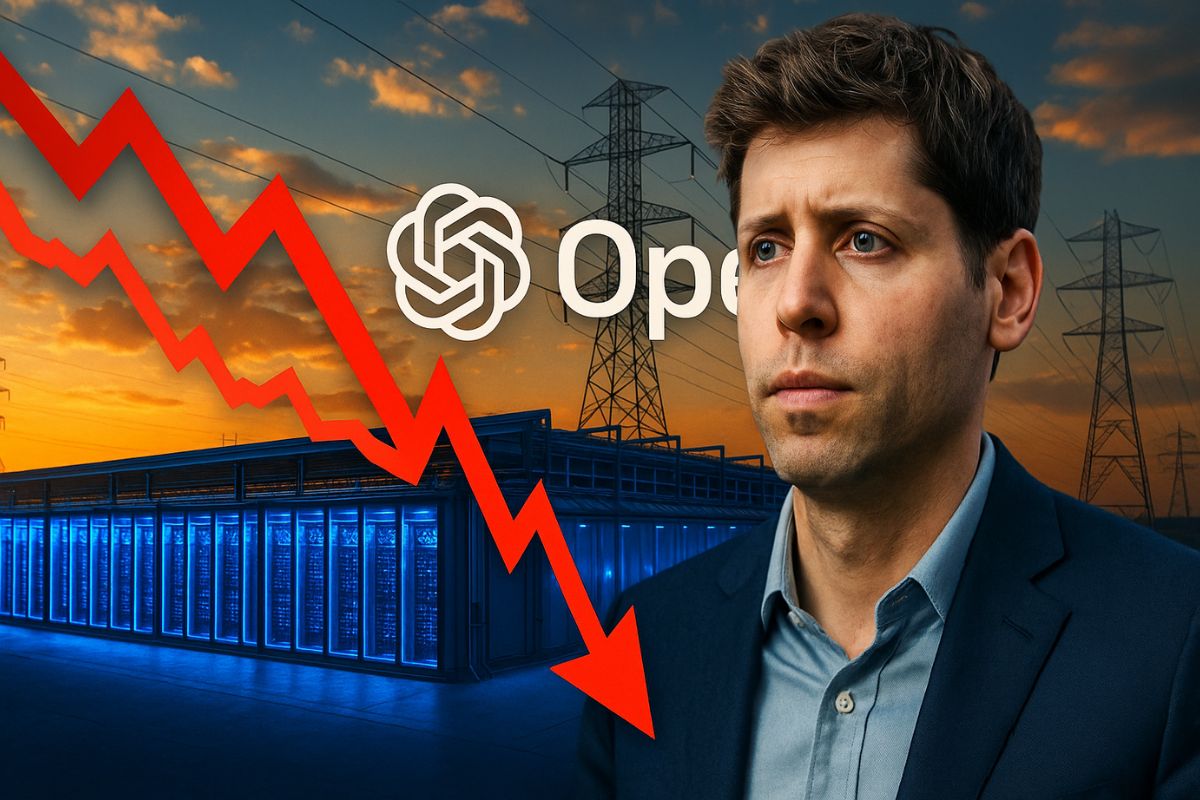

OpenAI Loses US$ 5 Billion in 2024, But Sam Altman Demands Trillions for Data Centers That Already Consume More Than the US Economy Consumption GDP
The recent trajectory of OpenAI shows the narrative power of Sam Altman, able to keep the company among the most valuable in the world despite negative financial results. In 2024, the company recorded revenue of US$ 3.7 billion but a loss of US$ 5 billion, according to an analysis by biologist and science communicator Átila Iamarino.
Nevertheless, the company’s market valuation exceeds US$ 500 billion, supported by promises of unprecedented technological expansion.
The Paradox of OpenAI: Loss and Valuation
What stands out is the gap between the financial situation and the market projection. Sam Altman can convince investors and governments that the future of artificial intelligence justifies trillion-dollar investments, even without profit. This movement relies on an aggressive strategy: to transform OpenAI not only into a software producer but into a massive infrastructure-dependent ecosystem, including chips, energy, and supercomputers.
-
Welder Discovers 16th-Century Diamond Ring in England After 7 Hours with Metal Detector; Gold Jewel Linked to Edward I Pattern Auctioned for £17,000

-
Former Merchant Marine Captain Invents Fuel-Free Barrier, Removes 20,000 Tons of Trash from Chennai Rivers
-
14-Year-Old Maxim Harris Turns School Project into Anti-Rage Gaming Accessory, Sells 1,000 Units Across 46 U.S. States, Donates 20% of Profits to Charity
-
Brazilian Health Agency Approves First Oral Medication for Cancer Patients




According to Átila, this dynamic resembles a speculative bubble, as companies and governments inject capital into projects that have yet to deliver real returns. However, in the short term, the narrative has been effective, ensuring OpenAI’s central position in the sector.
The Stargate Project and the Race for Super Data Centers
Among the most ambitious plans is the so-called Stargate, a network of global data centers with processing capacity far above what exists today. Sam Altman is asking for trillions of dollars to make the idea viable, which directly depends on Nvidia chips and industrial-scale electricity.
By 2025, Microsoft, Amazon, Meta, and Alphabet have already allocated US$ 155 billion solely for AI infrastructure — an amount greater than the US government’s budget for education and social programs in the same period. This shows the priority given to the sector and how Altman managed to mobilize resources comparable to large national projects.
The Energy Cost of Artificial Intelligence
One of the critical points is energy consumption. Super data centers already use more electricity than many entire countries and could surpass residential consumption in the U.S. by 2030. This scenario raises doubts about the sustainability of the expansion. On one hand, the promise is of intelligent machines that transform the economy; on the other, pressure on energy and resources threatens traditional sectors.
Sam Altman uses the rhetoric of “digital apocalypse,” comparing AI to the risks of nuclear war or pandemics, which helps justify the billion-dollar expenditures. However, critics argue that this discourse also serves to divert attention from practical problems, such as environmental costs, lack of transparency, and absence of consistent profit.
A Company in Identity Crisis
OpenAI began as a nonprofit organization, but in practice, it has become a private business that depends on external capital and strategic agreements. Former employees have already reported haste in launches, security risks, and internal manipulation. Even after being briefly removed in 2023, Altman returned to leadership because he is considered the only one capable of attracting the necessary investments to sustain the company.
This paradox exposes the fragility of the model: a deficit company but treated as an essential piece for the global economic future. What keeps OpenAI at the top is not its financial results but Sam Altman’s ability to sell the vision of an inevitable future dominated by artificial intelligence.
The case of OpenAI illustrates how Sam Altman transformed a billion-dollar loss into fuel to demand trillions in investments. The strategy keeps the company valued, but raises questions about financial sustainability, environmental impact, and concentration of power in a few hands.
And you, do you believe that Sam Altman’s plan is really the inevitable future of technology or are we facing a bubble that could burst at any moment? Leave your opinion in the comments — we want to hear your analysis of this scenario.