Portuguese
  Spanish


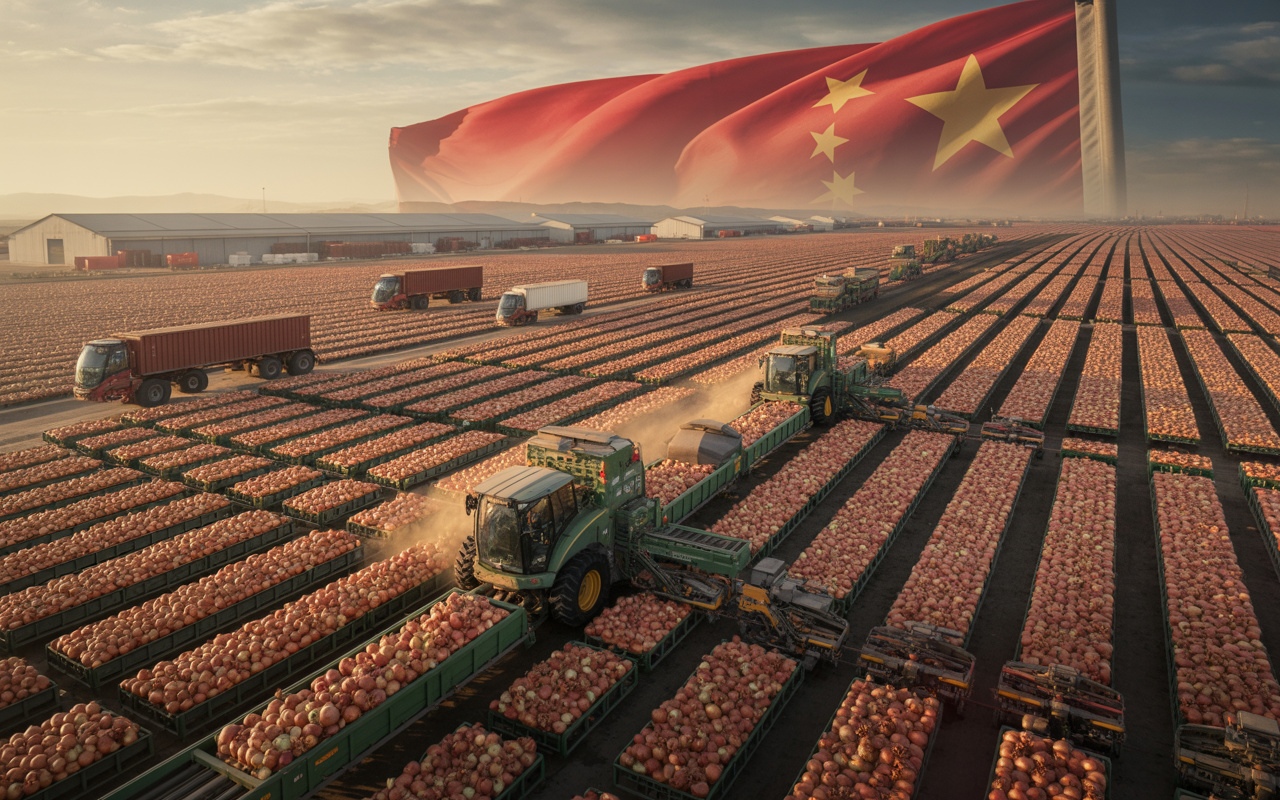


China Leads Global Onion Production with Over 25 Million Tons Per Year, Vast Cultivation Areas, Multiple Harvests, and a Central Role in Global Food Supply.
When it comes to onions, many people think of just a basic kitchen ingredient. However, behind this seemingly simple food lies a colossal agricultural machinery — and no country represents this scale better than China. For decades, the country has comfortably held the title of the world’s largest onion producer, with volumes that exceed the combined production of several continents.
Why China Dominates Global Onion Production
The Chinese leadership is not the result of a single factor, but rather a combination of territory, climate, agricultural policy, and productive organization. The country produces over 25 million tons of onions per year, a number that varies with each harvest but consistently keeps it at the top of the global ranking.
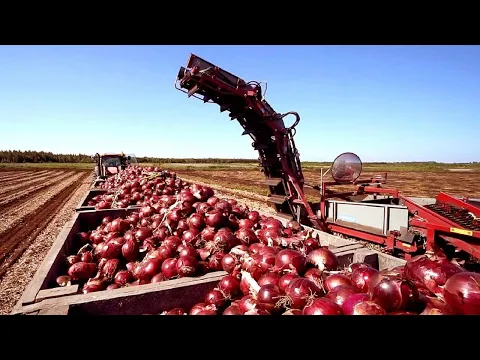

Onions are grown in almost all agricultural regions of China, particularly in provinces like Shandong, Henan, Gansu, Hebei, and Jiangsu, where large irrigated areas allow for large-scale production. In many cases, there are two or even three annual harvests, something unfeasible in much of the world.
-
Study of Brazil’s Tietê River Finds 25 Pesticides in Water, Including Cancer-Linked Substance Near Source

-
Young Entrepreneur Expands from 50 to 1,400 Chickens, Proving “Happy Hens” Can Be a Viable Business
-
Small Farm in Brazil’s Minas Gerais Produces 403 Liters of Milk Daily, Sets Benchmark for Rural Producers
-
Man Revives 1930s Abandoned Trout Farm, Learns from Scratch, and Earns $1.1 Million Annually Selling Fish to Michelin-Starred Restaurants



Territorial Scale and Multiple Harvests Make the Difference
One of China’s significant advantages is the planted area. The country concentrates millions of hectares exclusively dedicated to onions, something that no other producer can replicate. Additionally, the climatic diversity allows for staggered harvesting throughout the year, ensuring a continuous supply for both the domestic market and export.
While countries like the United States, Brazil, or Spain operate with well-defined seasonal windows, China can harvest onions practically year-round, reducing the risks of supply shortages and maintaining more competitive prices.
Comparison with Other Major Global Producers
To understand the magnitude of Chinese hegemony, just compare the numbers:
The India, the second-largest producer globally, produces on average between 22 and 25 million tons annually, very close to China but with greater volatility due to climatic issues and internal politics.
- The United States lags far behind, with around 3 to 4 million tons per year.
- Countries like Egypt, Turkey, and Pakistan each fall in the range of 2 to 3 million tons.
- Brazil, despite being among the ten largest producers in the world, harvests between 1.5 and 1.7 million tons annually.
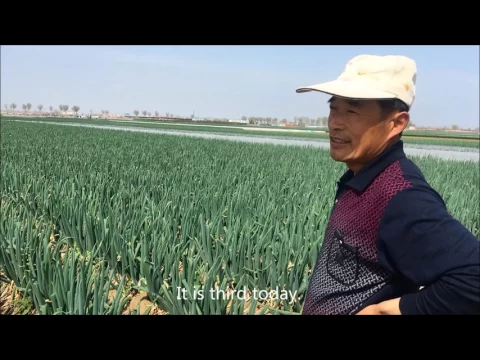
In other words, China alone produces the equivalent of several times the combined Brazilian and American production.
The Role of Onion in Chinese Diet
In China, onion is not just an export item or agricultural commodity. It is a fundamental part of daily meals, especially in regional dishes from the north and central parts of the country. This ensures a massive and stable domestic market capable of absorbing large volumes without solely relying on foreign trade.
Moreover, Chinese onions are used as raw material for processed foods, sauces, preserves, industrial seasonings, and dehydrated products, further enhancing the economic value of the chain.
Global Exports and Influence on International Prices
Although China consumes a large portion of what it produces, it is also one of the world’s largest onion exporters. Its product reaches dozens of countries in Asia, Africa, the Middle East, and Europe, often at lower prices than local competitors can offer.
This strong presence in the international market means that any variation in the Chinese harvest — whether due to climate, logistics, or agricultural policy — directly impacts global onion prices. In years of record production, excess supply drives prices down; in years of crop failure, the effect is almost immediate on the shelves of other countries.
Technology, Logistics, and Labor on an Industrial Scale
Another decisive factor is the logistics structure. China has heavily invested in refrigerated storage, road and rail transportation, and agricultural distribution centers, which reduces post-harvest losses and increases competitiveness.
Mechanization is also advancing rapidly, especially in large-scale regions, while smaller areas still use labor-intensive methods, keeping costs relatively low. This balance between technology and human labor is one of the keys to Chinese dominance in the sector.
Volume Is Not Everything: Quality vs. Quantity
Despite absolute dominance in volume, China does not necessarily lead in premium or high-value-added onions. Countries like Netherlands, Spain, and even Japan excel in quality, standardization, and price per kilogram, catering to specific niches in the global market.
Still, when it comes to global food security, no country today plays a more relevant role than China in onion supply.
A Simple Food Sustaining an Agricultural Power
Onion rarely appears in debates about major commodities, but the numbers show that it is strategic. In this silent game of global food supply, China occupies a central position.
More than just producing a lot, the country has built a chain capable of supplying its own population, influencing external markets, and maintaining stability in one of the most consumed foods on the planet.
In the world of onions, China does not just lead — it sets the pace.