Portuguese
  Spanish


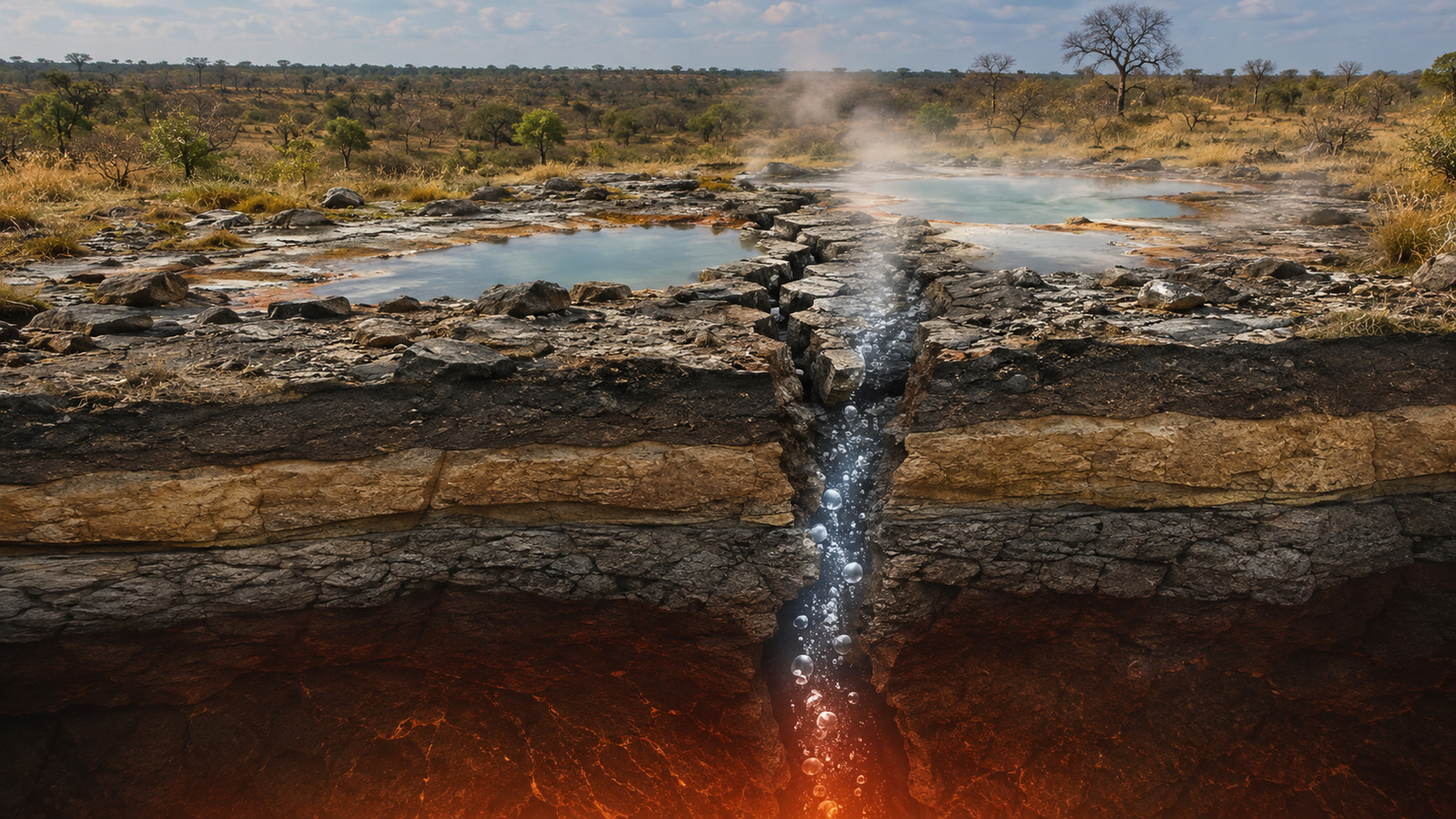

Gases collected from thermal springs and wells of the Kafue Fault in Zambia revealed a helium signature associated with the Earth’s mantle. The study, published in Frontiers in Earth Science, indicates that the fault may function as a deep pathway between the surface and the planet’s interior.


Helium in thermal springs indicates a deep connection
The discovery focuses on the helium found in gases emerging from the region’s thermal springs. This gas can function as a geological tracer because its isotopic composition helps indicate whether it came from the Earth’s crust or deeper regions.
In the Kafue Fault, researchers identified a signature that does not correspond solely to common surface processes. Part of the analyzed gas showed signs compatible with fluids linked to the Earth’s mantle.
-
Oceanographer Turns Abandoned Fishing Nets from Brazilian Waters into Bags, Creating Jobs and Earning Over $7,000 Monthly

-
Australia deploys poisoned sausages and uses traps, shooting, and fences in a battle against invasive cats that kill over 1.5 billion native animals annually, threatening more than 200 species.

-
NASA Rover Captures “Tired Face” on Mars, Highlighting Human Brain’s Tendency to See Faces in Rock Formations

-
Ancient Stone City in the Desert, Once Home to 30,000, Puzzles Scientists with Nabateans’ Water Mastery 2,000 Years Ago




The central point of the study is that this fault may have opened a sufficiently deep passage to allow gases from the Earth’s interior to reach the surface.
What makes the Kafue Fault important
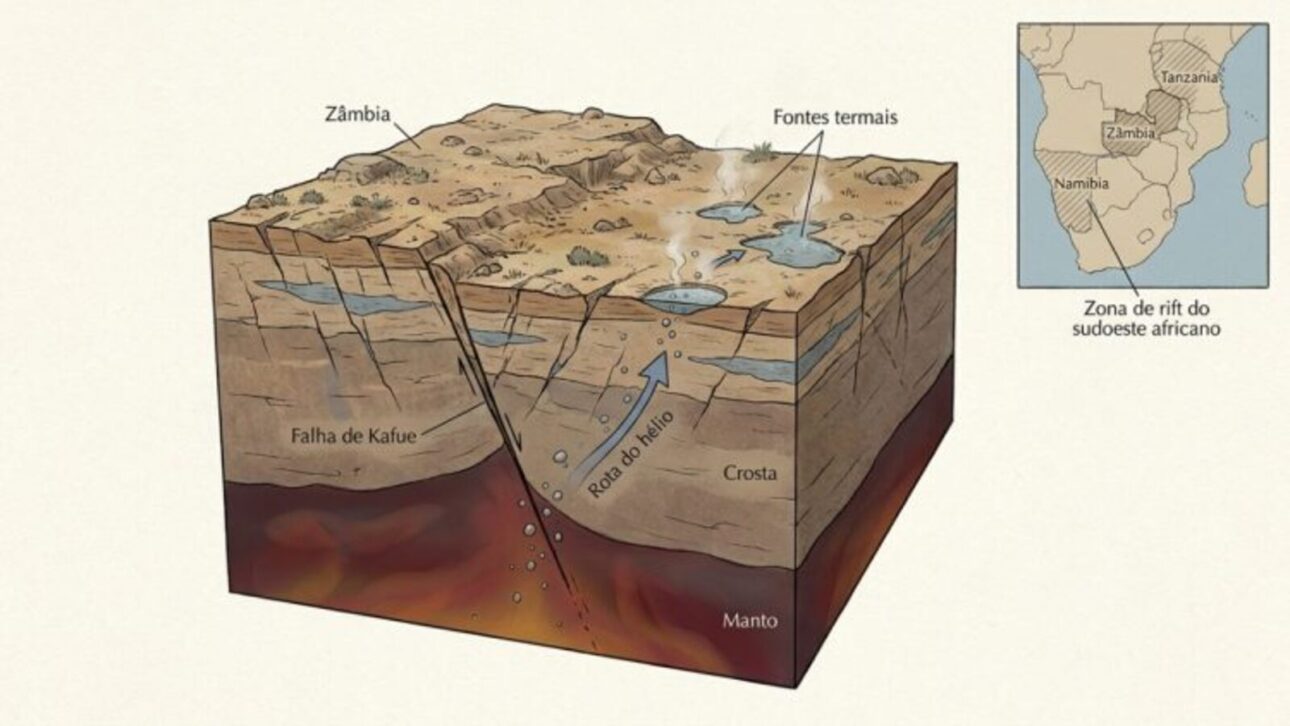
The Kafue Fault is located in the central plateau of Zambia and is part of the Southwest African Rift Zone. This crustal extension belt is observed as a possible extension of the East African Rift System.
According to the analyzed material, what was lacking was direct geochemical evidence that the rupture did not only reach shallow layers of the crust. The mantle helium signature suggests a deeper structure.
The interpretation presented in the study is that the fault can traverse the lithosphere, formed by the crust and the upper part of the mantle. This reinforces the region’s relevance for understanding the initial phases of continental tectonic transformation.
Isotopes show difference between crust and mantle
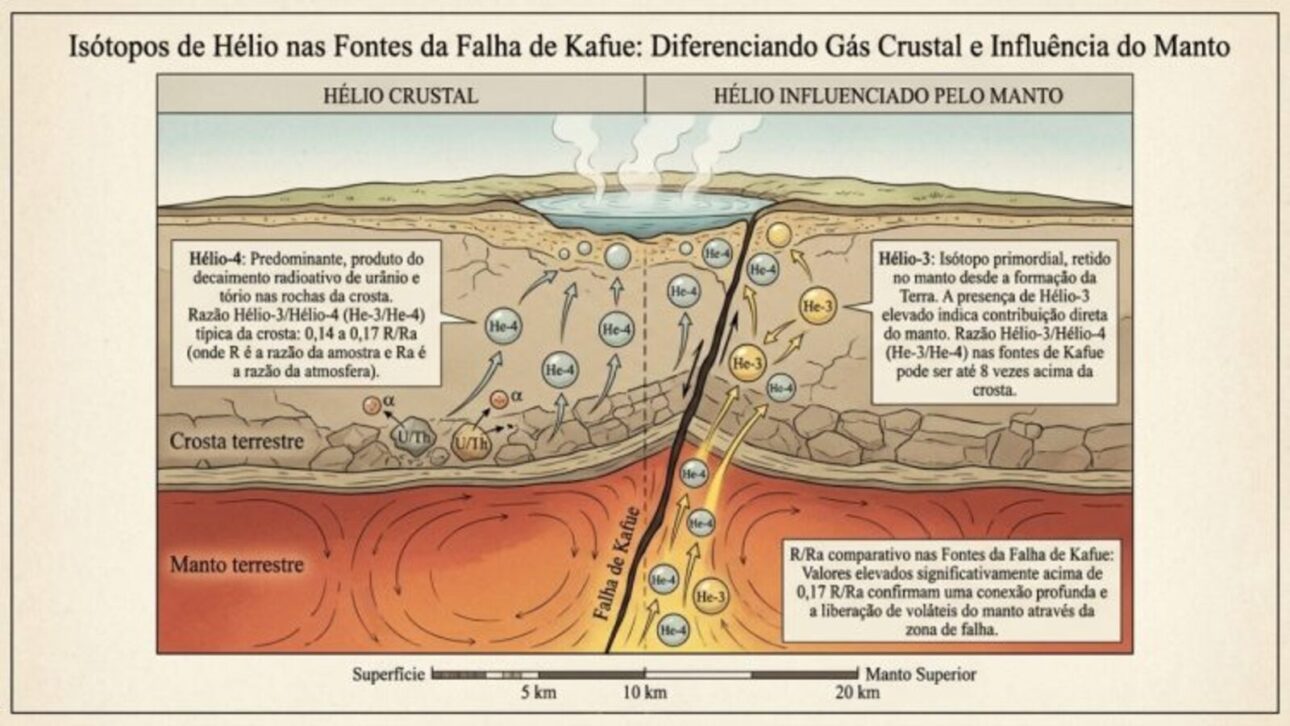
The research compared two isotopes of helium. ⁴He is associated with crustal processes, as it arises from the radioactive decay of elements like uranium and thorium in ancient rocks.
In contrast, ³He is rare in the crust and usually indicates mantle contribution. Therefore, the ratio between ³He and ⁴He was used as essential data to evaluate the origin of the gases.
In the sources associated with the rift zone, the samples showed a ³He/⁴He ratio between 0.14 and 0.17 R/Ra. According to the study, these values exceed by up to 8 times what is expected solely from local crustal production.
The samples outside the fault did not show the same signal. This contrast was important because it reinforces that the phenomenon is concentrated in the tectonic zone, and not commonly distributed throughout the region.
Collections compared sources and geothermal wells
The team analyzed gases collected at 8 points, including hot springs and geothermal wells inside and outside the fault zone. The comparison between affected areas and control areas was decisive for the conclusion.
Among the recorded data, the total helium concentration reached 2.3% by volume in the surface gases of the rift zone. Nitrogen appeared as the dominant gas, with a composition compatible with mobilized crustal fluids.
The study also recorded the absence of the same helium and carbon dioxide signature of mantle origin outside the fault. This pattern strengthens the interpretation that the Kafue Fault concentrates the conduction of these deep gases.
Discovery indicates slow process, not immediate rupture
The presence of deep gases does not mean that Africa will split on a human scale. The context presented itself indicates that continental rifting occurs over tens or hundreds of millions of years.
The release from Frontiers states that the hot springs of Zambia may reveal initial signs of a new tectonic boundary. The Kafue Rift is part of a zone approximately 2,500 km long, from Tanzania to Namibia.
CNN treated the discovery as a possible indication of a continental rift in formation, but the main data remains geochemical: gases from the deep interior are reaching the surface through an active fault.
Besides the scientific importance, helium concentrations also have economic interest, as the gas is used in medical technology, electronics, and industrial applications. Even so, the focus of the study is on the geological reading of the region.
This article was prepared based on information from Frontiers in Earth Science, the release from Frontiers, and CNN, with data, numbers, and statements preserved according to the consulted material.