






 Portuguese
  Spanish


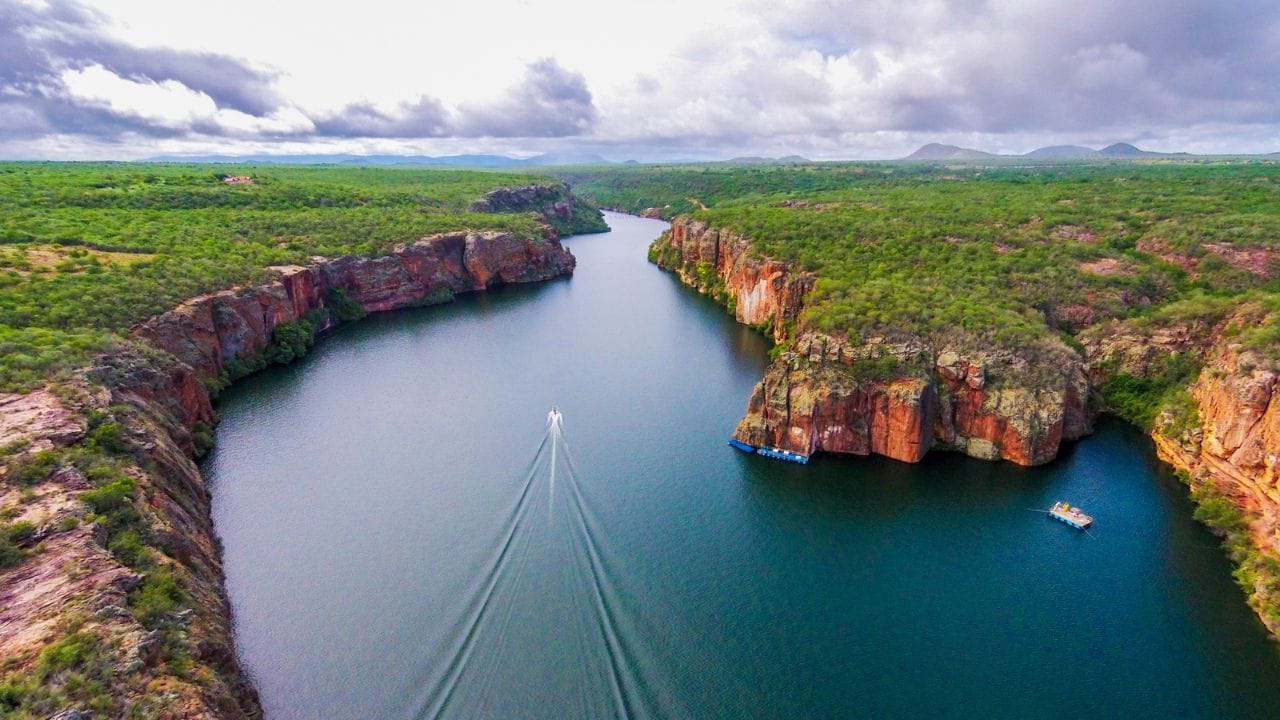

Brazil Accelerates Mega Project in the Semiarid: The Transposition of the São Francisco River Already Has 477 km in Operation and Continues to Expand with Federal Investment.
The transposition of the São Francisco River is one of the most ambitious infrastructure projects in Brazil, aimed at alleviating the drought that affects the northeastern region. This project, which already extends for 477 km, aims to divert the river’s waters to areas in need. However, there are plans under study to expand this transposition to over 10,000 km, making it the largest in the world.
Check out the details of this mega project, its challenges, and the impact it promises to transform the lives of millions of Brazilians.
Context of Drought in Northeastern Brazil
Northeastern Brazil faces a history of severe and prolonged droughts. This region, which houses about 40% of the northeastern population, has an average annual rainfall of less than 800 mm. This scenario hinders agricultural production and livestock farming, leading to food insecurity for many families.
-
France Revamps 530 Social Housing Units with Large Balconies and Glass Facades Without Demolishing Existing Buildings

-
Facing high rent, couple transforms parents’ garage into a fully functional apartment, creating a complete home at a fraction of the market cost.

-
MIT Scientists Develop Method to Transform CO₂ into a Construction Ally, Boosting Cement Strength by 13% in 24 Hours for More Sustainable Infrastructure
-
Canadian City Builds 8 Tiny Homes in 72 Hours for Homeless Youth, Plans 40 Affordable Houses for Female-Led Families Amid Housing Crisis


Over the past 30 years, the region has experienced about 85 years with scarce or poorly distributed rainfall. This reality directly affects 10 million inhabitants who depend on traditional agriculture and livestock, making them vulnerable to droughts.
The Transposition Project of the São Francisco River That Promises to Transform the Lives of Millions of Brazilians
The transposition project of the São Francisco River was conceived by the federal government and coordinated by the Ministry of Regional Development. The initial proposal called for the construction of 699 km of concrete channels, covering two major axes: North and East.
The axes were planned to divert the river’s waters to the states of Pernambuco, Paraíba, Ceará, and Rio Grande do Norte. Additionally, the project includes the construction of nine pumping stations along the route. However, five states were not included in the direct connection to the river, although they are connected by aqueducts.
Project Expansion: South and West Axes
After the initial proposal, the idea emerged to add a South axis, covering Bahia and Sergipe, and a West axis in Piauí. Despite these additions, two states would still be left out of the project: Maranhão and Alagoas, the latter of which already has water supply systems that meet its water needs.
With a current budget of over R$ 10 billion, the North and East axes aim to direct the river’s waters to watersheds in areas facing scarcity. The project is considered crucial for the water security of over 20 million people.
Controversies and Criticisms: Critics Argue That Water Will Be Taken From High Demand Regions to Supply Other Areas
Although the project has its supporters, there are controversies regarding the use of the waters of the São Francisco River. Critics argue that water will be taken from regions with high demand to supply other areas, raising concerns about the water availability for human and animal use.
Additionally, there are claims that the transposition will primarily benefit agribusiness and shrimp farming. Despite the criticisms, many believe that the benefits in terms of jobs and income outweigh the challenges.
Delays in the Project That Was Supposed to Be Delivered in 2012
Initiated in 2007, the original completion of the transposition was scheduled for 2012. However, significant delays pushed this date to 2022. During this period, the project was scaled down to 477 km, removing branches that represented about 68% of the total project.
On February 9, 2022, the federal government announced the completion of significant parts of the transposition, including the North and East axes, as well as the Agreste branch. The North axis, extending 260 km, supplies reservoirs and crosses four states, including Pernambuco, Ceará, Paraíba, and Rio Grande do Norte.
Details of the Axes and Branches
The East axis, with a length of 217 km, begins at the Itaparica reservoir in Pernambuco and heads toward areas affected by drought. The Agreste branch, which is 71 km long, plays a crucial role in directing water to critical regions of Pernambuco.
Both axes involve the construction of considerable infrastructure, including aqueducts, pumping stations, and reservoirs. Tunnel CCAS 1, one of the main highlights of the project, is the largest in Latin America, measuring 15 km in length.
Future of the Transposition and New Axes
The South and West axes are still under study. The South axis, which was initially planned in 2012, will have its length reduced to 400 km and is in preparation for the start of construction. The West axis, which will pass through Piauí, still lacks concrete information.
With the sum of all axes and branches, the transposition of the São Francisco River could reach over 10,000 km, surpassing China’s South-North water transfer project. This project, initiated in the 1990s, redirects water from the Yese River to meet agricultural and industrial demands in arid regions of China.
Challenges and Expectations
Although the transposition of the São Francisco River is seen as a solution to water problems in the northeast, its execution is not without challenges. The construction of a project of this magnitude requires planning, resources, and, above all, the acceptance of the local population.
The success of the project will depend not only on the infrastructure but also on the sustainable management of water resources and the involvement of benefiting communities. Expectations are high, and many believe that the transposition can truly transform the water reality of northeastern Brazil.
The transposition of the São Francisco River is more than an engineering project; it is a plan that can change lives. With the potential to become the largest water transposition in the world, its realization could bring relief to millions of people facing drought.






Parabenizo Lula, por sua atuação pro-ativa, sempre em atenção aos menos favorecidos, mesmo com o boicote desse Congresso Nacional e o Presidente do Banco Central, que pouco se importam com a população e sim com os seus interesses particulares.
Alta demanda ?
O Nordeste que não tem outras fontes, tem TODA a demanda a ser suprida !
Mais uma **** pra roubar dinheiro e não concluir