Portuguese
  Spanish


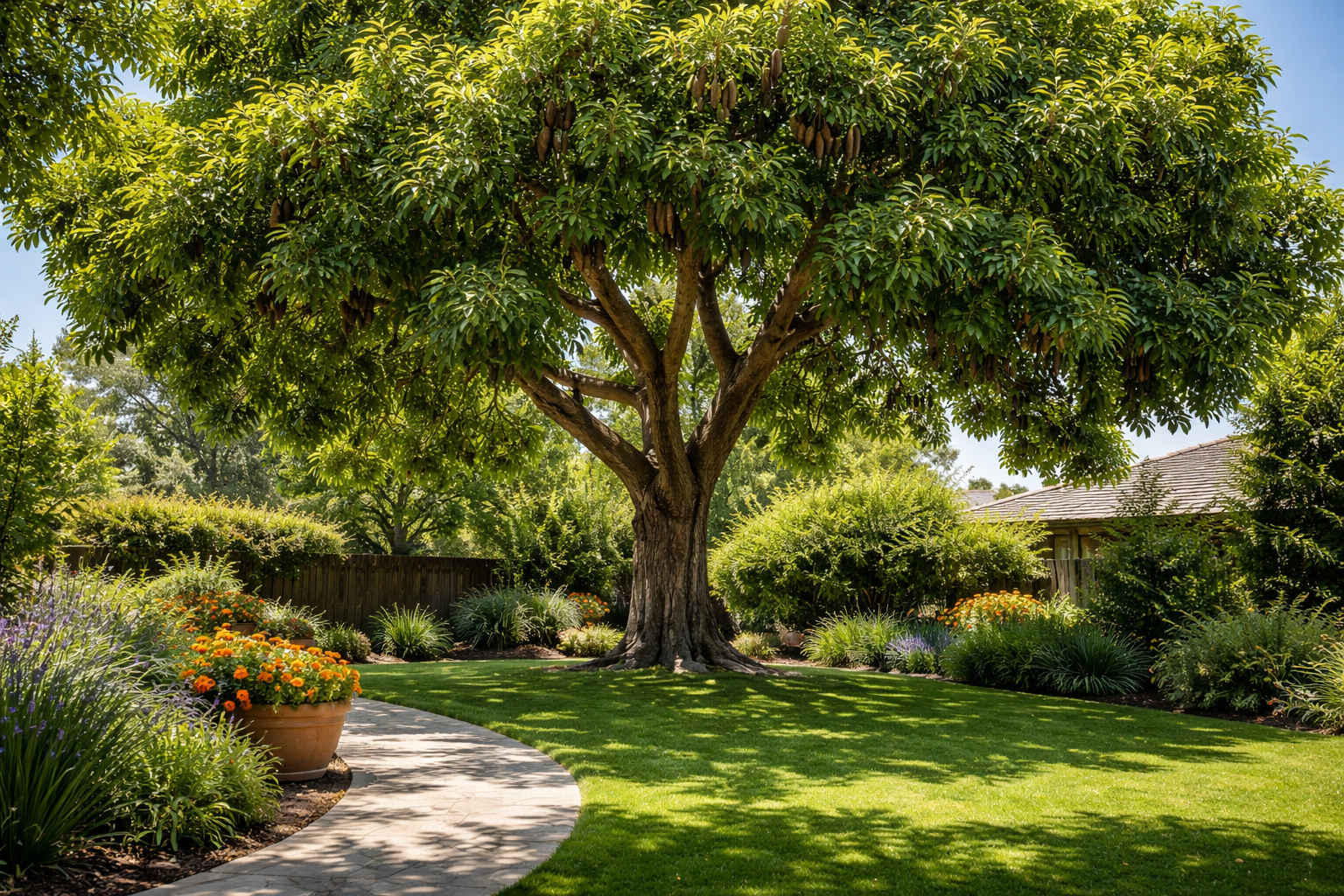

Species with deep roots, high climatic resistance, and low maintenance gains space in urban landscaping and offers shade, economy, and functionality to the property
A practical and sustainable alternative has caught the attention of urban homeowners in recent years.
The tree that does not lift the pavement has become a priority for those seeking shade without compromising sidewalks or the structure of the house.
The Carob tree, also known as Algarrobo, stands out in this scenario.
Its main differentiator lies in its deep and vertical roots, which grow downward in search of water.
This behavior prevents common damage caused by species with shallow roots.
According to analyses by the FAO since 2020, the correct choice of urban tree planting reduces maintenance costs and improves adaptation to the built environment.
-
Green Roofs on Homes Gain Popularity for Reducing Heat, Noise, and Rain Impact in Brazil

-
Brazilian promises his children to save a river, creates an eco-barrier in his backyard, has already removed more than 40 tons of trash from the water, and even inspires the idea in other states of the country.

-
How a Brazilian company created a system that transforms broken pallets of any brand into new assets, recycles 80 tons of plastic per month, and found a profitable solution to a problem that challenges industries across the country.
-
Invasive bullfrog capable of devouring other amphibians and laying up to 20,000 eggs is found in Florianópolis, raising an alert about the threat to native fauna.


Root system prevents structural damage
The structure of the roots defines the impact of the tree on the urban environment.
In the case of the Algarrobo, growth occurs vertically, without advancing across the surface.
This significantly reduces the risk of cracks in floors, sidewalks, and pipelines.
Common species, on the other hand, exhibit aggressive roots that expand laterally.
This difference directly affects maintenance costs.
While unsuitable trees require frequent repairs, the tree that does not lift the pavement preserves the structure over time.
Check out the main differences:
- Roots: deep and vertical vs shallow and aggressive
- Resistance: high drought tolerance vs constant need for watering
- Maintenance: low pruning needs vs frequent maintenance
Shade, fruits, and thermal comfort in summer
The performance of the species during heat is another relevant factor.
The Algarrobo develops precisely in the hottest periods of the year.
The dense canopy provides continuous shade and reduces direct sunlight incidence.
This effect can lower the temperature around the residence by up to 5°C.
The fruits also represent a differentiator.
The pods produced are nutritious and, in some cultures, used for flours and sweets.
This combination of shade and food production enhances the value of the tree that does not lift the pavement.
The residential space takes on both thermal and productive functions.
Initial care ensures healthy growth
Even though it is a resilient species, the beginning of planting requires attention.
The first 12 months after planting are crucial for the seedling’s development.
The plant needs to receive direct sunlight throughout the day.
The soil should have good drainage to prevent water accumulation.
Some basic care ensures proper growth:
- Initial watering: twice a week until it reaches one meter
- Fertilization: use of organic compost at planting
- Staking: support with a stake for straight growth
- Spacing: minimum of three meters from walls
Checking the electrical wiring is also necessary before planting.
This care prevents conflicts with power cables during the tree’s growth.
Drought resistance and climate adaptation
The adaptability of the Algarrobo draws attention in recent studies.
Research published by Embrapa since 2018 highlights the performance of drought-resistant species.
During long periods without rain, the plant enters a dormant state.
This mechanism reduces energy consumption and preserves its structure.
Even in poor soils, development is maintained.
This characteristic makes the tree that does not lift the pavement suitable for regions with water restrictions.
Affordable and functional investment
The increase in urban temperatures has intensified the search for shaded areas.
Reports from UN Habitat since 2022 indicate that tree-covered spaces improve thermal comfort in cities.
The cost of acquiring the seedling is considered low.
The return appears in the reduction of heat, the appreciation of the property, and the decrease in maintenance.
The choice of a tree that does not lift the pavement meets practical and environmental needs.
Landscaping takes on a structural, thermal, and productive function within urban space.
Sustainable solution for the residential environment
The definition of the species directly influences the use of space.
Trees with deep roots prevent recurring damage and additional costs.
Low maintenance contributes to practicality in daily life.
The environment becomes more functional and balanced over time.
The Algarrobo brings together characteristics that meet current demands.
Shade, resistance, and structural safety combine in a single solution.
Could the choice of the right tree completely transform the comfort and functionality of your residential space?