






 Portuguese
  Spanish


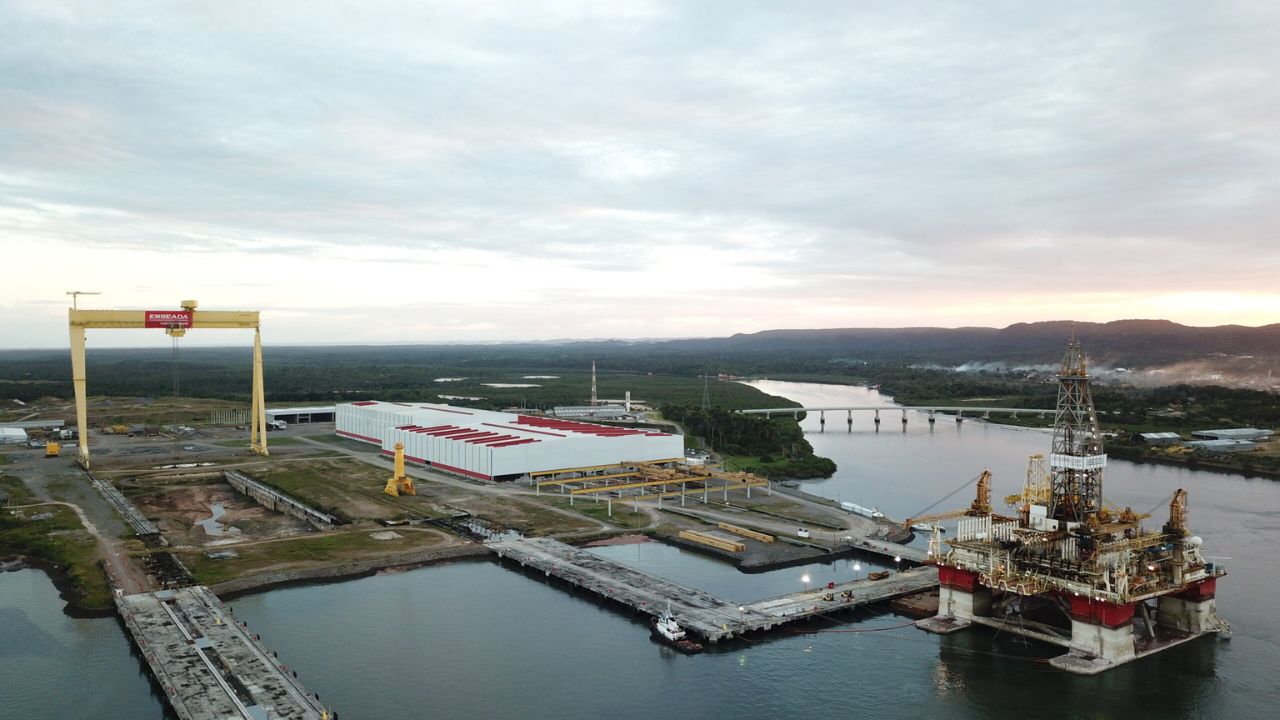


With Contracts Signed Between 2023 and 2024, Baiano Shipyard Rebirth in Maragojipe, Resumes Operations in the Enceada Complex and Becomes a Strategic Piece of Brazilian Shipbuilding
The baiano shipyard rebirth in a place where, for years, the industrial landscape seemed frozen: huge warehouses, deep docks, installed equipment, but little or no activity. Now, the routine has changed with the reopening of sectors, return of teams, and a constant flow of technical visits and work fronts in the region.
The movement revolves around the complex known as Enceada, in Maragojipe, in the Recôncavo Baiano, which had been left out of the shipbuilding industry for years.
The comeback rekindles expectations in Bahia and the country, because it involves not just a reopened shipyard, but the recovery of productive capacity that Brazil lost over the last decade.
-
At 61, Former Homeless Wheelchair User Receives Key to Container Home in Brazil, Declares Independence

-
São Paulo Highway to Receive Over $260 Million in Upgrades, Including 90 Kilometers of Service Roads and New Infrastructure, by 2027
-
Couple Transforms Abandoned Seaside Public Restroom Bought for £33,000 into £295,000 Beach House After a Decade of Renovations

-
With 26 Million Brazilian Families in Substandard Housing, Churches to Launch 2026 Challenge: Each Parish to Build or Renovate a Home for a Local Family


The Silence That Became Movement in the Recôncavo
For a long time, those passing through the Recôncavo saw the same scene: a grand project that seemed to have been interrupted along the way. Giant warehouses and finished structures, but idle, fueled the impression that the promise of a naval hub had remained in the past.
In recent months, this picture began to change. Sectors were reopened, teams returned, and the presence of negotiations and technical assessments began to characterize the routine. It is in this context that the baiano shipyard rebirth as a central topic for the local economy and Brazilian shipbuilding industry.
How a Billion-Dollar Project Almost Got Forgotten
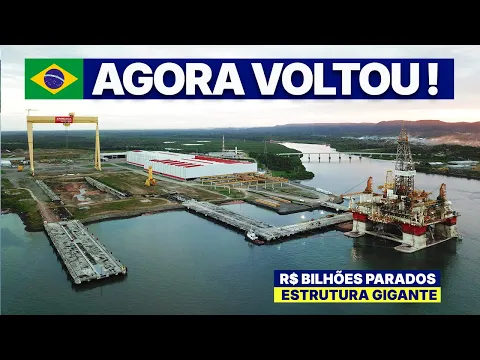

To understand why the baiano shipyard rebirth now, it is necessary to go back to the start of the project. In the early 2010s, Brazil was experiencing an expansion cycle in the shipbuilding industry, driven by demand related to the pre-salt, with a need for platforms, vessels, and large modules.
It was in this environment that the shipyard in Maragojipe was conceived to operate on a large scale, with docks, yards, warehouses, and production lines aimed at large orders.
The goal was to transform the regional economy and position Brazil among the greats in the sector, with job creation and strengthening the oil and gas chain in the Northeast.
What Stopped the Operation and Brought Down Orders
The promising scenario changed rapidly. The fall in international oil prices reduced the pace of investments, and the investigations of the Lava Jato Operation affected contracts linked to the Brazilian naval chain, paralyzing projects and interrupting works.
With fewer contracts to sustain the operation, the complex underwent a continuous reduction and deactivation of sectors. The infrastructure built to operate on a large scale became underutilized, and the region felt the impact with a decrease in economic activity after the peak of the works.
Contracts for 2023 and 2024 and the Turnaround with Petrobras and Transpetro
The recovery gained strength when Petrobras and Transpetro began demanding services and structures compatible with the maintenance and modernization of vessels. In this scenario, Enceada reemerged as an alternative with potential, and the baiano shipyard rebirth supported by contracts signed between 2023 and 2024.
There were technical visits, detailed assessments, and inspections that confirmed the strategic condition of the infrastructure, even after a long period of low operation. From there, negotiations advanced and initial contracts initiated a new phase, still gradual, but with visible effects in the territory.
What Changed Inside the Shipyard in the New Phase
The reactivation does not mean an automatic return to the maximum size originally planned. What appears, for now, is a cautious reconstruction process: administrative reorganization, update of safety protocols, and resumption of essential sectors to fulfill the contracts.
At the same time, the complex is beginning to evaluate the expansion of the service portfolio and diversification within the naval and offshore segment.
Each advance confirms that the structure remains functional, competitive, and ready for relevant industrial demands, a key point to sustain the argument that the baiano shipyard rebirth is based on actual operational capacity, not just expectation.
Why the Infrastructure Works in Favor of the Enceada
The complex was designed for large scale, with deep docks, wide yards, and warehouses capable of receiving bulky structures. Even after years of low activity, a significant part of this infrastructure remained preserved, which facilitates the resumption.
The location is also treated as a differential: proximity to the Bay of All Saints and access via a deep channel, allowing transportation of modules and vessels more efficiently.
This reduces logistical costs and increases competitiveness, especially in operations related to oil and gas, reinforcing the narrative that the baiano shipyard rebirth combines installed capacity and strategic positioning.
What Defines If the Recovery Turns Into a New Cycle by 2030
The pace of recovery depends directly on the continuity of contracts and the sector’s appetite for new orders. The window opened by Petrobras and Transpetro may accelerate operations, but the movement itself is described as gradual: it resumes, tests capacity, delivers, and seeks to expand.
Projections are cautious but positive within this framework. If there is continuity of investments and expansion of demands, there is room for progressive modernization and growth in activity volume, with a direct impact on maintaining skilled jobs and preserving accumulated technical knowledge in the country.
In your view, does the baiano shipyard rebirth have come to stay and reposition Brazil on the shipbuilding map, or does this type of recovery still depend too much on the cycle of oil and gas contracts?




Sim.
Trabalhei no consórcio, esse governo é puro engodo, não vai ter retorno de emprego, a ensecadeira sequer foi finalizada, ainda requer muito dinheiro pra terminar o estaleiro….
Está muito longe de recolocar o Brasil no mapa de Construção Naval. Não há nenhuma construção nova de grande porte que possibilite a plena utilização dos amplos galpões (oficinas).