Portuguese
  Spanish




Homemade Combination with Common Ingredients Draws Attention for Helping to Repel Insects Indoors, According to Specialist. Method Involves Natural Aromas, Spot Use, and Does Not Replace Basic Cleaning and Domestic Control Procedures.
A homemade combination of lemon with cloves has been cited as a low-cost alternative to help repel insects such as ants, cockroaches, and flies from inside homes.
The guidance was presented by biologist and botanist Guilherme Ceolin in an interview with the column É o Bicho!, from the portal Metrópoles, explaining that the odor released by the mixture can be unpleasant for these animals, thereby reducing their circulation in specific areas of the environment.
According to the specialist, the method does not replace basic hygiene care or broader control actions, but it can work as a complementary resource in areas where insect presence is recurrent.
-
Low-Cost Concrete Panel House Goes Viral: Investor Reveals Prefabricated Kit Structure for Around $1,500, Assembled in 30 Days, with Plans for Rental and Resale Income

-
Brazilian Lottery Winner Ordered by Court to Share $22 Million Jackpot with Ex-Partner, Sparking Major Legal Battle

-
Why Yellow is the Safety Color for Heavy Machinery: Origins and Benefits Since 1931

-
U.S. Channel Highlights 20 Brazilian Innovations Leading Latin America: From Açaí to Modular Homes and Biogas




The proposal gained attention precisely for requiring few ingredients and not involving industrial products.
According to Ceolin, the effect is related to the interaction between natural aromatic compounds present in both plants.
The clove contains substances like eugenol, while the lemon releases citrus essential oils, including limonene.
This combination, the botanist claims, is not well tolerated by many insects, which helps explain the repellent nature of the smell.
Scientific studies have already analyzed, in laboratories, the use of eugenol and citrus essential oils against different species of urban and agricultural insects.
Results vary depending on the type of insect, the concentration of the substances, and the method of application, indicating that the effects observed in domestic environments tend to be localized and dependent on the conditions of the space.
Pest control experts highlight that fresh fruits and peels release smaller amounts of essential oil compared to concentrated formulations.
Nevertheless, the spot use of lemon with clove can create an area with a more intense odor, sufficient to discourage the approach of insects on specific surfaces, such as countertops and tables.
How to Prepare the Natural Repellent with Lemon and Clove
The recommended preparation is simple and does not involve liquids or complex processes.
The guidance is to cut a lemon in half and stick between 10 and 15 cloves directly into the pulp.
Then, the lemon should be placed in areas where the presence of insects is usually bothersome, such as sinks, tables, or areas near the trash.
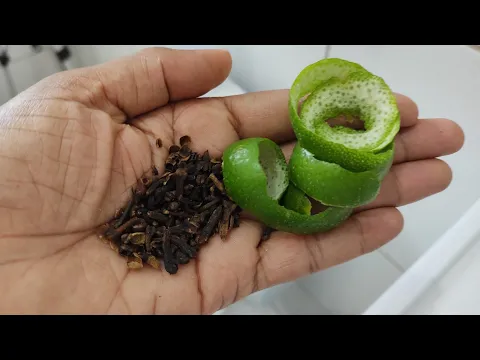

The recommendation is to keep the lemon while the aroma is perceptible.
Over time, the drying of the fruit reduces the release of the smell, which can diminish the effect.
The interval for replacement is not fixed and depends on factors such as ventilation, temperature, and humidity of the environment.
In large or very ventilated spaces, the reach of the odor tends to be smaller, which limits the method’s action to specific areas.
For this reason, use is usually more frequent in kitchens, pantries, and service areas.
Places in the Home Where Insects Usually Appear
Within residences, the most cited points are those that concentrate food scraps or moisture.
Near the sink, for example, it is common to find crumbs or residues that attract ants and flies, while countertops and tables can serve as pathways for these insects.
Another sensitive area is the domestic trash region.
Even with well-sealed bags, the odor of organic waste can attract insects.
In these cases, the lemon with cloves is usually positioned next to the bin, without direct contact with dirt, as a way to reinforce the odor block in a reduced space.
In the case of cockroaches, urban control specialists often explain that frequent presence is associated with the availability of shelter, water, and food, as well as cracks, drains, and poorly sealed access points.
Thus, although the smell of clove with lemon may be bothersome, it does not eliminate infestations nor replace structural interventions when there is an established focus.
Aromatic Use and Traditional Associations of the Plants
In addition to use against insects, Ceolin states that the combination can be used as a natural air freshener.
One suggestion is to boil lemon peels with cloves and let the steam spread throughout the house, a practice traditionally adopted to scent indoor spaces.
The botanist also mentions that lemon and clove frequently appear in culinary uses and in traditional preparations, such as teas.

However, the original text does not present formal therapeutic indications or dosages.
Health professionals often emphasize that any use for medicinal purposes should be guided by specialists, especially in cases of allergies, gastric sensitivity, or continuous use of medications.
Eugenol, present in cloves, is a compound known for specific applications, such as in dentistry, where it appears in products with analgesic and antiseptic properties.
Limonene is widely used in the fragrance and aroma industry, in addition to being studied in research on natural compounds.
Domestic Measures That Help Reduce Insects
According to experts, the effectiveness of any domestic solution increases when the residence reduces the factors that attract insects.
Regular cleaning of surfaces, proper storage of food, and frequent removal of trash are often pointed out as central measures in this process.
Accumulated residues, pet food outside closed containers, leaks, and damp areas create favorable conditions for insects to thrive.
In the case of flies, the exposure of organic matter and food scraps tends to be one of the main attractants.
In this context, lemon with clove is described as a complementary resource, aimed at making certain points less attractive due to the smell.
When associated with cleaning practices and property maintenance, the effect tends to be more noticeable than when used in isolation.
If the presence of insects persists or indicates the existence of hidden foci, professionals in the field recommend specialized technical evaluation.