






 Portuguese
  Spanish
  3 min of reading
  2 comments


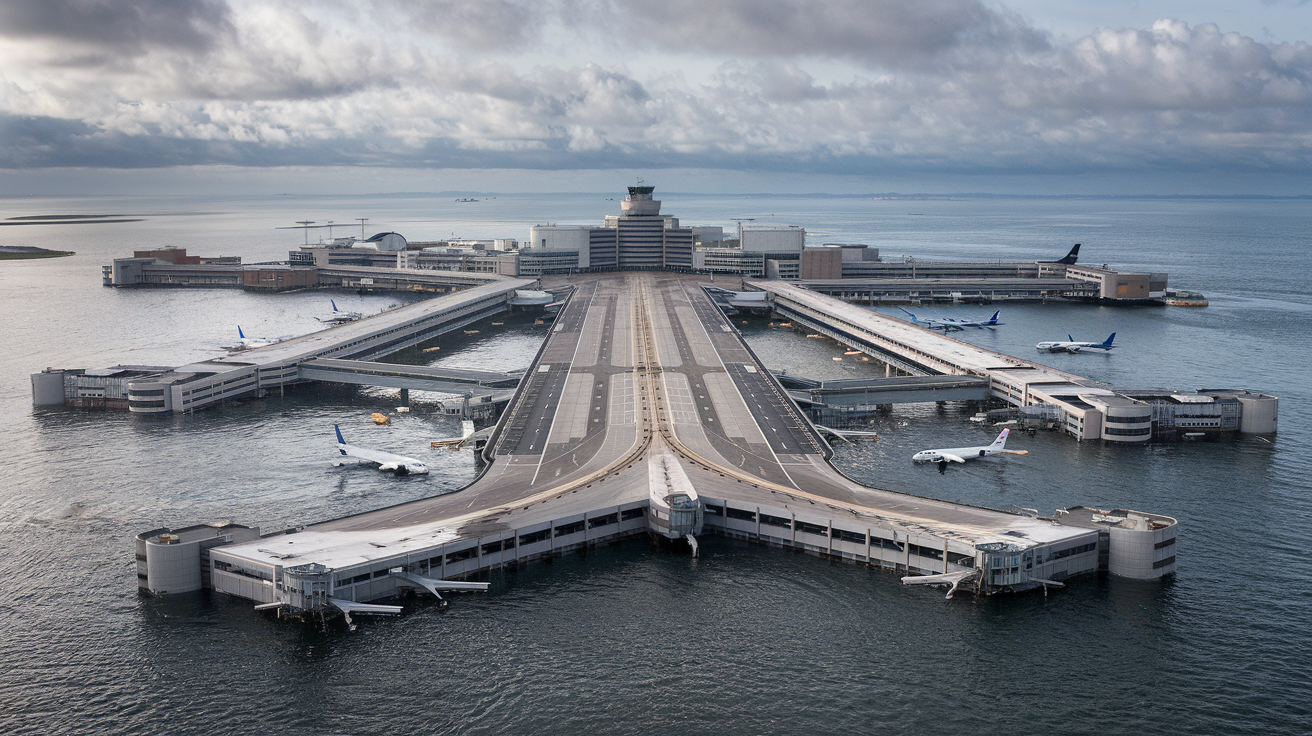


Floating Airport Begins to Sink in Japan and Scares Global Market. Understand What Is Happening with Japan’s Floating Airport and What Engineers Are Having to Face.
The Kansai International Airport in Japan is a true engineering feat and has just completed 30 years. Among its incredible achievements is the fact that it is the first floating airport in Japan built on an artificial island in the ocean, as well as having the longest terminal in the world and a zero baggage loss rate. But behind this success lies a major challenge: the floating airport is beginning to sink.
Understand Why the Floating Airport Is Beginning to Sink
The floating airport is beginning to sink; however, even with this problem, a billion-dollar renovation is underway to expand its capacity and ensure its vital role as a Regional Hub. Since its conception, Japan’s floating airport has faced one of the greatest geological challenges for a construction of this size: the sinking of the artificial island upon which it was built.
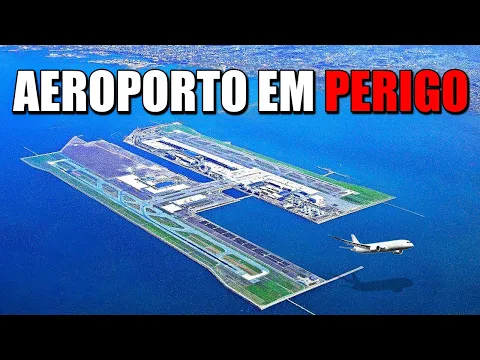

Although engineers knew that soil compaction would occur, the initially predicted sinking rates were underestimated. Thus, the floating airport began to sink much more quickly than expected, raising concerns not only about the stability of the structure but also about the safety of operations.
-
Without a mansion, without high investment, and without a traditional classroom, a teacher living in a 22 m² house taught students to build a 9 m² studio apartment with the equivalent of R$10,000.

-
Without her own home and pressured by rent, a 25-year-old bought a small 15-meter boat, gradually renovated the interior by herself, transformed the interior with paint, new flooring, a larger bathroom, and started living on the canals, paying much less per month.
-
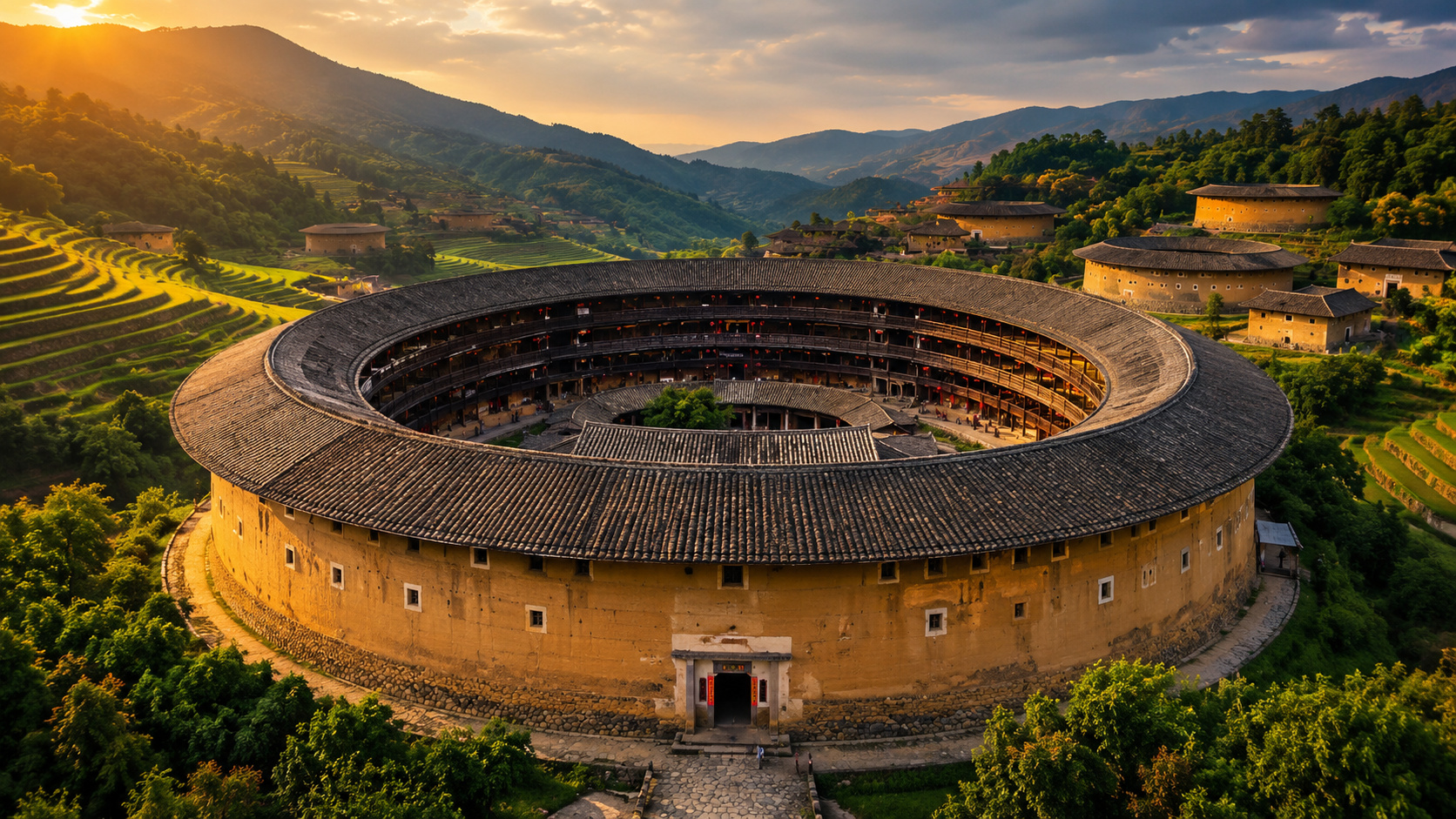
Long before sustainable construction became a trend, China built earthen fortresses with multiple floors, a central courtyard, and the capacity to house up to 800 people living in a community.
-
He got tired of renting, bought an old school bus, removed the seats, modified the roof, reinforced everything with steel, and created a two-story mobile home that looks small on the outside but houses two bedrooms inside.



This phenomenon, known as subsidence, occurs due to the compaction of the underlying soil layers that cannot support the massive weight of the infrastructure. Over the years, the floating airport has sunk approximately 13 meters since its inauguration.
This constant sinking requires continuous monitoring and periodic structural adaptations, which naturally increases maintenance costs and elevates the complexity of infrastructure management. The impact of the sinking is not limited to the need for constant repairs and directly affects the runways of the terminals and even the drainage system.
Understand the Importance of the Enterprise for Japan
The Kansai Airport is not just a transportation infrastructure but also a crucial economic engine for the Osaka region and for Japan as a whole. Since its inauguration, the airport has become one of the main logistics and transportation hubs in Asia, facilitating the movement of goods and passengers between Japan and the rest of the world.
Thanks to its strategic location, Kansai significantly contributes to international trade, in addition to being an important connection point for tourism. The business and connectivity provided by the airport has driven economic growth in the region, attracting investments and promoting job creation.
The Tourism, Hospitality, Trade, and Logistics sectors have greatly benefited from the airport’s presence. The latest data indicate that the airport handles millions of tons of cargo annually, playing a vital role in the transportation of high technology, automotive components, and other manufactured goods that are essential to the Japanese economy.
Japan’s Floating Airport Begins Projects to Secure Its Future
Given its unique positioning on an artificial island, Kansai faces significant environmental challenges. The floating airport, which is already dealing with the ongoing problem of sinking, also needs to confront sustainability issues involving energy consumption, environmental impact, and adaptation to climate change.
In a world increasingly concerned with carbon footprint, airports play an important role in the quest for a balance between operational efficiency and environmental sustainability.
Kansai Airport has already begun to adopt measures to reduce its environmental impact and make its operations more sustainable. Among these initiatives are the efficient use of energy, water recycling, and the implementation of more sustainable construction technologies. One of the main initiatives implemented at Kansai Airport is the use of solar energy to reduce dependence on conventional energy sources and consequently decrease carbon emissions.




Quando o Japão construiu este aeroporto, o sonho de consumo de um chinês era uma bicicleta! Eu estava lá em sua inauguração! somente provincianos que o o que sabem na vida vem pela tela de uma TV, igualam a China ao Japão!
Os niponicos teem que aprender com os chineses, e não competir com eles. Tá aí o resultado.