Portuguese
  Spanish


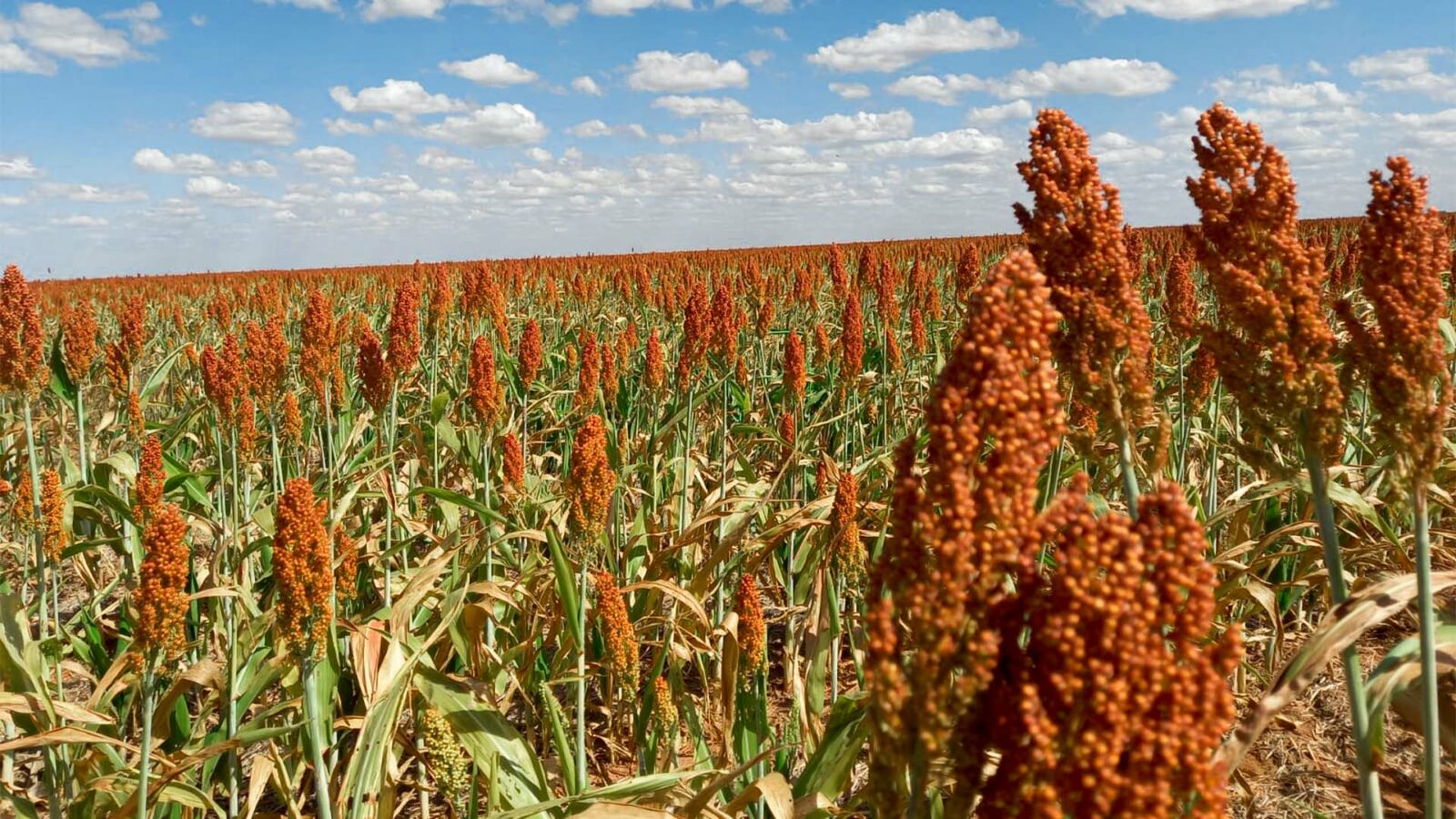

After the soybean harvest, sorghum advances in northwestern São Paulo as a more economical and climate-resistant alternative, occupying areas from 60 to 900 hectares, with producers seeking extra income even in the face of drought, excess rain, and lack of storage.
After the soybean harvest, producers in northwestern São Paulo have been betting on sorghum as an alternative to keep the land in production and seek a new source of income. More economical and more resistant to climate variations, sorghum has been gaining ground amid water difficulties, high production costs, and high temperatures in the region.
In Brejo Alegre (SP), a crop still in the initial phase shows this movement in the field. With just over a palm’s height, the planting started about 25 days ago and already represents, for producer Odair Albano, a viable option given the conditions faced in the region.
The entry of the crop occurs right after the soybean harvest, within the so-called second crop. This strategy allows the area not to remain idle and gives the producer a second income opportunity in the same space, taking advantage of the window right after the oilseed.
-
Producer receives news and had to cull almost the entire herd, bounced back with the help of compensation, and is now producing 450 liters of milk per day in SC.

-
Quail Eggs Reveal a “Secret Code” on Their Shells Explaining Unique Patterns and Colors

-
Rare Tropical Fruit Canistel, with Egg Yolk Color and Caramel Flavor, Gains Interest from Researchers and Small Producers in Brazil
-
Brazilian Farmers Develop Wheeled Metal Lever to Ease Cassava Harvesting Without Heavy Machinery


Sorghum gains space after soybeans in northwestern São Paulo
On Odair Albano’s property, there are about 60 hectares of grain sorghum. The production is aimed at grains used mainly in the feeding of poultry, pigs, and cattle.
The harvest in this area is expected to take place in three to four months. However, the expected outcome directly depends on the behavior of the climate throughout the crop cycle.
The advancement of this crop, which was previously more common in the second crop, is also already appearing in the summer. This is because sorghum has been seen as a more drought-resistant alternative compared to corn, a characteristic that has attracted producers amid climatic irregularities.
Climate, cost, and water drive producers’ choices
Agronomist Isabela Redigolo points out that the growth of the crop is linked to the recent challenges faced in the field. Among them are high production costs, water scarcity, and high temperatures.
She emphasizes, however, that the greater resistance of the crop does not eliminate risks. Even with this characteristic, sorghum is not immune to adverse conditions, and productivity still depends on the management adopted and the amount of rainfall.
This combination of factors has influenced producers’ decision-making right after the soybean harvest. The need to act quickly on land use makes the choice of the next crop a decisive point for the outcome of the harvest.
Mirandópolis enters the harvest after planting done in November
In Mirandópolis (SP), the scenario is different from that recorded in Brejo Alegre. Amid the sugarcane fields, a sorghum crop occupies about 900 hectares planted still in November, during the summer harvest, and it has now reached the harvest time.
The producer Marco Antonio Bordin leased the area from a mill for planting. At the beginning of the cycle, one of the main challenges faced was the excess rainfall, which affected the development of the crop and also influenced the choice of the species planted.
Even with this obstacle, the expectation for the harvest remains positive in several areas of the region. The final performance, however, continues to be linked to the conditions faced throughout the cultivation and the ability of each producer to deal with these variations.
Lack of storage concerns commercialization
In addition to climatic issues, another problem worries those investing in the crop. The lack of infrastructure to store the grain has a direct impact on the commercialization of the production.
The limitation of warehouses can reduce the producer’s profit at the end of the cycle. This happens precisely at the moment when the result of months of work begins to be measured by the quality and destination of the harvested grains.
In the northwestern part of São Paulo, sorghum has been consolidating as an increasingly present alternative in the field. Given the current conditions, the crop has been adopted as a safe option by producers seeking to keep production active after soybeans and face, with more balance, the challenges of climate and costs.