






 Portuguese
  Spanish


National Agriculture Enters A New Phase With Technology And Traceability
The Brazilian agribusiness is at a decisive moment. More than large-scale productivity, the sector needs to align its actions with sustainability criteria.
Transparency and governance have become essential to ensure international competitiveness. Since 2023, the international landscape has shown that production must meet new requirements.
With the tariffs announced by the United States in 2023, it became clear that trade barriers are not limited to economic tariffs. Now, environmental practices are also required.
-
Low-Demand Brazilian Beef Offal Gains Popularity Abroad: Indonesia Purchases $19.5 Million, Boosting Revenue and Reducing Waste

-
Soy Expansion in Former Brazilian Savanna Sparks Water and Land Conflicts in Major Agricultural Frontier
-
Mexican Pest Threatens U.S. Cattle Herds at Historic Lows, Potentially Boosting Brazilian Beef Exports as Burger Prices Soar

-
Avocado Boom for European and U.S. Markets Fuels Water Crisis in Drought-Stricken Chilean Region




Sustainability Becomes A Decisive Criterion
If it was once enough to produce, now it is mandatory to prove how it is produced. Therefore, auditable data and performance metrics have become pillars of international credibility.
A study by MDPI published in 2022 indicated that precision farming practices can reduce CO₂, CO, and NOₓ emissions by up to 80%.
Thus, Brazil, already recognized for its energy transition in the field, needs to turn technological innovation into practical strategy to maintain its international prominence.
Advanced Technologies Consolidate A New Standard
Tools like IoT, blockchain, and data intelligence, once seen as future trends, have consolidated as prerequisites for survival in modern agribusiness.
In this context, smart fuel management has ceased to be merely an operational solution. Today, it has become a fundamental competitive differentiator for rural producers.
Monitoring every liter refueled, tracking routes in real time, and calculating the carbon footprint has ceased to be an option and has become a necessity for all.
Added Value To The Final Product
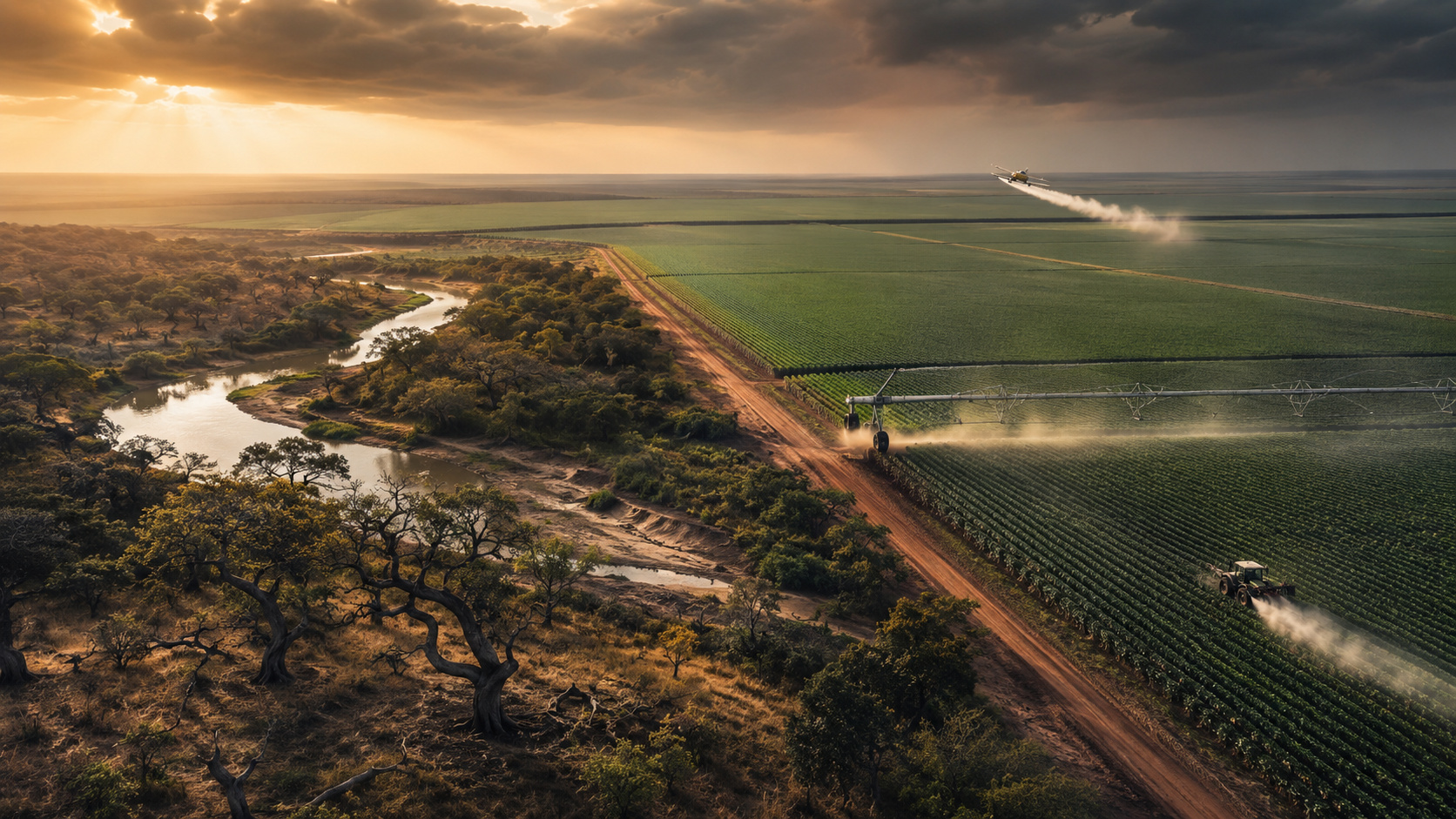
The detailed tracking of the consumption of tractors, harvesters, and agricultural aircraft allows for cost reductions. At the same time, it adds value and improves the image of the final product.
According to information from Excel Fueling Technologies, producers using this model are able to open doors in demanding markets and attract global investments aligned with new demands.
In this context, sustainability has ceased to be merely an expense. Currently, it is understood as an investment with a direct return on competitiveness and international expansion.
Brazil Facing The Global Challenge
The true challenge is not whether Brazil has the ability to meet international requirements. The question is whether the country will assume the lead.
According to Cristian Bazaga, CEO of Excel Fueling Technologies and president of ABIEPS, the agribusiness that will lead in the next decade will be the one with proven traceability.
This agribusiness will unite productivity, governance, and purpose. In this way, smart fuel management, often overlooked, will become a strategic pillar of transformation.
Thus, the future of Brazilian agribusiness will depend on the ability to integrate energy efficiency, technological innovation, and sustainability throughout its production chain.





Be the first to react!