Portuguese
  Spanish


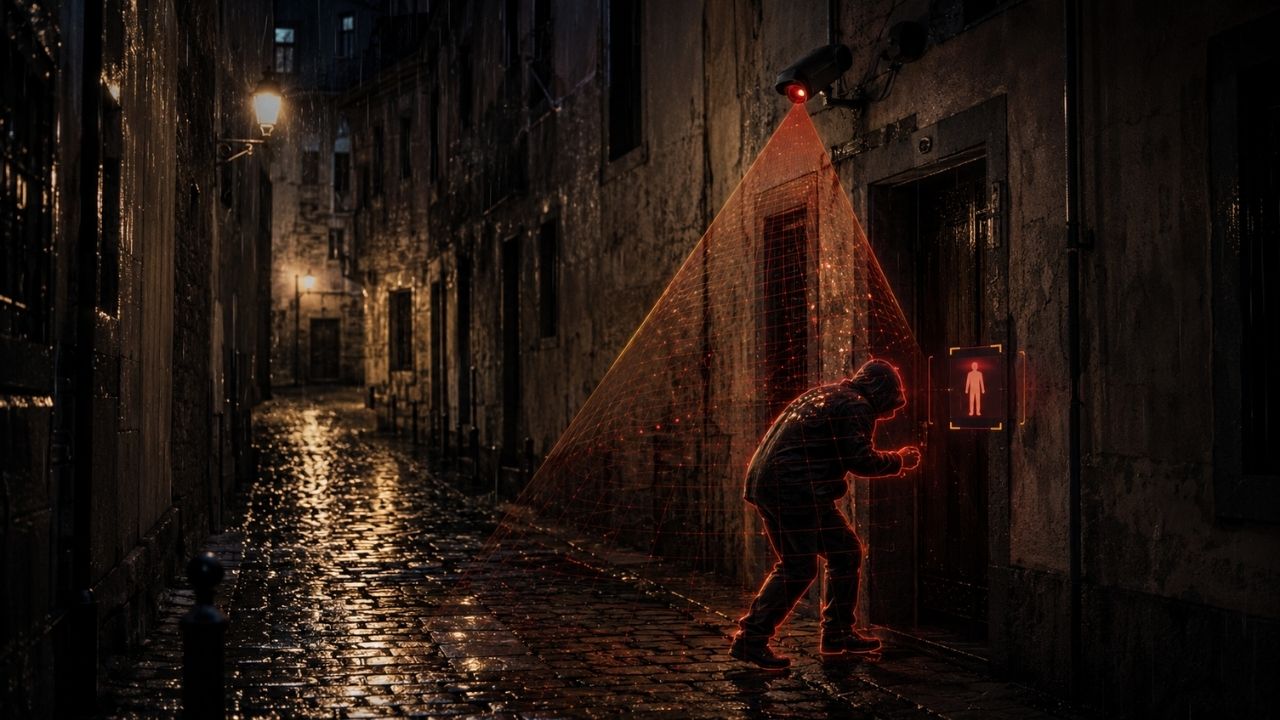

Security with AI from Khronos Detect AI uses artificial intelligence to reduce false alarms in monitoring homes, condominiums, and businesses in Brazil. The system sends 30-second clips, with 15 before and 15 after the trigger, to support 24-hour centers and users.
Security with AI has gained a new application in Brazil with Khronos Detect AI, a system launched by the Khronos Group to reduce false alarms in residences, condominiums, businesses, public spaces, and corporate operations. The technology was presented by ND Mais on June 26, 2026, in Florianópolis, as a solution aimed at electronic monitoring.
The system uses artificial intelligence integrated with cameras and alarms to analyze movements, interpret situations, and send 30-second clips when an event is detected. The material shows 15 seconds before and 15 seconds after the trigger, allowing the 24-hour center and the user to better understand what happened before treating the alert as a real occurrence.
False alarms have always been a problem in monitoring
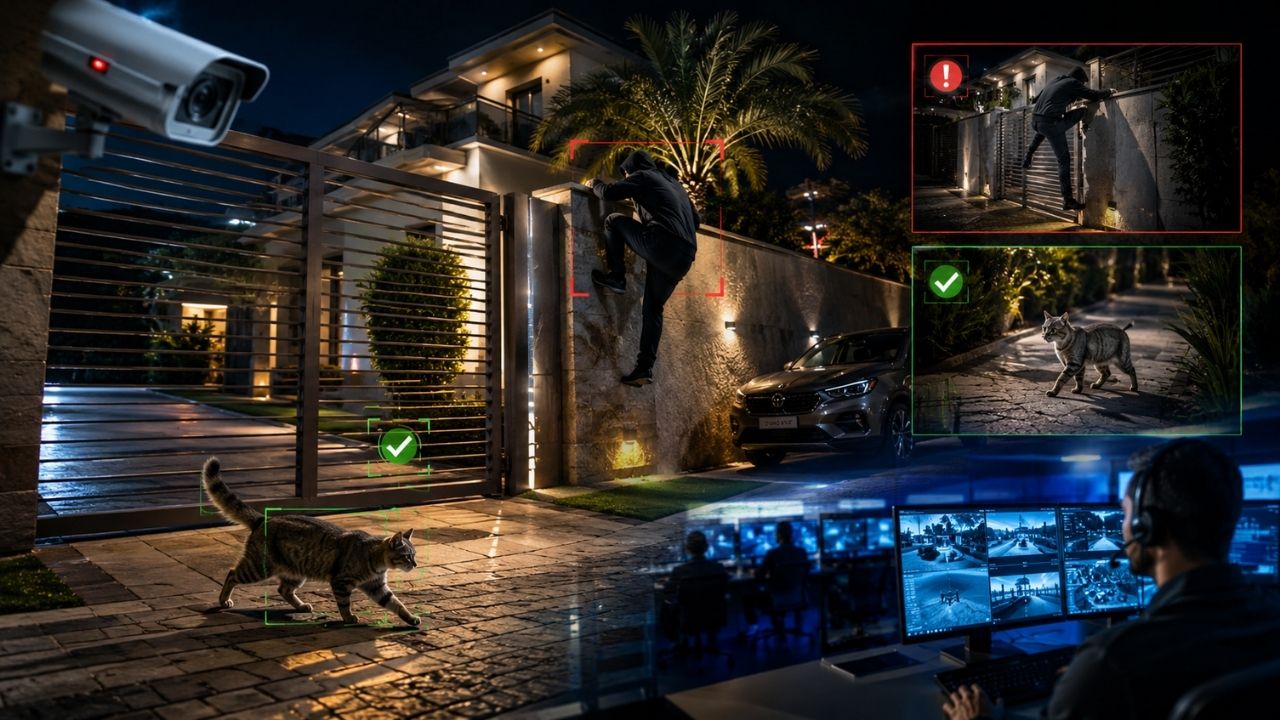
For years, alarm systems have relied on sensors, cameras, and human evaluation to identify suspicious movements. The problem is that not every trigger indicates an invasion. Pets, insects, objects moved by the wind, and climate changes can trigger alerts without any concrete risk.
-
Archaeologists Discover 1,500-Year-Old Byzantine Mosaic with Greek Biblical Inscription in Israel, Uncover Ruins of 10 Buildings Near Kiryat Gat

-
Ohio Carpenter Finds 308-Gram Meteorite the Size of a Baseball After Dreaming of Its Location

-
Chinese Student Builds Humanoid Robot for $2,100 at Age 20, Now Leads Robotics Startup in China
-
Sumatran Rhino: The Rare “Prehistoric Survivor” with Fewer Than 50 Left and a Fascinating Natural History


These false alarms cause wear and tear for residents, businesses, and monitoring centers. A wrong alert in the middle of the night can scare a family, occupy operators, and delay attention to truly important events. Therefore, the promise of security with AI is to reduce noise and make the response more precise.
How artificial intelligence changes the reading of images
The difference between a traditional system and a system with artificial intelligence lies in the interpretation of context. Instead of just detecting movement, the technology tries to recognize patterns, assess behavior, and separate common situations from potential threats.
In practice, this means that AI security can help distinguish the passage of an animal, like a cat, from a human presence in a protected area. The aim is not to eliminate central analysis, but to deliver more qualified information so that operators can decide more quickly and with less doubt.
30-second clips help understand the trigger
One of the central points of Khronos Detect AI is the pre-alarm function. When the system identifies an event, the 24-hour monitoring center and the user receive a 30-second video clip of the recorded situation. The clip includes the 15 seconds before and the 15 seconds after the trigger.
This detail changes the way an occurrence is evaluated. If the operator only sees the moment of the alarm, context may be missing. With the before and after, it’s easier to understand if there was suspicious approach, natural movement of an object, animal passage, or a real invasion attempt. The short video turns the alert into immediate visual evidence.
System differentiates human movement from common situations
The solution was developed with an architecture called Human Motion Detection. The goal is to recognize patterns associated with the presence and behavior of people, instead of treating any movement as a sign of invasion.
This layer of analysis is important because a good portion of false alarms arises from generic readings. When the camera or sensor doesn’t understand what’s happening, the alert comes as a risk. With AI security, the aim is to reduce this type of error and prioritize occurrences with a higher probability of real threat.
Homes, condominiums, and businesses can feel direct impact
In homes, the main change is in the resident’s peace of mind. False alarms during the night cause fright, sleep interruption, and a feeling of insecurity, even when nothing happened. If the technology can differentiate common movement from a real intruder, daily use tends to be less exhausting.
In condominiums and businesses, the impact is also operational. Centers receive many simultaneous alerts and need to quickly separate what requires action. When technology better filters the triggers, the team gains time to focus on what really matters.
24-hour monitoring can gain a more strategic response
The monitoring center is one of the most affected parts by this type of technology. In a conventional model, operators need to analyze alerts that may have low relevance. With contextualized clips, decision-making can become more agile.
This does not mean that artificial intelligence completely replaces human judgment. The role of security with AI is to function as a support layer, organizing information and reducing unnecessary triggers. The final decision still depends on protocols, operators, and analysis of the protected environment.
Technology already appears in different sectors
According to the information released, the Khronos Detect AI is already being used in residential condominiums, commercial establishments, agribusiness operations, and corporate environments. The solution appears in markets of states like Santa Catarina, Mato Grosso, Mato Grosso do Sul, and Minas Gerais.
The variety of environments shows that the problem of false alarms is not restricted to residences. Companies, rural areas, and commercial spaces also deal with undue movements, animals, external circulation, and events that can confuse traditional systems. The more diverse the location, the greater the need for monitoring capable of interpreting context.
Preventive security starts before the door
One of the ideas behind the system is to anticipate threats. Instead of reacting only when someone is already very close to the entrance, the technology seeks to observe external areas, yards, accesses, and approach points. This logic changes the dynamics of protection.
When the alert arrives earlier and with contextualized video, there is more time to assess the occurrence and take appropriate measures. Security with AI starts to act as a kind of preventive filter, especially in places where suspicious movement can be perceived before the attempt to enter.
Reduction of false alarms does not eliminate basic care
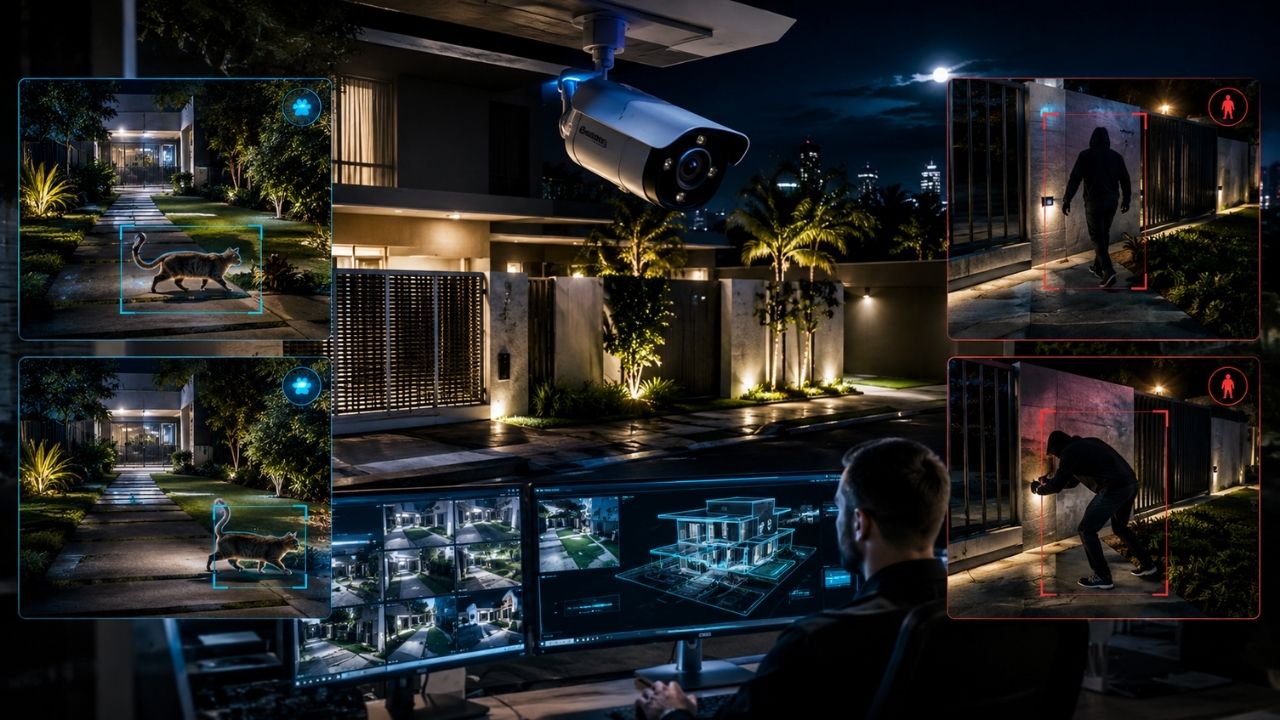
Even with advanced technology, security systems depend on correct installation, maintenance, camera positioning, and proper sensor configuration. A poorly positioned camera, inadequate lighting, or an uncovered area can reduce the solution’s efficiency.
For this reason, artificial intelligence should be seen as reinforcement, not as an absolute guarantee. No system completely eliminates risk, but more precise solutions can improve monitoring routines, reduce unnecessary interruptions, and help centers act with more clarity.
AI enters a new phase of electronic security
The arrival of such systems shows a greater shift in the electronic security sector. The focus is no longer just on recording images and triggering alarms. The trend is to interpret data, recognize patterns, and support real-time decisions.
This evolution follows the growing use of artificial intelligence in different areas of everyday life. In the case of security with AI, the impact appears in very practical situations: avoiding scares with false triggers, better identifying a suspicious event, and speeding up the response when there is a concrete risk.
Security with AI still raises debates about privacy, trust in technology, and the limits of automation, but the reduction of false alarms can represent an important change for residents, companies, and 24-hour centers. The challenge will be to balance precision, data protection, and human supervision so that technology helps without creating new concerns.
Would you trust a system capable of differentiating a cat from a real intruder before alerting the center, or do you still prefer that every movement generates an immediate alert? Tell us in the comments if you have ever experienced scares with false alarms at home, in a condominium, or at a company.