Portuguese
  Spanish


The biblical inscription was found in a colorful mosaic during excavations for a new neighborhood near Kiryat Gat, in Israel. The Byzantine complex from the 5th or 6th centuries includes a possible monastery, large warehouse, and sophisticated wine press, according to information released by the Israel Antiquities Authority in a statement.
A biblical inscription in Greek appeared in an ancient mosaic during excavations for the construction of a new neighborhood near Kiryat Gat, in Israel. Archaeologists identified a Byzantine-era complex at the site, with ruins of buildings, a possible monastery, decorated floor, large warehouse, and a wine press.
The discovery was announced on January 16, 2025, by Smithsonian magazine, based on information from the Israel Antiquities Authority. The complex is dated to the 5th or 6th centuries AD, a period when the region was part of the Byzantine Empire, and was described by those responsible for the excavation as one of the most important archaeological finds in the area.
New neighborhood construction revealed ancient ruins
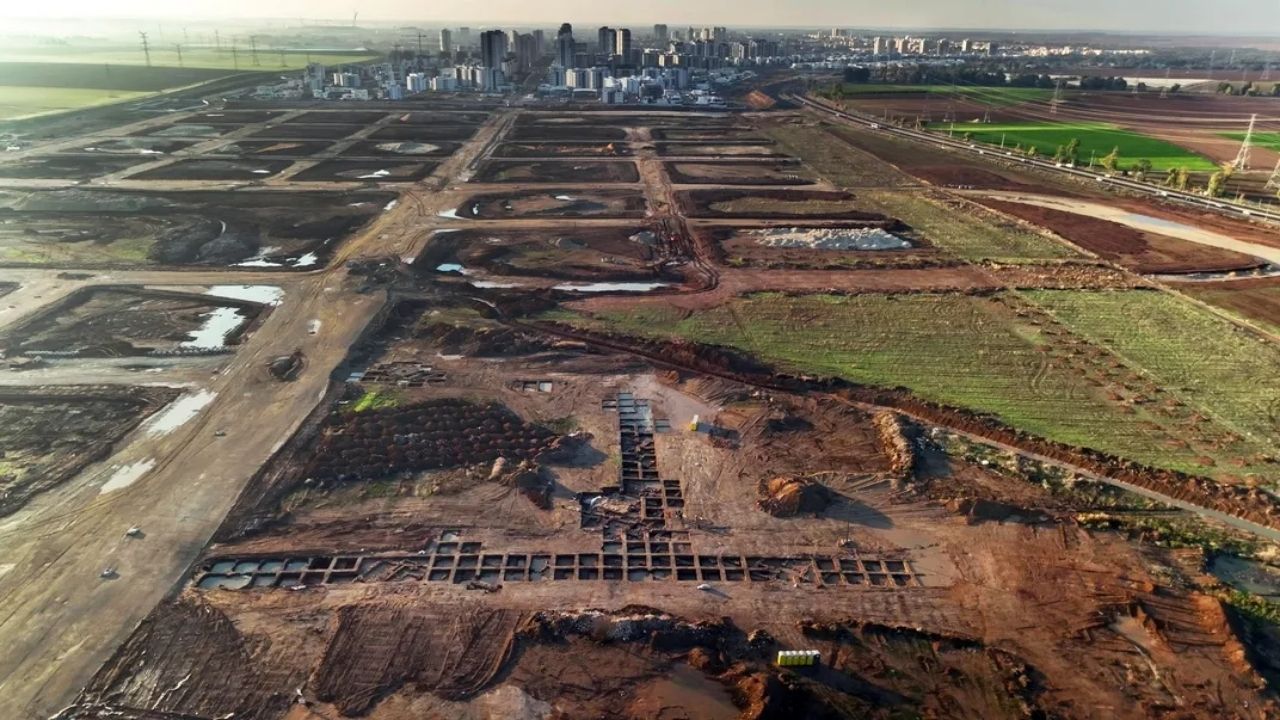
The excavation began because of a modern construction project, but ended up revealing a set of ancient structures. Instead of just preparing the land for a new neighborhood, the work exposed traces of occupation, buildings, and production areas that changed the historical understanding of the region near Kiryat Gat.
-
Ohio Carpenter Finds 308-Gram Meteorite the Size of a Baseball After Dreaming of Its Location

-
Chinese Student Builds Humanoid Robot for $2,100 at Age 20, Now Leads Robotics Startup in China
-
Sumatran Rhino: The Rare “Prehistoric Survivor” with Fewer Than 50 Left and a Fascinating Natural History

-
Chinese Humanoid Robots Transition from Labs to Real Factories to Assemble Tablets: AgiBot Deploys G2 Machines at Longcheer, Aiming for 100 Robots in Electronics, Cars, Chips, and Energy by 2026



The case draws attention precisely because of this contrast. A common construction project paved the way for an archaeological site of great value, showing how ancient layers can remain hidden beneath areas that are now being urbanized again. In Israel, where many projects undergo archaeological monitoring, discoveries of this type help connect urban expansion and historical preservation.
Colorful mosaic brings verse from Deuteronomy
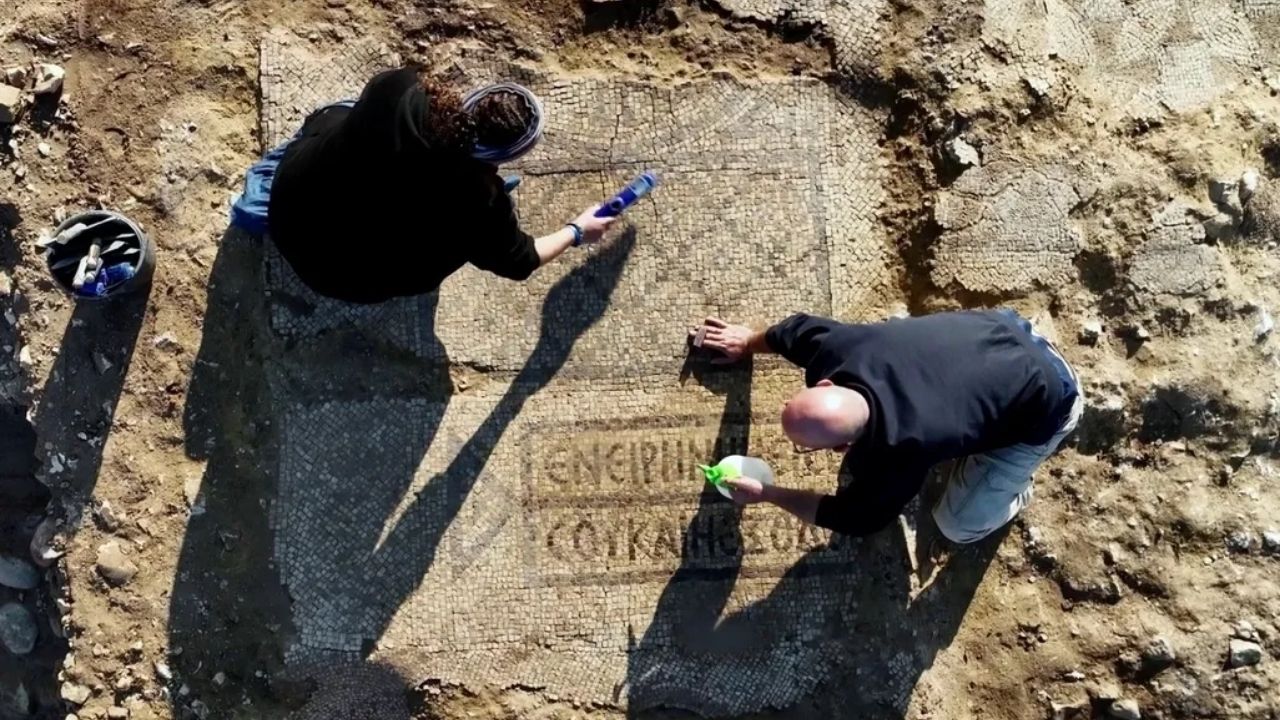
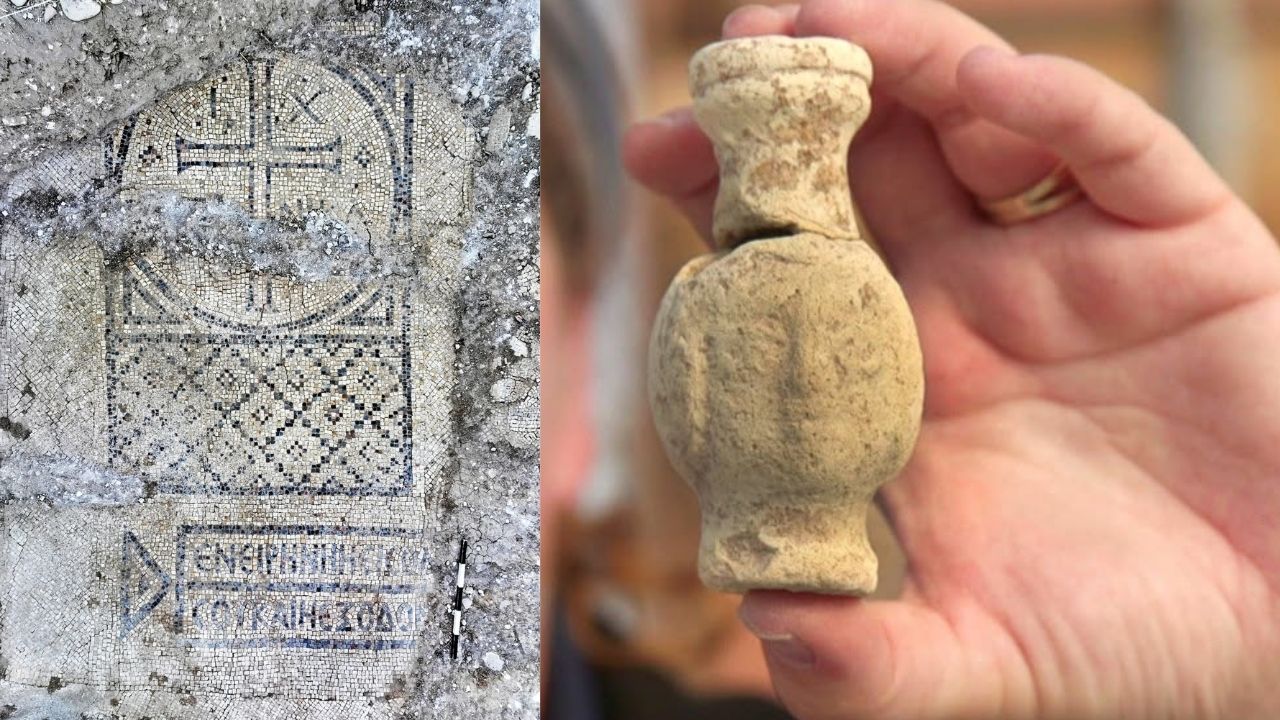
The most striking feature of the find is the mosaic floor with a biblical inscription in Greek. The phrase refers to a verse from Deuteronomy, with a blessing related to entry and exit, placed amidst a decorative composition rich in symbols.
The mosaic includes crosses, lions, doves, flowers, geometric patterns, and an amphora, an ancient container used in antiquity. For archaeologists, these elements reinforce the hypothesis that one of the constructions may have functioned as a monastery. The biblical inscription gives the floor a religious and cultural dimension that goes beyond visual beauty.
Possible monastery indicates Christian presence in the Byzantine era
The presence of a possible monastery helps situate the complex in the context of the Byzantine Empire. Between the 5th and 6th centuries, Christianity was already deeply associated with the religious, political, and cultural life of various regions under Byzantine influence, including areas of present-day Israel.
The remains found in the building reinforce this interpretation. In addition to the mosaic with a biblical inscription, decorative elements and materials were identified that point to a structure of community relevance. The site does not appear to have been just an isolated point but part of a settlement with religious, economic, and daily activities.
Floor described as one of the most unique in Israel
Experts highlighted the uniqueness of the mosaic found near Kiryat Gat. According to the information released, the floor contains small clusters of very delicate stones, arranged with precision. This level of detail caught the attention of the artistic conservation team linked to the Israel Antiquities Authority.
The intention is to first take the mosaic to a conservation workshop and then exhibit it to the public in an open area of Kiryat Gat. Transferring an ancient mosaic requires extreme care, because any failure can compromise small pieces, the original design, and the historical reading of the set.
Sophisticated wine press shows economic strength of the settlement
In addition to the possibly religious area, the site revealed a wine press considered sophisticated. The structure had fermentation rooms and collection tanks, suggesting a more complex operation than simple domestic production.
The maintenance of a press of this size likely required resources, specialized labor, and organization. This indicates that the settlement had significant economic activity, possibly linked to the production and circulation of wine. The discovery shows that the complex was not only spiritual but also productive.
Large warehouse and imported objects deepen the mystery
The complex also included a large warehouse, as well as imported goods, metal and glass containers, coins, and marble artifacts. These materials help suggest commercial connections and a more developed pattern of occupation.
The presence of varied items indicates that the site participated in networks of exchange, storage, and circulation of goods. The biblical inscription in the mosaic is the most striking detail, but the objects found around it enhance the importance of the excavation because they show a community with active economic, religious, and social life.
Occupation may have spanned different periods
Researchers believe that the site was continuously occupied from the beginning of the Roman period to the end of the Byzantine era. There is also the possibility of a much older human occupation, linked to the Chalcolithic period, also known as the Copper Age.
This long sequence makes the find even more relevant. The same land can hold traces of various human phases, with layers that tell different stories. The discovery near Kiryat Gat, therefore, is not limited to a Byzantine building but can help reconstruct a broader occupation of the region over time.
Excavation has revealed ten buildings so far
So far, remains of ten buildings have been identified at the archaeological site. Even so, the actual extent of the settlement has not yet been determined. The excavations remain important because they can reveal new structures, connections between the buildings, and details about the use of each area.
This uncertainty is part of the archaeological process. Each wall, floor, coin, pottery fragment, or imported object can change the interpretation of the whole. What today seems like an already significant Byzantine complex may gain new layers as the excavation progresses.
Find reinforces the historical importance of Kiryat Gat
The discovery near Kiryat Gat reinforces the historical importance of the region during the Roman and Byzantine periods. The combination of a possible monastery, mosaic with a biblical inscription, wine press, warehouse, and various buildings shows that the site had multiple functions.
This type of find helps the public see archaeology in a more concrete way. It is not just about distant ruins, but spaces where people prayed, worked, stored goods, produced wine, and left cultural marks. The biblical inscription preserved in the mosaic acts as an ancient voice among the stones.
Preservation will be a central part of the next stage
After the discovery, the challenge becomes conserving and presenting the material to the public. The mosaic needs to be removed, restored, and reinstalled with precision, while the other finds must be studied to form a more complete understanding of the site.
The future exhibition in Kiryat Gat can transform the discovery into a point of historical education and visitation. For this, it will be necessary to balance protection, public access, and ongoing research. Archaeological finds gain strength when they cease to be just news and are preserved for future generations.
The biblical inscription found in the Byzantine mosaic shows how a modern work can reveal a much older history than the initial project imagined. The complex near Kiryat Gat brings together religion, production, commerce, and prolonged occupation, transforming a construction excavation into one of the most important discoveries in the region.
Do you think that works in historical areas should always have mandatory archaeological monitoring, even if it delays constructions? Tell us in the comments if the preservation of finds like this should weigh more than the rush for new neighborhoods.