Portuguese
  Spanish


Around the age of 20, Chinese student Huang Yi built a walking humanoid robot alone in his university dorm room, spending about $2,100. He made the entire project open source, became a well-known name in robotics, and now runs his own startup in China.
Building a walking humanoid robot usually requires million-dollar labs and teams of engineers. However, a Chinese student did it practically alone, inside his college dorm room, spending the price of a good cell phone. The feat is by Huang Yi, and was reported by the site Interesting Engineering.
The shocking number is the budget. Huang built the humanoid robot, named AlexBot, with about $2,100, just over 11,000 reais, a tiny fraction of what commercial humanoids cost. Instead of hiding the secret, he made the entire process open source, turning the student dorm project into a global reference.
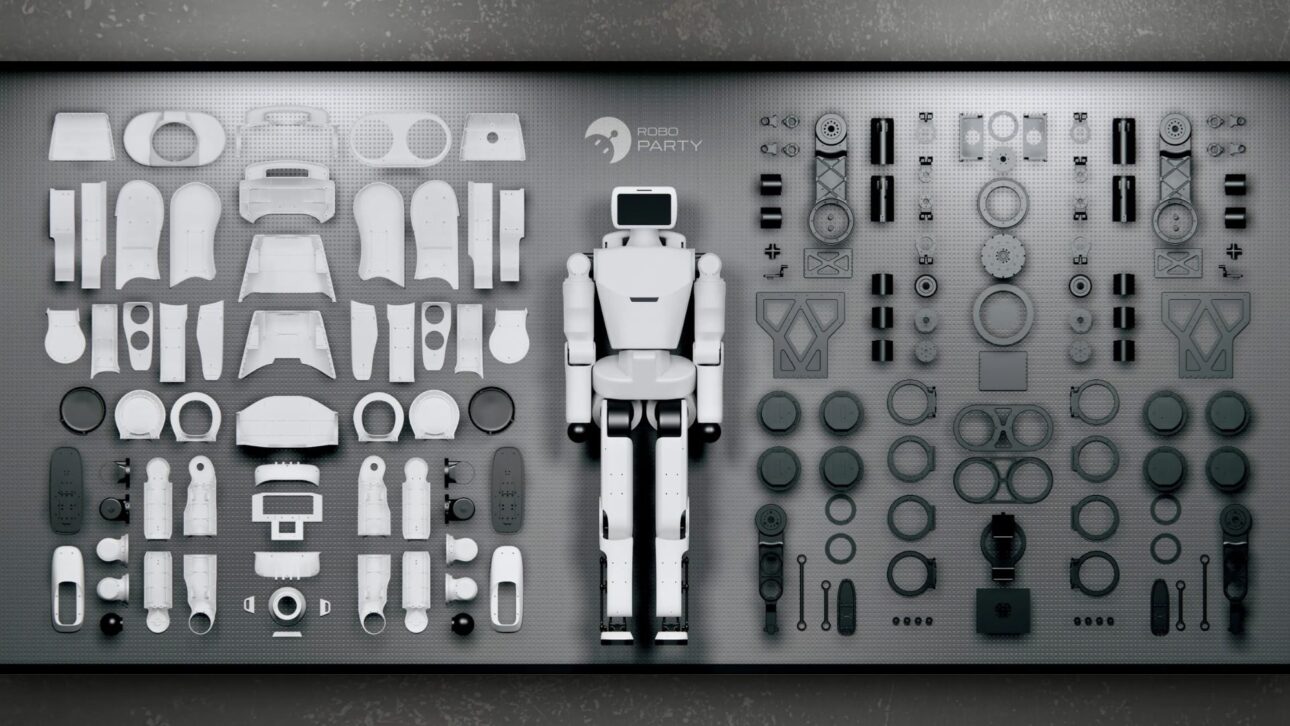
Today, that young man has become an entrepreneur. After graduating early, Huang Yi founded his own robotics startup, RoboParty, with the mission of bringing open-source humanoids to the whole world. From the dorm bed to leading a company funded by giants, his journey sums up China’s race for robots.
-
Sumatran Rhino: The Rare “Prehistoric Survivor” with Fewer Than 50 Left and a Fascinating Natural History

-
Chinese Humanoid Robots Transition from Labs to Real Factories to Assemble Tablets: AgiBot Deploys G2 Machines at Longcheer, Aiming for 100 Robots in Electronics, Cars, Chips, and Energy by 2026

-
Shopkeeper Buys Notebook at English Bazaar, Discovers Rare 1915 WWI Record Listing 900 Volunteers, 140 Fallen

-
Hyundai Workers Vote to Strike Over Fears of Being Replaced by Atlas Robots in Factories



The $2,100 Homemade Humanoid Robot
The star of this story is the AlexBot. It is a bipedal humanoid robot, meaning it walks on two legs, built by Huang Yi while he was still a freshman at university. The achievement is impressive because machines like this, capable of walking in a balanced manner, are among the greatest challenges in current engineering.
The cost is what turns the project into a phenomenon. While humanoid robots from companies cost tens or hundreds of thousands of dollars, the AlexBot came out at around $2,100. It’s a price so low that it changes the conversation: it shows that you can enter the world of humanoids without a multinational budget.
More than cheap, the robot is symbolic. It proves that the barrier to creating cutting-edge technology is falling, and that a motivated student, with accessible parts and a lot of knowledge, can come close to what only large laboratories used to do. The AlexBot thus became a calling card for Huang’s talent.
It’s worth understanding why this is so difficult. Making a machine walk on two legs without falling involves dynamic balance, sensors, motors, and real-time calculations, a problem that occupied engineers for decades. Solving much of this with about $2,100, the price of a high-end smartphone, is what makes Huang’s humanoid robot even more impressive.
Who is Huang Yi, the prodigy student
Behind the robot is an exceptional young man. Huang Yi was born in 2004 and is regarded as one of the youngest humanoid robotics entrepreneurs in China. He was studying at the Harbin Institute of Technology, one of the country’s most respected engineering universities, when he began to attract attention with his projects.
The AlexBot was not his first achievement. Already in 2023, still at the beginning of his undergraduate studies, Huang had stood out by winning a national technology competition with an amphibious drone capable of operating in water and air. This history shows that the humanoid robot was the continuation of an early trajectory of inventions, and not an isolated stroke of luck.
His profile is that of the classic young technology prodigy. Curious, self-taught, and willing to learn by doing, Huang represents a generation that grew up surrounded by electronics and programming and tackles ambitious projects without the fear that would hold back many experienced people. It was this boldness that led him to attempt a humanoid in his dorm room.
Built alone in the dorm room
The creation setting is what makes everything more surprising. The AlexBot was not born in a top-notch laboratory, but in Huang’s dorm room, under common student conditions. It was among books, tools, and scattered parts that the humanoid robot took shape, assembled almost entirely by one person.
Working alone and with little money required ingenuity. Without a team or a robust budget, Huang had to design, assemble, program, and test each part of the robot on his own, solving one problem at a time. Each mistake became a learning experience, in a trial-and-error process typical of those who build with their own hands.
This homemade character is part of the charm of the story. The image of a humanoid robot walking, created in a university dorm room, breaks the idea that high technology is exclusive to giants. It shows that, with focus and knowledge, a student’s room can become a small robotics laboratory.
Open source: he taught the world how to do it
Huang’s most intelligent decision was not technical, but rather one of attitude. Instead of keeping it a secret, he published the entire development process of AlexBot as open source, allowing anyone in the world to study, copy, and improve the project. It was a rare gesture in a sector marked by closed competition.
The community’s response was swift and strong. The project accumulated over 4,000 stars on GitHub, the platform where programmers share code, and the documentation surpassed 200,000 views. For a project done in a dormitory, these numbers show the level of global interest in an accessible humanoid robot.
The impact reached the big names in the sector. According to reports, Huang’s work attracted the attention of figures like Marc Raibert, founder of Boston Dynamics, a world reference in robots, and earned sponsorship from the robotics company Fourier Intelligence. The open source transformed a student project into a topic for experts.
From AlexBot to AlexBotmini
The success of the first robot opened doors for the next one. In February 2025, with support from Fourier Intelligence, Huang launched an improved version, the AlexBotmini. The leap from a solo project to an iteration with company sponsorship marks the professionalization of his journey in robotics.
This evolution shows the logic of building in stages. Each new version corrects flaws, improves performance, and incorporates what was learned from the previous one, in a cycle of continuous improvement. Moving from AlexBot to AlexBotmini was the natural step for someone who takes their own project seriously.
The support of an established company also brought credibility. Receiving support from Fourier Intelligence, a relevant name in Chinese robotics, signaled that Huang’s talent had market value, not just academic merit. It was the bridge between the homemade humanoid robot and the professional world of technology.
The startup RoboParty and the ROBOTO ORIGIN
The definitive turning point came with early graduation. Convinced that the sector was stagnant and inefficient, Huang Yi graduated ahead of schedule and, in 2025, founded his own startup, RoboParty, based in Beijing. The goal was ambitious: to create a completely open-source platform for biped humanoid robots.
The company’s flagship product soon appeared. RoboParty developed and opened the code for ROBOTO ORIGIN, described as a full-stack open-source biped humanoid robot, with research completed in about 120 days. The idea is for it to function as a sort of “Android of robotics,” a common base that any developer can use and adapt.
The reception mirrored the success of AlexBot. Shortly after launch, ROBOTO ORIGIN already amassed over a thousand stars on GitHub and nearly a hundred pre-orders for development kits. Once again, open source proved to be Huang’s right bet to accelerate the adoption of his humanoid robot.
The ambition of RoboParty goes beyond a single robot. Huang’s idea is to create a common base that serves as a foundation for the entire industry, something like an open operating system for humanoids, where each developer contributes and benefits from the work of others. If the bet pays off, the student will have helped shape the foundation of an entire sector.
Xiaomi and the millions in investment
The market saw potential in the young founder. RoboParty raised a seed round in the millions of dollars, with heavyweight investors betting on Huang Yi’s project. For a company born from a dormitory robot, attracting this type of capital is proof that the idea was taken seriously.
The list of investors is impressive. According to reports, names like Matrix Partners China, Xiaomi’s strategic investment division, and Galbot, among others, joined in. Having a tech giant like Xiaomi on the team of supporters gives the startup resources and visibility that few startups achieve.
This funding changes the game for RoboParty. With money in the bank and strong partners, the startup gains momentum to develop new robots, expand the open-source community, and compete in a rapidly growing sector. The student who used to assemble parts alone now runs a real company.
Why China leads the humanoid race
Huang’s story does not happen in a vacuum. China is experiencing a true humanoid robot race, with companies like Unitree and several startups competing to create the most advanced and cheapest machine. The country has made robotics a strategic priority, and young talents are emerging in this vibrant environment.
Cost reduction is a hallmark of this competition. While Western humanoids still cost fortunes, Chinese manufacturers are racing to lower prices and popularize the technology, and open-source initiatives like Huang’s accelerate this movement. The more people can build and improve robots, the faster the sector advances.
In this scenario, a student with a $2,100 robot becomes a symbol. He shows that Chinese innovation in robotics doesn’t just come from big companies but also from dorm rooms and an entire generation willing to get their hands dirty. It’s this broad base of talent that helps explain the country’s leadership.
The competition, of course, is global. The United States and other countries are also racing to dominate humanoid robots, with companies like Boston Dynamics and projects from tech giants. But China’s strategy of lowering costs and opening the code, embodied by people like Huang, is cited as one of the reasons why the country is advancing so quickly in this frontier.
What Brazil has to do with it
History serves as a mirror and inspiration for Brazil. The country has talented young people in engineering, computing, and robotics, many of them in high-level public universities, but still struggles with a lack of resources, incentives, and bridges between academia and the market. Huang’s case shows what can happen when these elements come together.
The open-source model is one of the greatest lessons. Sharing projects, instead of locking them away, allows students to learn from each other and good ideas to spread quickly, without relying on large budgets. Encouraging this culture in Brazilian colleges could reveal many talents currently hidden.
Brazil has talent nurseries waiting for this push. Competitions like the Brazilian Robotics Olympiad reveal, every year, students from public and private schools capable of surprising feats with few resources. Giving these young people structure, scholarships, and access to open-source projects could transform potential into real inventions.
There is also the message about low cost and boldness. If a humanoid robot can be born in a dorm room for just over 11,000 reais, robotics projects cease to be a distant dream and become a real possibility in technical schools and universities. Often, all that’s missing is the push of encouragement and the courage to try, as the Chinese student did.
And you, would you bet on this young inventor?
Huang Yi’s journey shows that great inventions can start small: a humanoid robot that walks, built alone in a dorm room for about $2,100, open to the world in open source and transformed into the startup RoboParty, now funded by giants like Xiaomi in China. From the dorm to running a company, in just a few years.
And you, do you believe that Brazil could reveal young inventors like Huang Yi if it invested more in robotics and open-source projects in universities? Share in the comments if you would trust a homemade humanoid robot and what you think is missing for the country to develop more talents like this.