Portuguese
  Spanish


AI accelerates writing, research, and decisions, but studies cited by Exame, MIT Media Lab, and Microsoft Research indicate that passive use can reduce mental effort of the brain and critical thinking, reigniting the alert about cognitive debt, memory, and invisible dependency in common tasks in today’s professional digital work routine.
AI has returned to the center of a delicate debate: to what extent can saving time with digital assistants reduce the mental effort used to write, research, and solve problems? The discussion was resumed after a report by Exame, published on June 25, 2026, gathered recent studies on artificial intelligence, the brain, and critical thinking.
The topic involves researchers from MIT Media Lab, Microsoft Research, Carnegie Mellon University, and experts consulted by the press. The conclusions do not say that the technology causes brain damage, but point to a risk of passive use: when the machine becomes too much a part of reasoning, the brain may be less challenged precisely in tasks that strengthen memory, attention, and analysis.
The alert is not against technology, but against automatic use
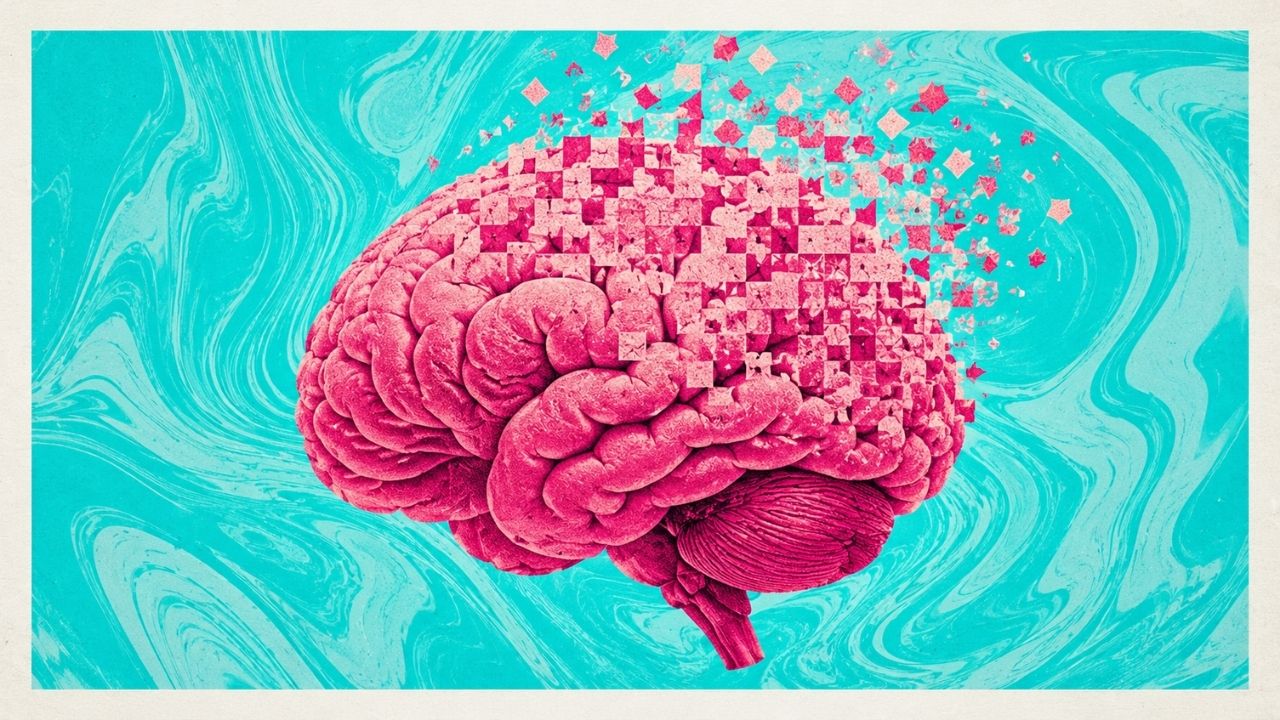
The discussion about AI usually oscillates between enthusiasm and fear. On one hand, generative tools help summarize texts, organize ideas, review sentences, translate documents, and accelerate decisions. On the other hand, researchers are beginning to observe how this economy of effort can alter the way people mentally engage with a task.
-
Brazilian Researchers Develop Low-Cost Sensors to Detect Avian Flu in Minutes, Enhancing Global Health Security

-
545 Intact Amphorae Found 370 Meters Deep in Turkey Reveal Ancient Byzantine Trade Routes Connecting the Aegean and Black Sea

-
NASA to Send Astronauts Over 400 km Above Earth for 6.5-Hour Spacewalk to Repair Canadarm2 on the ISS

-
Microsoft Raises Xbox Prices Again Due to Rising Component Costs


According to Exame, recent studies indicate that excessive or passive use of artificial intelligence can reduce cognitive effort in activities such as writing, research, and problem-solving. The central point is not to demonize the tool, but to understand what happens when the user stops thinking before asking for the answer.
This difference is important because a tool can enhance capabilities when used as support, but it can also weaken mental habits when it becomes a substitute for reasoning. In other words, the same technology that helps produce faster can exact a price if used to completely avoid the reflection stage.
For this reason, experts approach the topic with caution. AI does not appear as an enemy of the brain, but rather as a resource that requires method. The risk increases when the text, argument, or decision is accepted without review, comparison, checking, or reorganization in one’s own words.
MIT observed differences during writing tasks
One of the studies mentioned in the debate was developed by the MIT Media Lab and analyzed participants during writing tasks. The volunteers were divided into groups: one wrote using only their own reasoning, another used search engines, and another had the assistance of artificial intelligence.
The researchers observed differences in brain connectivity among the groups during the activity. According to Exame, those who used AI showed less activation in areas related to cognitive processing at the time of the task. This does not mean a definitive loss of capacity, but suggests less mental engagement when the assistant takes on an important part of the work.
The study became known for the expression “cognitive debt,” used to describe the possibility of accumulating a kind of invisible cost when mental effort is repeatedly outsourced. The logic is similar to that of the body: if a function is little exercised, it tends to be less demanded in daily life.
The interpretation itself requires caution. The finding does not prove that using artificial intelligence causes brain damage, nor does it authorize alarmist conclusions about all users. What it does is raise a relevant hypothesis: if a person frequently delegates writing, structuring ideas, and retrieving information, they may train less in the skills involved in these tasks.
Cognitive debt became the name of the invisible fear
The expression “cognitive debt” gained traction because it aptly translates the conflict of easy productivity. AI saves minutes now, but it may reduce the mental training that helps sustain memory, attention, and critical thinking in the long term. The charge does not appear immediately; it arises in the growing dependency.
In practice, this phenomenon connects to what is called cognitive offloading. This happens when a person transfers to an external tool part of the effort to remember, organize, decide, or solve. Humanity has always done this with agendas, calculators, maps, and search engines, but artificial intelligence elevates the process to another level.
The difference is that generative tools not only store information or calculate numbers. They structure arguments, create texts, suggest decisions, and simulate reasoning. When the user jumps straight to the ready-made answer, they stop practicing important stages of their own thinking.
This does not make the feature bad in itself. The problem arises when a person replaces mental exercise with automatic acceptance. If AI becomes a starting point for asking better questions, comparing sources, and reviewing ideas, it can serve as support. If it becomes an endpoint, it can reduce the effort needed to learn.
Microsoft and Carnegie Mellon linked excessive confidence to less critical thinking
Another study cited by Exame was conducted by Microsoft Research in partnership with Carnegie Mellon University. The research involved 319 knowledge workers and gathered 936 examples of using generative AI in professional tasks.
The result pointed to an important relationship: greater confidence in AI was associated with less application of critical thinking, while greater confidence in one’s own ability was linked to more analytical effort. The conclusion does not say that everyone who uses artificial intelligence thinks less, but shows that excessive confidence can change behavior in response to answers.
The research also indicated that critical thinking does not necessarily disappear; it changes place. Instead of creating everything from scratch, the user starts to verify answers, integrate information, and supervise the result. This change can be positive when there is real revision, but dangerous when checking becomes just a formality.
Therefore, the warning is especially relevant in work and study environments. If the tool delivers something convincing, quickly, and well-written, the temptation to accept without questioning increases. The risk is not only in the machine’s error but in the reduction of the human habit of doubting, testing, and redoing.
The brain works less when the answer comes ready
The popularization of AI occurs in a scenario of pressure for productivity. Professionals need to respond to emails, create presentations, write reports, summarize meetings, and make decisions in less time. In this environment, any tool that reduces effort seems like an immediate solution.
But intellectual tasks are not just for generating a final product. Writing helps organize thought. Researching helps compare versions. Arguing helps test coherence. Reviewing helps detect flaws. When all these steps are compressed or outsourced, part of the cognitive training also diminishes.
That is why the discussion goes beyond “to use or not to use.” The real debate is how to use it. Asking the tool to review an already thought-out text is different from asking it to create everything without participation. Requesting counterpoints is different from copying a response. Using AI to challenge a hypothesis is different from outsourcing the conclusion.
Technology can act as an intellectual partner when the user remains active. It can suggest paths, point out gaps, summarize materials, and organize data. But the gain appears more securely when the person maintains control over the objective, criteria, sources, and final decision.
How to Use Without Giving Away the Entire Thought Process
Experts cited by Exame recommend simple habit changes to reduce the risk of dependency. The first is to try to solve the problem before resorting to AI. Even a bad draft already forces the brain to retrieve memory, organize ideas, and formulate a direction.
Another practice is to use the tool after the first attempt. In this case, artificial intelligence acts as a reviewer, counterpoint, or enhancer, not as a total substitute. The user can request critical questions, possible flaws, counterarguments, or ways to improve an already created structure.
It is also important to confront responses with other sources. AI can make mistakes, oversimplify, invent connections, or present convincing sentences without sufficient basis. Checking data, rewriting in one’s own words, and comparing interpretations keeps the brain engaged in the process.
In the study, the greatest danger appears when there is automatic trust. Therefore, the best defense is to cultivate productive skepticism. The tool can speed things up, but the user needs to ask: is this correct? does it make sense? is there a source? is there another side? can I explain it without copying?
Easy Productivity Can Hide Learning Costs
AI promises time savings, and this promise is real in many tasks. The problem is that not all saved time represents a gain in learning. In intellectual activities, effort is part of skill building.
A student who receives a ready-made summary may finish faster but perhaps memorize less. A professional who accepts an analysis without questioning may deliver sooner but perhaps understand the problem less. A writer who outsources the entire structure may produce volume but lose training in repertoire and editorial judgment.
This does not mean going back to working as before technology. It means recognizing that speed and depth do not always go hand in hand. The central question is how much of the mental process still remains with the person and how much is done by the machine.
In the end, the invisible risk is not using AI, but losing the ability to perceive when it is thinking for you. The brain needs friction, trial, error, comparison, and revision. Without this, productivity may grow while critical thinking silently shrinks.
The Challenge is to Turn AI into a Partner, Not a Crutch
The discussion about cognitive debt shows that AI should be treated as a powerful tool, not as a shortcut without cost. It can support learning, accelerate tasks, and expand repertoire, but requires active participation from the user to avoid becoming an intellectual crutch.
The most balanced approach is to use technology to enhance reasoning, not to avoid it. This includes creating an idea before the prompt, reviewing the response, asking for sources, testing arguments, comparing versions, and rewriting with autonomy.
If used in this way, artificial intelligence can help you think better. If used passively, it can reduce precisely the effort that strengthens memory, attention, and critical thinking. And you, have you noticed that you have become more dependent on AI to write, decide, or remember simple things? Do you think it helps your reasoning or is it taking up too much space?