Portuguese
  Spanish


A retired commercial airplane found a new destination in the United States by being converted into a home by Bruce Campbell, who installed the aircraft in an area surrounded by trees and kept much of the original structure, creating one of the most curious dwellings in Oregon.
But, in the hands of Bruce Campbell, a former electrical engineer from Oregon, USA, a retired Boeing 727-200 found another destination. Instead of being dismantled, the aircraft was taken to a forest area in Hillsboro, near Portland, and became the retiree’s own home.
The story draws attention due to the size of the contrast. A commercial airplane nearly 47 meters long, made to transport passengers, began to function as a home surrounded by trees. Inside, Campbell kept original elements like the cockpit, seats, flight controls, lavatories, and stairs.
According to Reuters, Campbell bought the Boeing in 1999 for about $100,000. The report also stated that the complete project reached approximately $220,000. The land, with 10 acres, had been purchased by him when he was still in his 20s, for about $23,000.
-
European Country Achieves 100% Glass Recycling and 52% Municipal Waste Recovery, Highlighting Brazil’s Challenges Despite Selective Collection in 60.5% of Cities

-
Facing extreme heat, floods, and disappearing fertile soil, Pakistan launches a “10 Billion Tree Tsunami” in three years to combat desertification, protect rivers, create green jobs, and make reforestation a national survival priority.

-
Cape Verde’s World Cup Surprise: Betting on Electric Cars, a 5 MW Solar Plant, and an Ambitious Plan to Transform Energy for 600,000 Residents

-
Man Finds 1,469 Ancient Roman Silver Coins While Metal Detecting in Romania


The plane left Greece before becoming a house in the middle of the forest
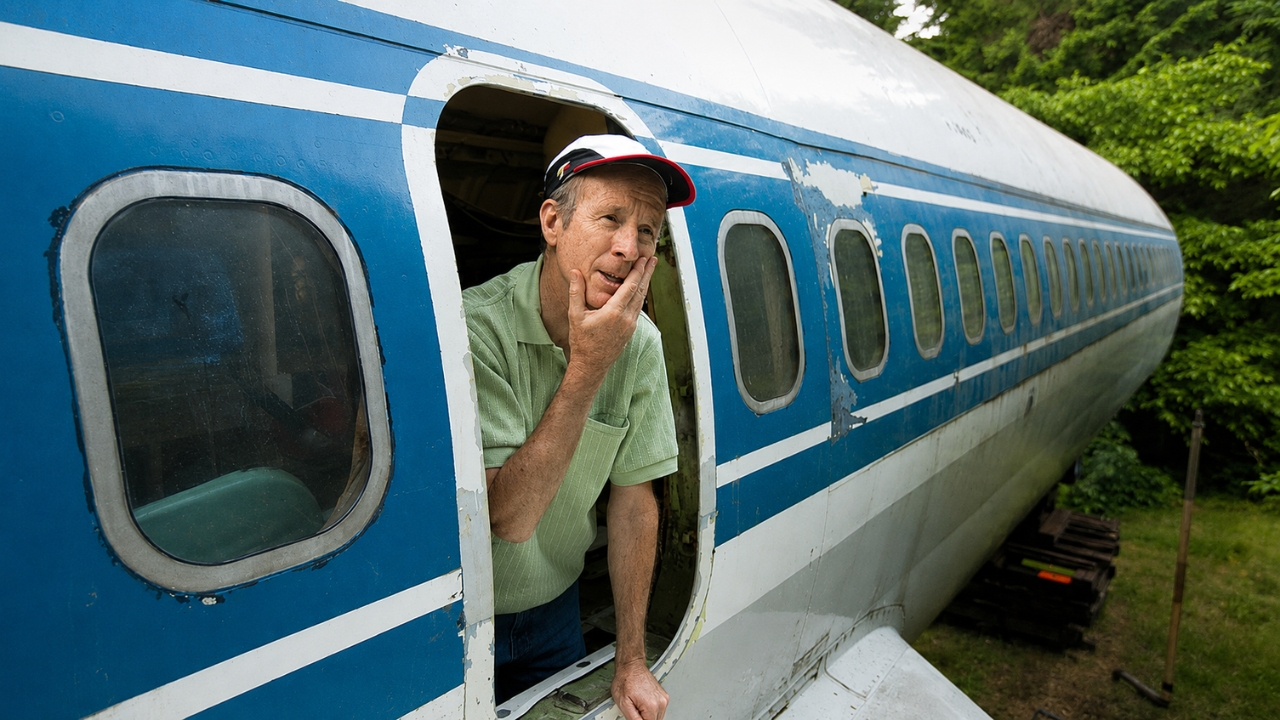
The transformation did not start in Oregon. According to information published on the website AirplaneHome.com, maintained by Bruce Campbell himself, the Boeing was in Greece before arriving in the United States.
The aircraft was taken from Athens International Airport to Hillsboro airport, which is about 20 kilometers from the land where it would be installed. After that, the most complicated part of the project began: removing a commercial airplane from an airport and placing it within a wooded area.
To make the transport possible, engines and some systems were removed. Parts of the wings, tail, and radome also needed to be removed. The fuselage was placed on equipment used for moving large structures and crossed streets with narrow margins until reaching the final location.
The result looks like an unlikely scene. Among tall trees, a Boeing 727 appears supported on the land, as if it had landed permanently in the middle of the forest.
Inside, the Boeing still looks like a real airplane
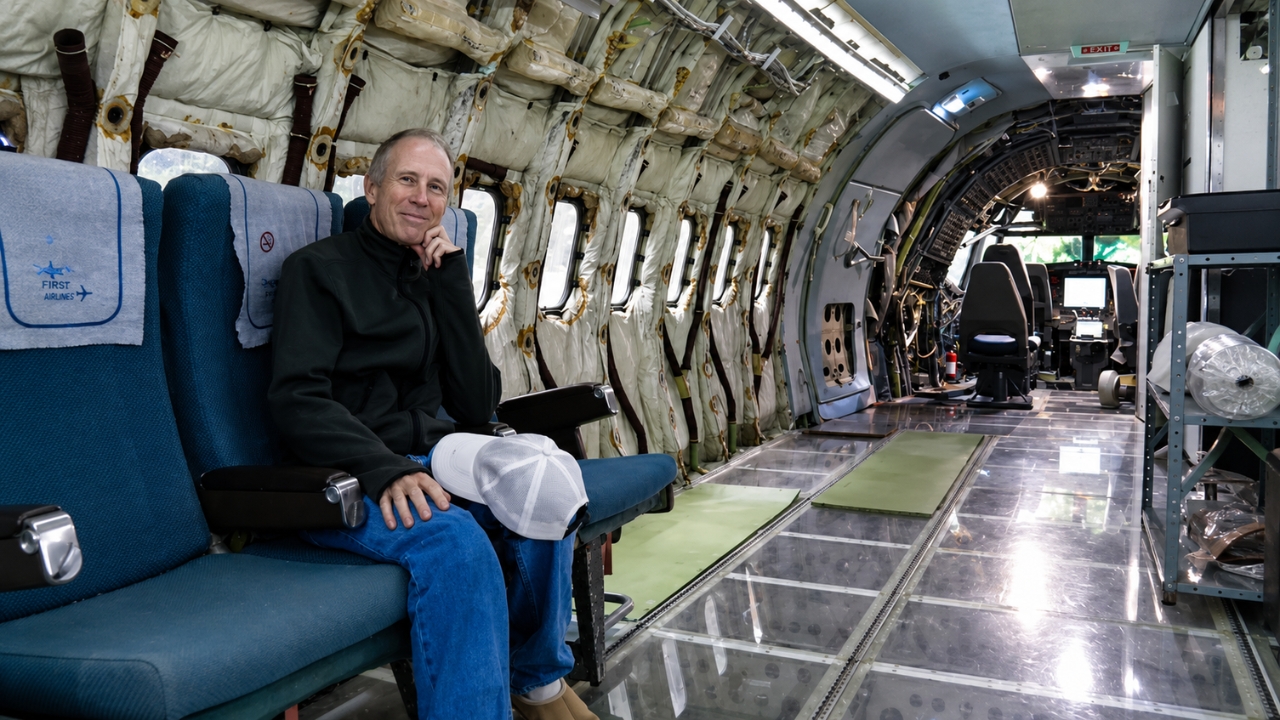
Campbell did not try to erase the identity of the aircraft. On the contrary. Part of the visual strength of the house lies precisely in the fact that it still looks like an airplane inside.
Reuters reported that the space retains the cockpit, controls, seats, functional lavatory, airplane stairs, and LED lighting. The interior mixes domestic improvisation with original aviation parts, creating a home that does not look like a common house.
According to AirplaneHome.com, the Boeing 727-200 offers about 99 m² of living space, including the passenger cabin and cockpit. The plane also has cargo compartments and technical areas below the floor, although these spaces have reduced height.
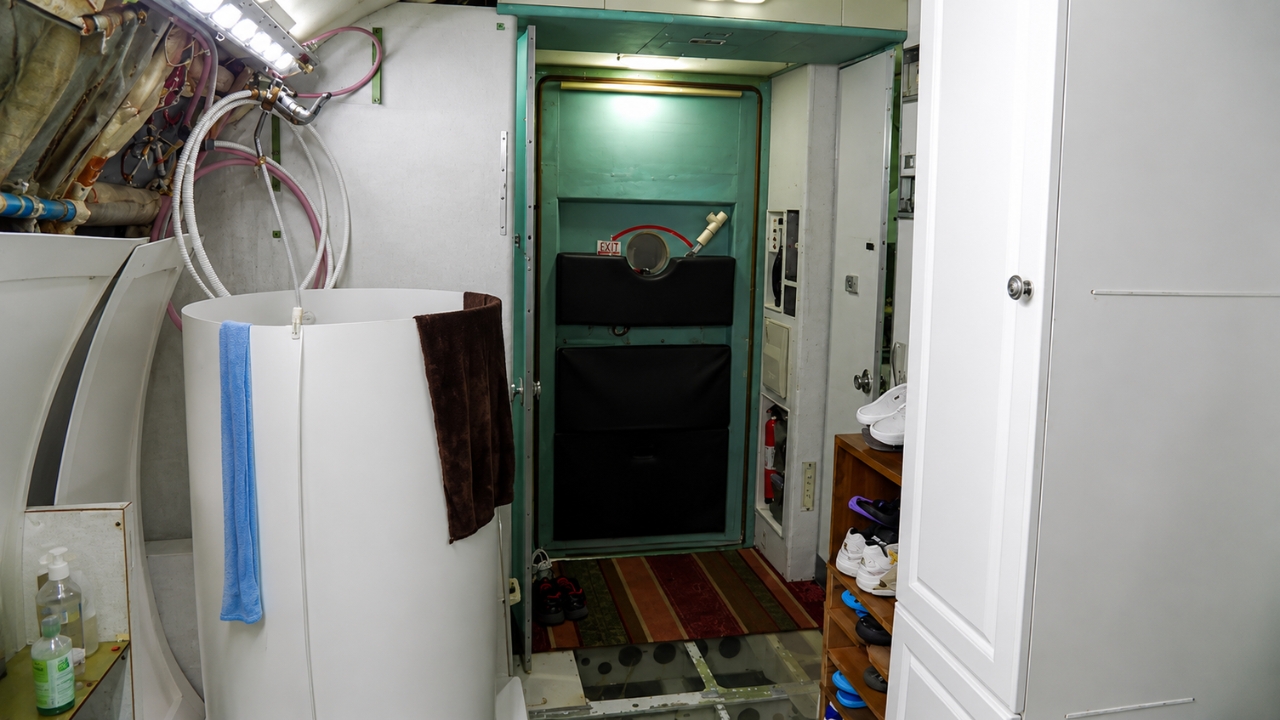
The routine inside the aircraft is simple. Reuters described Campbell sleeping on a futon, using a microwave or toaster to prepare food, and maintaining a life without luxury inside the plane. The shower is improvised, and visitors are advised to wear socks or slippers to avoid dirtying the interior of the aircraft.
The idea was born from a criticism of waste
For Bruce Campbell, the project is not just a personal extravagance. He argues that retired airplanes should not be automatically destroyed after going out of operation.
On AirplaneHome.com, Campbell presents commercial jets as resilient, durable structures that are technically superior to many conventional buildings. In his view, these aircraft could be repurposed as homes, small businesses, or even shelters, instead of being shredded as scrap.
This is the point that turns the story into something bigger than a curious house. The Boeing 727 in the woods functions as a kind of manifesto on extreme repurposing. An object made to cross continents has taken on another function after its commercial life ended.
KPTV, in a report published by Gray Media, revisited the case in 2026 and showed that the aircraft remained installed in the forest, still with cockpit, seats, and controls preserved. In the same approach, Campbell reinforced his vision that, one day, retired commercial airplanes could be reused more frequently.
The size of the airplane helps explain the visual impact of the house
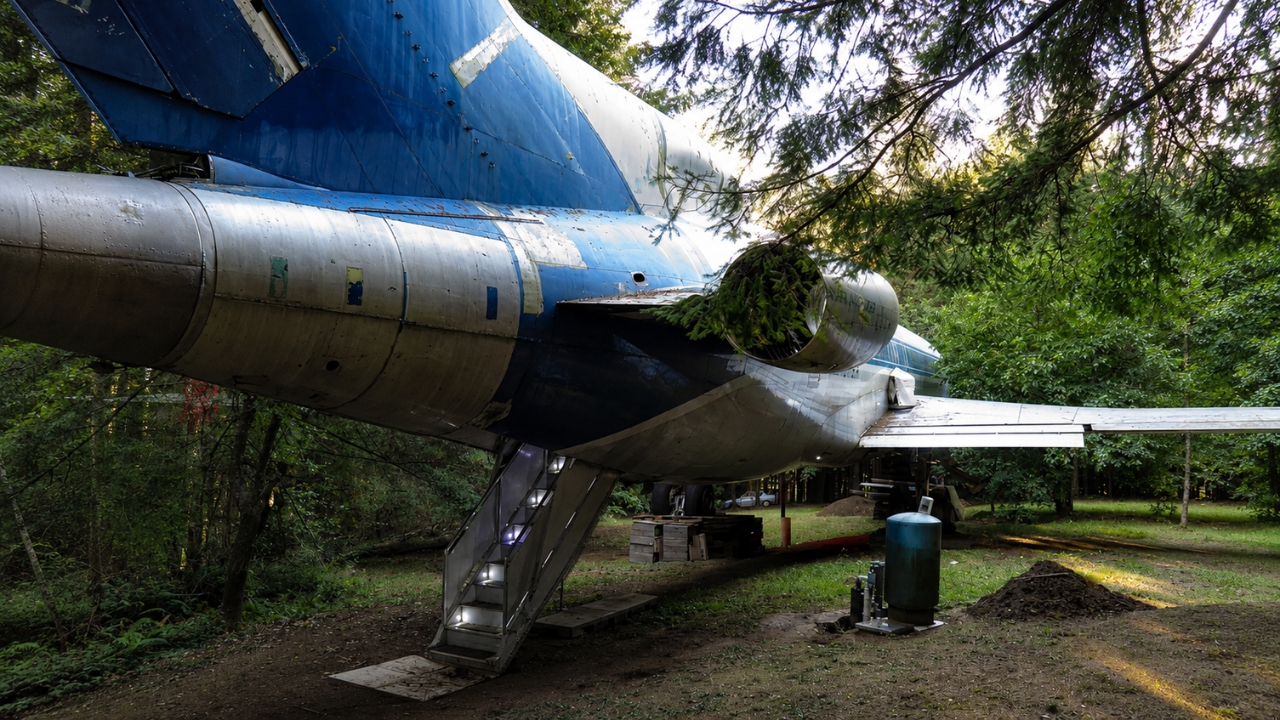
The Boeing 727-200 is not a small structure. Technical data from GlobalAir indicates that the model is approximately 46.7 meters long, 32.9 meters in wingspan, and about 10.4 meters high.
In commercial configuration, it could carry up to 189 passengers. These numbers help explain why the project attracts so much attention. Campbell did not transform a compact cabin into a dwelling. He brought an entire commercial aircraft to the woods, with proportions of a narrow and elongated building.
From the outside, the plane seems out of place in the landscape. Inside, the feeling is of being in a house that still holds the memory of its original function. The cockpit did not become generic decoration. The controls remain there, as a mark of the aircraft’s past.
A house open to curiosity, but with rules


Public interest in the plane has turned the location into an informal attraction. On the website AirplaneHome.com, Campbell states that he allows self-guided external visits during the day and does not charge a fee for visits, tours, camping, or lodging.
At the same time, he imposes clear rules. The site cites safety requirements, sobriety, respect for neighbors, and a prohibition on weapons. It also warns of risks on the grounds, such as dead trees, slippery surfaces, metal stairs, construction areas, and unprotected parts of the aircraft.
This combination helps dismantle the image of a house perfect for social media. Campbell’s Boeing is real, rustic, technical, and still evolving. It is not a luxury hotel nor a scenic work. It is the home of a man who decided to live inside a machine made for another purpose.