Portuguese
  Spanish


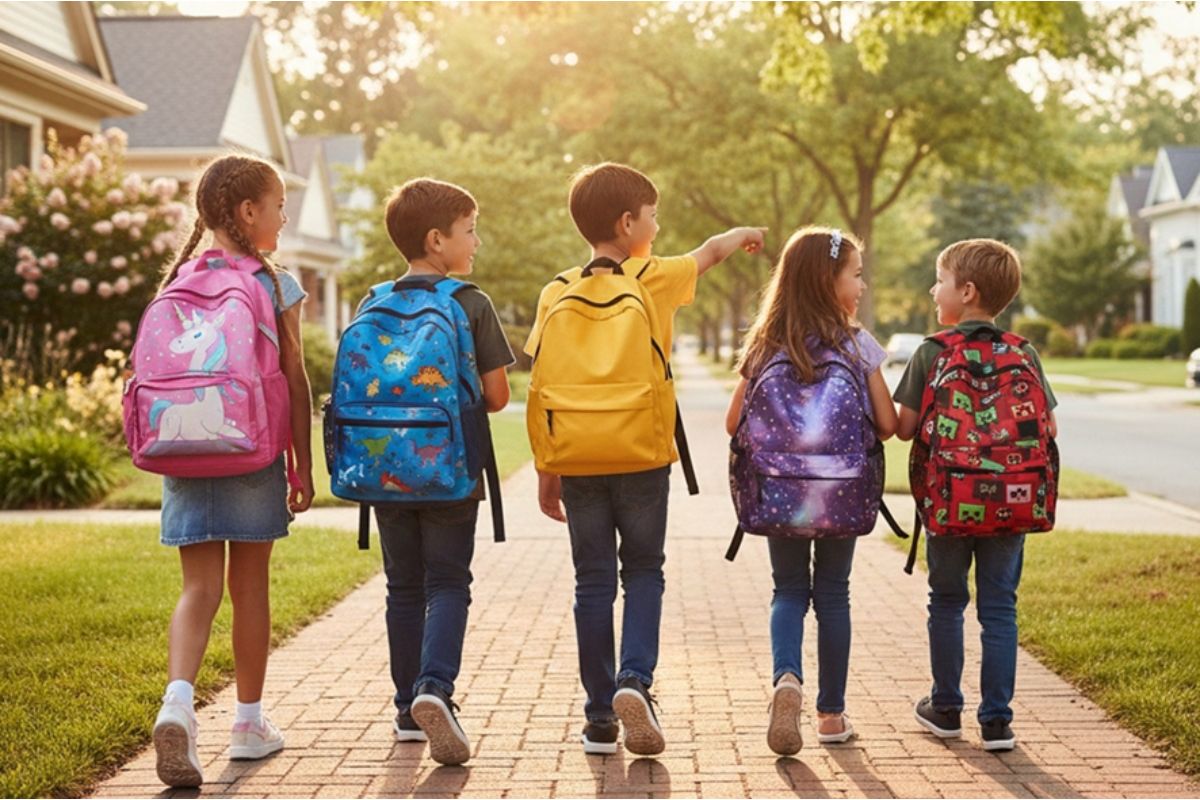


This Item Is Essential for Carrying and Organizing School Supplies, But Some Care Is Essential
With the return to school, parents and guardians often worry about school supplies, uniforms, and adapting to the routine. However, a fundamental aspect of children’s health often goes unnoticed: the weight of the backpack. The item, indispensable in daily school life, can turn into a silent problem when used improperly, especially during a phase of life marked by intense growth and physical development.
However, the backpack helps organize the school routine by bringing together books, notebooks, pencil cases, and other materials in one place. The problem arises when this “everything together” exceeds safe limits for the child’s body. Children and teenagers are still in a phase of bone and muscle development, making their spines more susceptible to overload.
When the weight exceeds the recommended amount, the body starts to adopt compensations to maintain balance, altering posture continuously.
-
Women Who Faced Death Head-On Break Taboos and Uncover Forgotten Funeral Rituals

-
Elderly Man in His 70s Spends Nearly 30 Years Digging 3 km Canal to Transform Arid Land into Farmland in Rural India

-
Submerged Town Reemerges in São Paulo as Reservoir Levels Drop, Revealing Ruins and Memories of Displaced Families
-
In Northeastern Brazil, 1,200 Residents Face a Silent Nightmare as Giant Sinkholes Threaten Entire Neighborhoods


These adaptations do not usually provoke immediate symptoms, but their effects accumulate over time. However, excess load can overload muscles, joints, and, primarily, the spine. Among the most common changes associated with improper backpack use are postural deviations such as scoliosis, characterized by lateral curvature of the spine; lordosis, which is an increased curvature of the lumbar region; and hyperkyphosis, popularly known as a “hunchback.”
In more severe situations, repeated habits from childhood can contribute to chronic pain and even problems in adulthood, such as herniated discs.
What Is the Weight Limit for the Backpack?

As reported by the news portal Uol, to avoid this type of consequence, specialists agree on a basic rule: the backpack should not weigh more than 10% of the child’s body weight.
In practice, this means that a student weighing 30 kilograms should not carry more than 3 kilograms on their back. Although simple, this guideline is still poorly observed in daily school life, either due to excessive required materials or the lack of adult supervision.
However, care is not limited to weight alone. The way the backpack is used also makes a significant difference. A common mistake among children and teenagers is to carry the backpack on just one shoulder.
This habit creates a constant imbalance in the body, forcing the spine to lean to compensate for the weight, which significantly increases the risk of postural changes. Therefore, the ideal is to always use the backpack with both straps, adjusted evenly, keeping the weight centered.
Another important point is the height of the backpack on the back. When it is too low, close to the buttocks, a space is created between the weight and the body, increasing the leverage on the spine. Thus, the ideal model should fit snugly to the torso, close to the back, without excessive looseness. Backpacks with two wide, padded, and adjustable straps are the most recommended. Models with one strap, used laterally, should be avoided.
Wheeled Backpacks Become Interesting Alternatives
Wheeled backpacks emerge as an alternative to reduce the overload, especially for younger children. However, they also require attention. The handle of the cart should be at the correct height so that the child can pull the backpack without bending over or excessively raising their shoulders. Otherwise, other types of postural overload can occur.
In addition to choosing the right model, organizing the contents is essential. Carrying only the necessary materials for the day avoids unnecessary weight. In the internal arrangement, heavier items should be placed closest to the back, while lighter ones should be positioned at the front. This distribution helps maintain a more balanced center of gravity and reduces the impact on the spine.
Finally, specialists also advocate for the adoption of institutional measures to minimize the problem, such as providing lockers in schools and using digital materials.
While these solutions do not become a reality in most Brazilian institutions, the role of parents and guardians is crucial in guiding, supervising, and educating children about the correct use of the backpack. Small changes in daily habits can make a big difference for long-term health.
Article Prepared with Information from UOL VivaBem