Portuguese
  Spanish


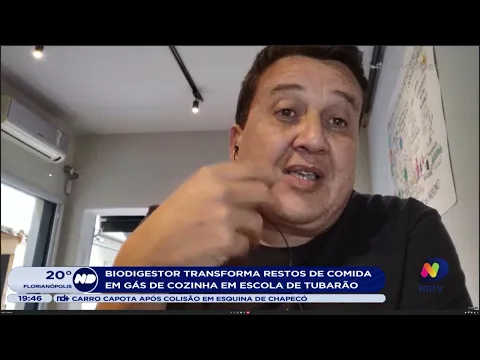
The ND Notícias report shows the partnership between the Santa Catarina city hall and the government of Israel: the HomeBiogas equipment works without electricity, fuels the lunch stove, and also produces fertilizer for the community garden
In a school in the south of Santa Catarina, the onion peel that used to go to waste now lights the stove burner. According to ND Notícias, in a report published in August 2022, a school in Tubarão received a biodigester that transforms food scraps into cooking gas, the result of a partnership between the city hall and the government of Israel, through the consulate.
The equipment arrived custom-sized. The monthly production capacity is equivalent to almost 3 cylinders of 13 kilos, exactly what the school needs to serve the children daily, as reported by ND Notícias. And the system provides a bonus: the fertilizer left from the process feeds a community garden within the school itself.
The lit flame that arises from food scraps
In the kitchen routine, the revolution goes unnoticed. According to ND Notícias, users guarantee the quality: the lit flame works like any other stove, just place the pots and start cooking, with the morning and afternoon teams taking turns preparing the meals.
-
Microsoft Submerges 855 Computers in Nitrogen-Filled Capsule 35 Meters Under the Scottish Sea, Records Eight Times Fewer Failures Than on Land After Two Years

-
Animal Once Thought Extinct in the 2000s Reborn in Lab, Survives Minutes, Becomes Rare Biological Case

-
61-Year-Old Brazilian Retiree Produces His Own Cooking Gas from Cow Manure, Goes a Year Without Buying a Cylinder, and Sells Surplus Biofertilizer

-
Ghana to Launch Public Library Offering Over 100 Air Quality Sensors for Community Use, with Plans to Expand Across West Africa


The difference is in the pipe that feeds the fire. The gas comes directly from the equipment installed at the school, powered by food scraps, without a cylinder and without relying on electricity to function, as shown by the ND Notícias channel on YouTube. For the cook, only the source of the flame changed; for the school’s bill and the city’s waste, everything changed.
How the biodigester works without using energy
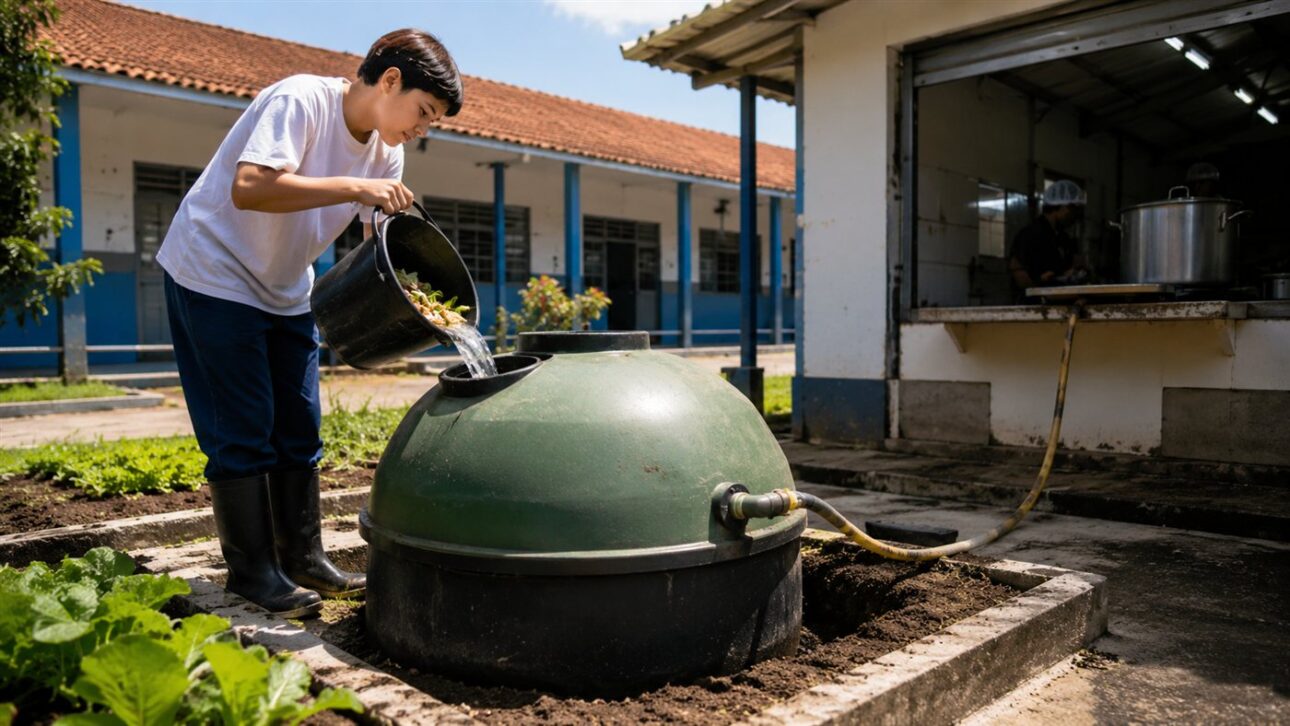
The technology behind the system is biological, not electronic. According to ND Notícias, the equipment transforms organic waste, from food scraps to manure and any biomass, through an anaerobic biodigestion process: bacteria consume the material and generate gas, which accumulates in the system itself, directly connected to the stove.
The demonstration in the report fits into a kitchen scene. Onion, potato, and apple peels freshly taken from the sink are mixed with water and poured into the equipment’s opening, slowly, and that’s it, as ND Notícias captures in the step-by-step with the employee. On one side goes what would be trash; on the other comes out the gas for meals and fertilizer for the garden.
Almost 3 cylinders per month: the school’s account
The savings are well-known. According to ND Notícias, the system’s monthly production is equivalent to almost 3 cylinders of 13 kilograms, the exact measure of the kitchen’s consumption that feeds the children every school day.
The financial gain, however, shares the stage with another goal. Gas savings are declared as the first goal, but the educational factor is presented as the most important part of the project, as ND Notícias records in the statement from the municipal management. In an era where gas cylinders weigh on the budgets of schools and families, the math of the school biodigester adds up two columns: the one that saves money and the one that teaches.
From onion peel to garden: the complete cycle
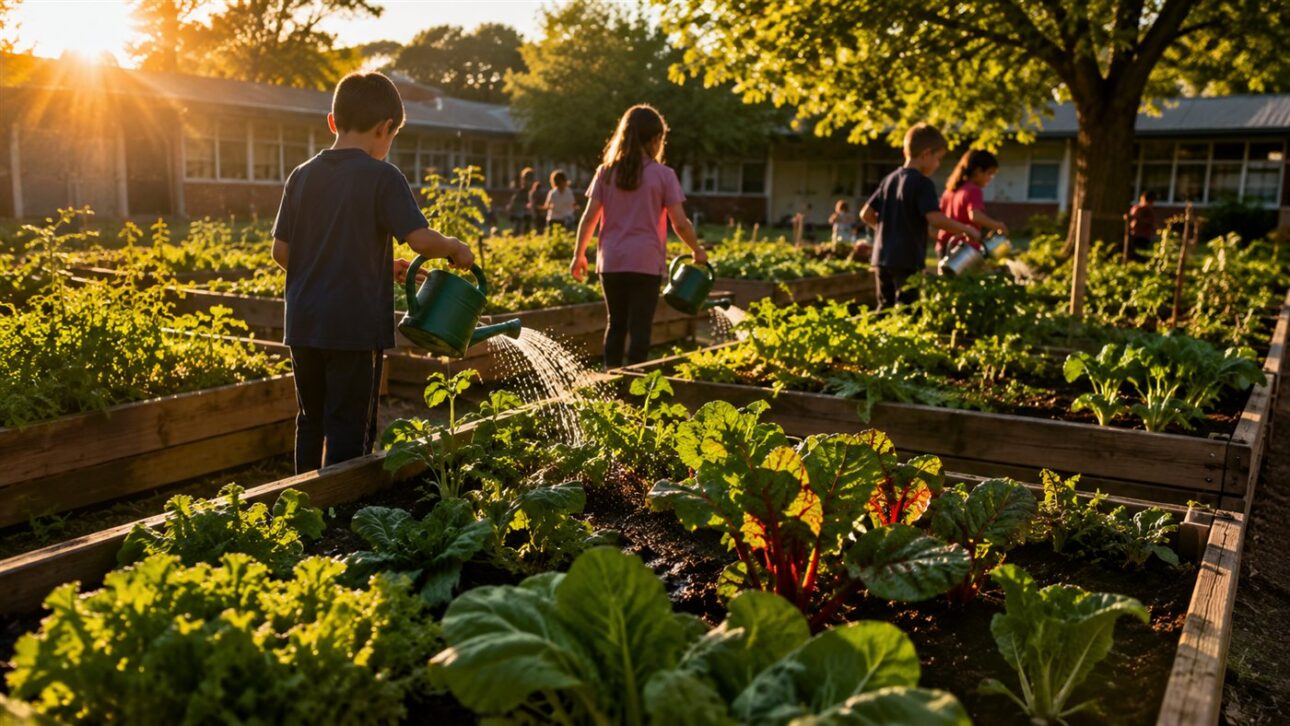
The system completes a circuit that the children can see in its entirety. According to ND Notícias, besides gas, the biodigester produces fertilizer, used in the school’s community garden, and the educational plan uses each stage: the children experience soil preparation, seed planting, vegetables growing, the cooks harvesting, and the vegetables reaching the meals.
The closure of the cycle is the most beautiful part of the engineering. What is not used in meals, and previously went to waste, returns to the equipment and generates more gas, as ND Notícias describes. It’s circular economy explained without a book: today’s lunch leftovers cook tomorrow’s lunch, and what’s left becomes lettuce in the garden bed.
The Israeli technology operating in various countries
The equipment has a stamped passport. According to ND Notícias, the biodigester was delivered by HomeBiogas, an Israeli company with units in various countries, and arrived in Tubarão as a donation from the Israeli consulate as part of a partnership with the city hall.
And the agreement doesn’t end in the kitchen. The report notes that other projects were already coming off the paper, starting with irrigation, an Israeli specialty forged in desert agriculture, as ND Notícias anticipates in the statement from the municipal management. The biodigester was presented as the first concrete result of the cooperation, with the promise of also bringing irrigation technology to the city’s gardens.
The cylinder that weighs on the public budget
The backdrop of the project is a bill that every city hall knows. School kitchens operate every school day, for dozens or hundreds of meals, and gas is a recurring expense that grows along with the price of the cylinder. Multiplied by the entire network of schools in a municipality, the savings of 3 cylinders per month per unit becomes a real budget.
There is also the issue of waste, which also costs public money. Every kilo of food waste that enters the biodigester is a kilo that no longer follows the truck to the landfill, reducing weight, freight, and the methane that the organic matter would release decomposing in the open air. The same waste that was a double expense, collection and purchased gas, becomes a double income: energy and fertilizer.
Why the school is the perfect place for the biodigester
The choice of location has logic that goes beyond economy. A school produces food waste every day, in the right amount and at the same address where the gas is consumed, eliminating transportation and making the system self-sufficient in its own yard.
The multiplier effect is the silent bet of the project. Every child who learns to throw the peel into the biodigester instead of the trash takes the concept home, and an entire generation grows up knowing that food waste is energy, the kind of environmental education that no booklet delivers alone. If Brazil wants to scale domestic biogas, the shortest path goes through school meals.
What the case of Tubarão teaches other cities
The model recorded by the report is replicable in any municipality: a compact equipment, without energy consumption, fed by the waste that the kitchen itself generates, with returns measured in cylinders that are no longer purchased and in fertilizer that is no longer needed.
The standard for copying well is the same as any public project. Define who feeds the system every day, who takes care of the garden, and how the savings are measured and publicized, so that the equipment doesn’t become a yard ornament after the inauguration. In Tubarão, the answer came from the school routine itself: cafeteria workers, teachers, and students took over the cycle, and the flame remains lit.
Watch the report
The video shows the flame on the stove, the demonstration with kitchen scraps, and the garden that receives fertilizer from the system.

The biodigester at the Tubarão school proves that the energy transition also happens on a kitchen scale: food scraps turning into gas, gas turning into meals, and meals turning into lessons for the future. Tell us in the comments: would the school in your city agree to exchange organic waste for a free gas cylinder?