






 Portuguese
  Spanish


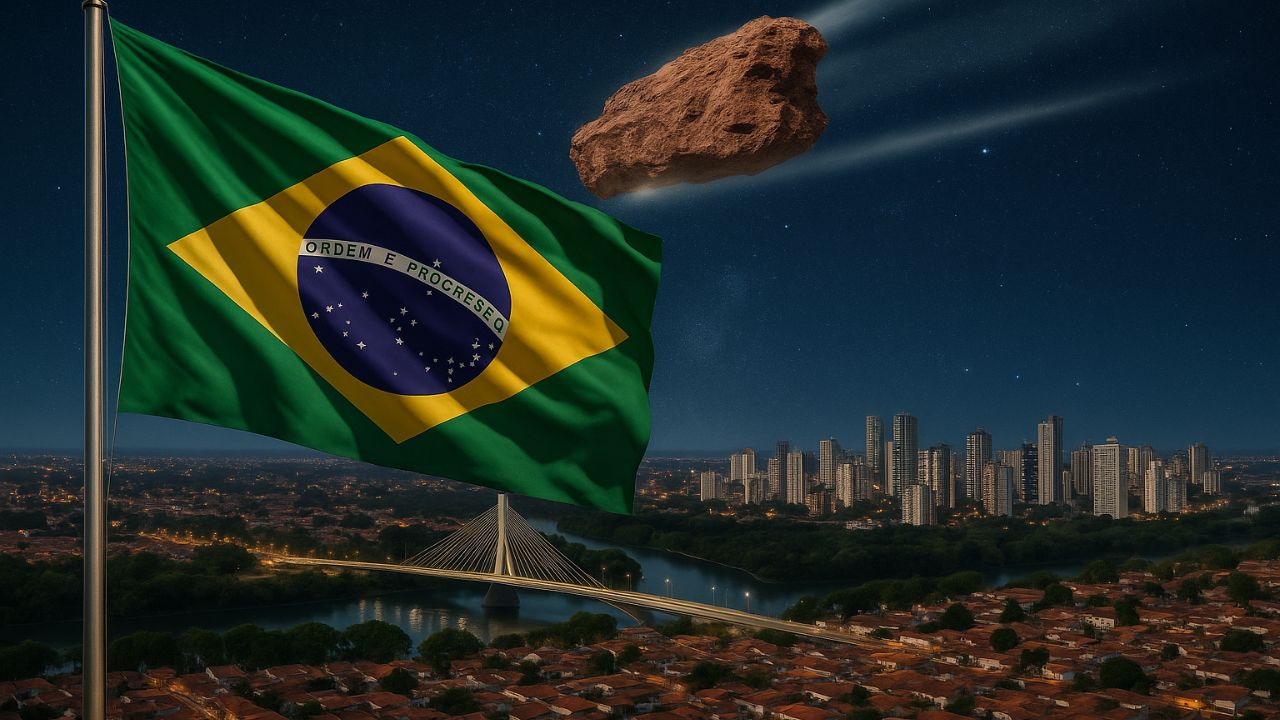

Josielly Figuêredo, At 19, Ensures That The Name Of The Capital Of Piauí Is Permanently Inscribed On The Official Map Of The Solar System As Asteroid (792972).
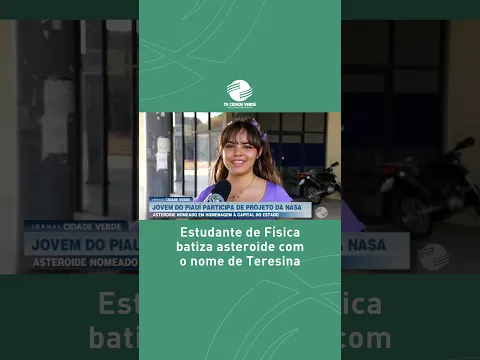
The Brazilian science community celebrates a milestone of credibility and inspiration: a celestial body has been officially named after a city in the country. The object, previously known by the provisional designation 2023 QY16, is now permanently registered as asteroid (792972) Teresina. The person who inscribed the capital of Piauí on the cosmic map was Josielly Figuêredo, a Physics student from the Federal University of Piauí (UFPI), who was only 19 years old at the time of achieving this feat.
This accomplishment, which may seem like a simple act of naming, is actually the result of a complex network of citizen science, human analysis, and precise astronomical mechanics. The story of the asteroid Teresina weaves together the dedication of a young scientist, the power of global collaboration, and how modern astronomy maps the universe. The protagonist, Josielly Figuêredo, not only brought the name of her capital to the skies but also demonstrated the potential of science conducted by Brazilian students in global observation programs.
The Young Astronomer Who Named The Asteroid
The central figure of this achievement is Josielly Figuêredo Do Rêgo Leite Sousa, from União, Piauí, and a student of Physics at UFPI. Her choice to name the celestial body Teresina was not casual, but the culmination of a deep and consistent engagement with astronomy, initiated in childhood, inspired by documentaries and studies about the universe.
-
How to Prevent Brown Recluse Spider Bites: Common Hiding Spots and Free Tips to Reduce Risks

-
Natto: The Unusual Japanese Superfood Gaining Popularity on Social Media and Driving Record Exports
-
Brazilian Mayor Goes Undercover as Homeless for 24 Hours to Assess Public Services

-
15-Year-Old Entrepreneur Malu Lira Publishes 20 Children’s Books on Financial Education, Earns $500,000, and Expands Her Project to the Amazon Rainforest




The student transformed her early interest into concrete action through citizen science programs. At 15, Josielly had already detected five asteroids, showing a history of talent and dedication to practical observation. The crucial achievement that earned her the right to name came through her participation in the “Asteroid Hunt” program, the Brazilian initiative linked to the International Astronomical Search Collaboration (IASC). The IASC is a global program that offers raw astronomical data — telescope images — for volunteers and students to analyze and search for new celestial bodies.
Josielly solidified her role in the scientific community by being credited with the detection of other provisional asteroids, such as 2022 QA131 and 2022 SP47. She also acts as the Official Ambassador of the International Astronomy and Astrophysics Competition (IAAC). This trajectory demonstrates that the opportunity to name the asteroid was earned through years of unpaid volunteer work and meticulous image analysis.
Unraveling The Discovery: The Linkage Process

The most technical and detailed part of this story is understanding how, in practice, the asteroid (792972) Teresina was “discovered” and named. While reports celebrate Josielly’s “unprecedented achievement”, international official records, maintained by organizations such as the Minor Planet Center (MPC) at Harvard University, indicate that the object was originally observed on December 10, 2014, by the Mount Lemmon Survey.
This apparent contradiction is not an error, but illustrates the complexity of modern astronomy. The “discovery” of asteroids today is a layered data collection process known as linkage:
- Original Discovery (2014): The robotic telescopes of the Mount Lemmon Survey, in Arizona (USA), recorded the object.
- Confirmation Observation (2023): Almost a decade later, the asteroid was captured again, receiving the provisional designation 2023 QY16.
- The Crucial Role of Josielly: As a participant in the “Asteroid Hunt” program, Josielly was analyzing images from another telescope (Pan-STARRS, in Hawaii). Her “detection” consisted of identifying the object 2023 QY16 in these new images.
- The Connection at the MPC: The MPC used sophisticated software to link the new observations (reported by Josielly/IASC) with the old ones from 2014. This linkage allowed calculating a stable orbit, confirming that it was a single celestial body.
Thanks to her recovery observation, which was crucial for rescuing the asteroid from the limbo of lost objects, the object received a permanent number: (792972). As a professional courtesy and recognition of her vital contribution to the confirmation process, the Mount Lemmon Survey granted naming rights to the young Piauí scientist, who chose to honor her capital.
The Bureaucratic Naming Process: Eternal Permanence
The name (792972) Teresina is not a nickname, but a formal scientific record. This is due to the rigorous and official process of the International Astronomical Union (IAU), which ensures the seriousness and permanence of the astronomical record.
After the asteroid received a permanent number (number 792972), the official discoverer (or their representative, in this case, Josielly) gains the right to suggest a name. Josielly proposed “Teresina” along with a brief citation explaining the choice. The proposal was submitted to the Working Group for Small Bodies Nomenclature (WGSBN) of the IAU, which reviews the name to ensure it follows all guidelines.
The naming was officially published in the group’s official bulletin, the WGSBN Bulletin, in 2025. The record “(792972) Teresina = 2023 QY16” formalizes the name. It is this bureaucratic process that gives scientific weight and ensures that the name Teresina is indexed in the JPL Small-Body Database and recognized by the entire global astronomical community.
Technical Portrait Of The Object
For the astronomical community, the asteroid (792972) Teresina is now a cataloged object with a well-defined orbital profile. The celestial body resides in the Main Asteroid Belt, a vast region of rocks located between the orbits of Mars and Jupiter.
Specifically, it is classified as “MBA (inner)”, indicating that its orbit lies in the inner portion of the main belt. Based on its brightness (absolute magnitude), astronomers estimate that the diameter of (792972) Teresina is approximately 1.4 kilometers.
| Parameter | Value |
| Permanent Designation | (792972) Teresina |
| Date of Discovery | December 10, 2014 |
| Official Discoverer | Mount Lemmon Survey |
| Estimated Diameter | ~1.4 km |
| Orbital Classification | Main Belt Asteroid (Inner) |
The Legacy of (792972) Teresina
The story of the asteroid (792972) Teresina transcends curiosity and serves as a paradigm of 21st-century science: the brute force of robotic observatories combined with the passion and pattern recognition power of the human brain, provided by citizen scientists like Josielly Figuêredo.
This case proves that citizen science programs, such as the “Asteroid Hunt”, produce valuable scientific data and actively contribute to mapping the Solar System. The impact is clear: for the city of Teresina, it is a permanent and literal place on the map of the cosmos. For Brazil, it is a powerful story of inspiration and representation. It proves that a young student from a federal university, driven by curiosity and dedication, can leave an indelible mark on the skies.
Look Up, Teresina Is Now Also An Asteroid. Somewhere Between Mars And Jupiter, A Small Rocky World Carries The Name Of A Brazilian Capital, A Lasting Testament To The Grit And Passion Of A Student For Science.
What Does Josielly Figuêredo’s Achievement Mean For The Future Of Citizen Science And The Encouragement Of Astronomy In Brazil? Do You Believe This Accomplishment Will Have A Significant Impact On Inspiring New Scientists At Federal Universities? Share Your Opinion In The Comments, We Want To Hear From Those Who Feel Represented By This Cosmic Mark.







Gostaria de saber, o que mudou na vida dela esta descoberta.