





 Portuguese
  English
  Spanish
 3 min of reading


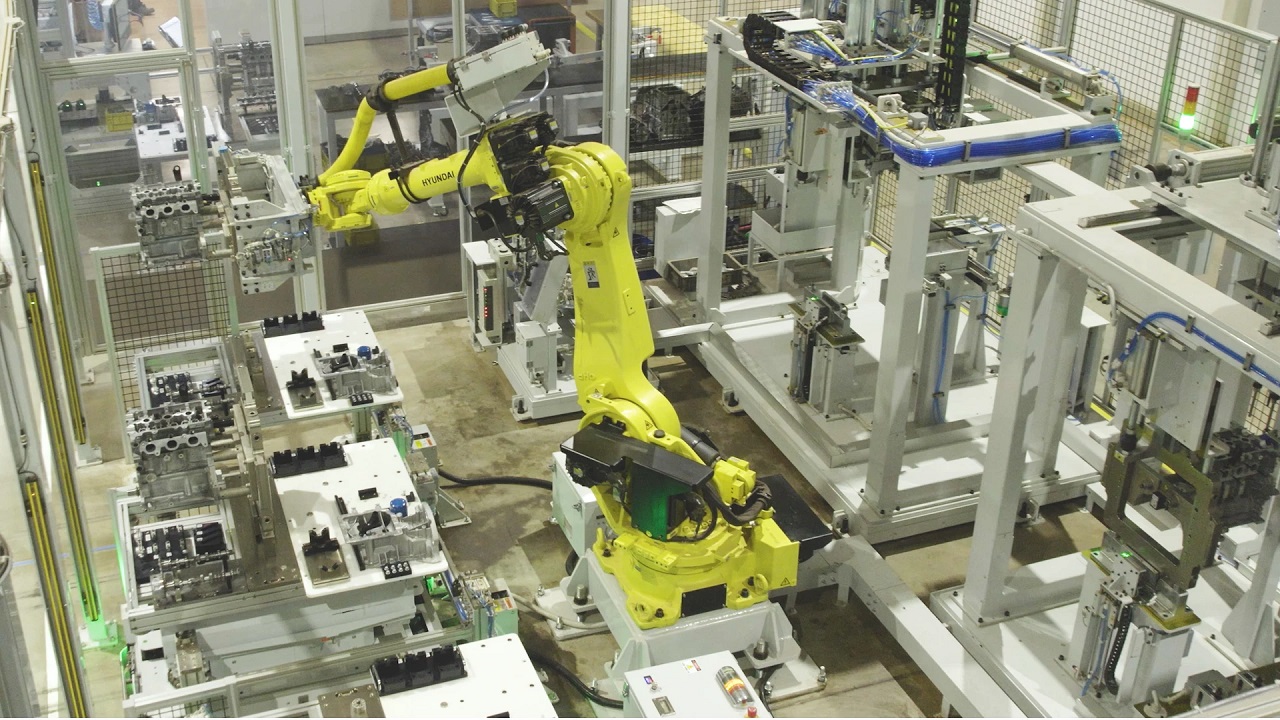
The inauguration of the new Hyundai engine plant was held at the event to celebrate the 10th anniversary of the multinational in the country.
The South Korean automobile multinational Hyundai Motor Company announced that it has begun operations at the engine factory in Piracicaba, São Paulo. The new Hyundai factory will be located within the same complex where the multinational manufactures the Creta and HB20 models. The Hyundai engine plant received an investment of R$ 500 million and has the capacity to produce at least 70,000 engines per year.
Learn More About the New Hyundai Engine Plant
According to data provided by the South Korean multinational, about 256 employees are working on the construction of the new Hyundai engine plant, which is the first engine factory of the multinational in Latin America and the 13th in the world.
According to Hyundai, the new facility in Piracicaba features a high level of automation and will be responsible for supplying engines for the HB20 lineup.
-
Chinese SUV priced at R$ 432,000 arrives in Brazil and challenges traditional models: GWM Wey 07 Dark Edition has 512 hp, over 5 meters, goes from 0 to 100 in 4.9 seconds, and aims to surpass SW4 in technology.

-
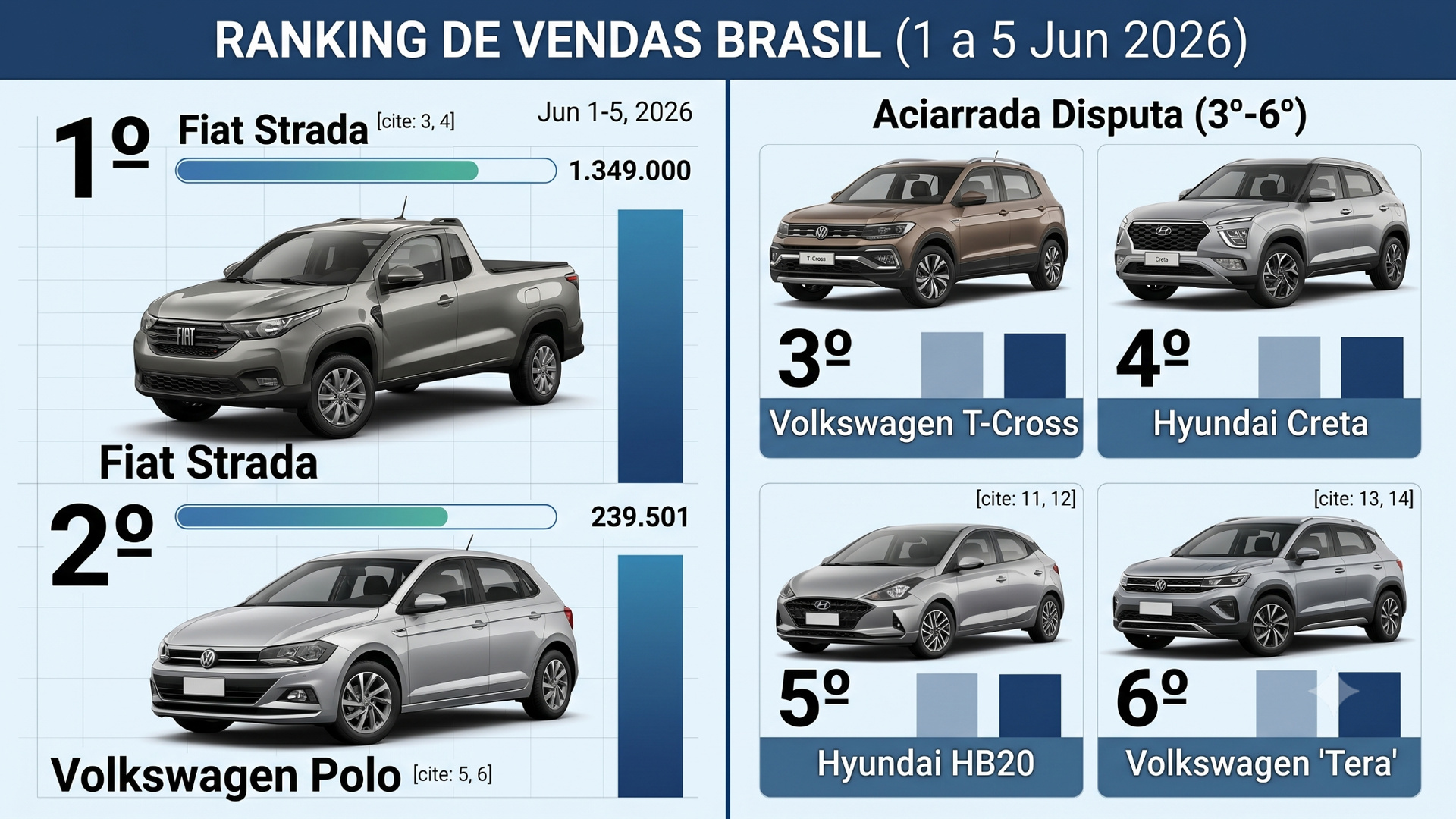
Currently best-selling cars in Brazil in June 2026: Fiat Strada leads the way, Volkswagen Polo catches up, and SUVs like T-Cross, Creta, HB20, and Tera intensify the competition in the national ranking.

-
Mitsubishi surprises the Brazilian market with cuts of up to R$ 55,000, expands bonuses for trade-ins, and pressures rivals in SUVs and pickups.

-
It is not the oil-bathed belt: Chevrolet Sonic addresses complaints from Onix owners with an unprecedented change in the design, new suspension, MTV technology in the shock absorbers, and fuel consumption of up to 14.8 km/l. Chevrolet Sonic addresses complaints from Onix owners. And it is not the belt.



The director of the engine factory and quality at Hyundai Motor Company in Brazil, Joel Anjos, stated in a statement that the new Hyundai plant is one of the tools the multinational has to continue growing and facing the various challenges that arise in the sector.
Hyundai Motor Company Celebrates 10 Years in Brazilian Soil


The engine plant was inaugurated at the event celebrating the 10th anniversary of the opening of Hyundai’s first factory in Brazil, also in Piracicaba, São Paulo, which opened on September 20, 2011.
Since then, the South Korean multinational has manufactured around 1.7 million cars at the first factory in Piracicaba, including various versions of the HB20 and the Creta SUV. Since 2013, Hyundai’s industrial complex has operated 24/7, with employees divided into 3 shifts.
The pioneering unit in Piracicaba has the capacity to produce about 210,000 cars per year, maintaining a relatively stable dynamic, even amid the current market volatility that has prevailed for nearly a decade.
The Choice of Brazil
According to Euisun Chung, global executive chair of the Hyundai Motor Company, choosing Brazil was very challenging for the multinational, as the country is quite far from the company’s headquarters, and it has a vast area, a large population, and a wide variety of natural resources, in addition to the high potential Brazil has in the automotive market.
Chung also emphasized that, even after a decade, he can still witness the successful business expansion of Hyundai Motor both in Brazil and throughout Central and South America. During his video participation at the event celebrating 10 years of Hyundai Motor in the country, Euisun Chung highlighted that Brazil plays a key role in the sustainable development of the South Korean multinational.
About Hyundai Motor Brasil
Hyundai Motor Company was founded on December 29, 1967, by Chung Ju-Yung, in South Korea. Hyundai has 10 factories worldwide, with 7 located outside its home country.
In Brazil, the factory is located in Piracicaba, São Paulo, where it is responsible for producing the HB20 models, which are assembled only here, and the Creta SUV. The Hyundai factory in Brazil operates in 3 shifts, capable of producing around 44 cars per hour.






Be the first to react!